


 Play store

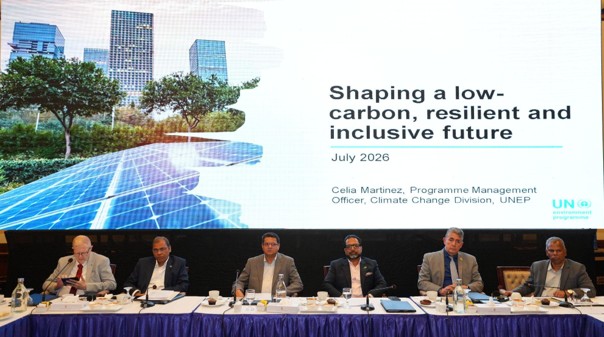
The Government of Bangladesh, the United Nations Office for Project Services (UNOPS), and key international partners convened on July 29, 2026, for a high-level strategic workshop aimed at accelerating the nation’s transition toward a low-carbon, climate-resilient built environment.
The event took place under the “Transforming the Built Environment through Sustainable Materials in Bangladesh” project, implemented by UNOPS alongside the United Nations Environment Programme (UNEP) and funded by the Government of Germany.
Inaugurating the workshop, Minister for Housing and Public Works Zakaria Taher, MP, alongside State Minister Ahammad Sohel Monzoor, MP, reaffirmed the government’s commitment to energy-efficient and resource-conscious construction alignment with national climate goals. The session was chaired by Md. Nazrul Islam, Secretary of the Ministry of Housing and Public Works.
Key points include- HBRI-DESH Sustainable Building Labelling Framework: Officially launched in draft form, this framework sets clear rating and sustainability standards for greener construction across the country, DESHboard Digital Platform: The launch of the DESHboard website will support evidence-based policymaking, track sustainable metrics, and promote eco-friendly materials and Low-Carbon Innovation Showcase: Technical experts presented advancements in low-carbon construction materials, green building regulations, and sustainable urban planning approaches developed with HBRI, RAJUK, PWD, and UN-Habitat.
Addressing the gathering, Sudhir Muralidharan, Country Manager for UNOPS Bangladesh and Bhutan, reaffirmed UNOPS’s commitment to providing technical expertise to advance resilient urban development. Martín Arévalo de León, Head of the UNOPS Rome Liaison Office, emphasized the vital role of global knowledge exchange in decarbonizing the construction sector.
Participants concluded the workshop with a strategic dialogue focusing on institutional coordination, policy reforms, and scaling green construction practices to help Bangladesh meet its carbon reduction targets while building safer, climate-proof infrastructure.