


 Play store

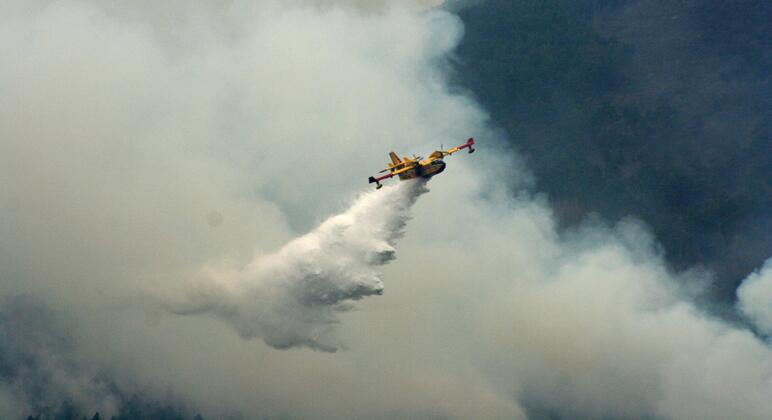
The United Nations has urged governments to prioritise wildfire prevention and climate resilience as devastating blazes continue to sweep across Europe and North America, warning that climate change and human activity are making extreme fires increasingly frequent and destructive.
The warning came from the UN Economic Commission for Europe (UNECE), which said more than 434,000 hectares of land have already burned across Europe this year, underscoring the growing threat posed by rising temperatures, prolonged droughts and changing weather patterns.
“Every summer reminds us that wildfire is no longer an exceptional event but an increasingly predictable consequence of a warming climate,” said Paola Deda, Director of UNECE’s Environment and Forests Division.
“While emergency response remains essential, our greatest opportunity lies in prevention, sustainable forest management and building more resilient landscapes and communities,” she added.
France has lost around 42,000 hectares of pine forest in the Gironde region, forcing tens of thousands of residents and tourists to evacuate. Spain has recorded more than 200,000 hectares burned this year, about twice its historical average, making it one of the country’s worst wildfire seasons in decades.
The European Union has also warned that the wildfire crisis is shifting eastwards, with Greece and Italy facing heightened risks as extreme heat, drought and strong winds persist into early August.
Across the Atlantic, the United States has recorded nearly 1.85 million hectares burned so far this year. Canada has reported more than 4,000 wildfires that have scorched about 3.77 million hectares, with dozens of major fires still burning out of control.
UNECE said the impact of wildfires extends far beyond the destruction of forests, leaving homes, infrastructure and livelihoods devastated while forcing communities to evacuate. Smoke from major fires can travel hundreds or even thousands of kilometres, affecting air quality far from the source.
The economic cost is also mounting. Wildfires are estimated to cost the European Union around €2.5 billion annually through damage to infrastructure, lost tourism revenue and wider economic disruption.
Long after fires are extinguished, affected areas continue to face ecosystem degradation, biodiversity loss, reduced agricultural productivity and costly restoration efforts.
According to UNECE, around 90 per cent of wildfires are caused by human activity, either through negligence or deliberate acts, highlighting the importance of stronger public awareness, tighter regulations and temporary restrictions during periods of extreme fire danger.
At the same time, climate change is intensifying wildfire risks by increasing temperatures, extending droughts, triggering more frequent heatwaves and lengthening fire seasons in regions once considered less vulnerable.
Wildfires are also contributing to global warming. UNECE said they released an estimated 1.8 billion tonnes of carbon dioxide in 2021. Between 2001 and 2023, global carbon emissions from wildfires increased by around 60 per cent, while emissions from boreal forest fires across Europe, North America and Central Asia nearly tripled.
The Commission warned that this creates a dangerous cycle in which climate change fuels more intense wildfires, while larger fires release greater volumes of greenhouse gases, accelerating global warming.
Although extreme wildfires cannot always be prevented, UNECE said their frequency and impact can be significantly reduced through greater investment in prevention, sustainable forest management, early warning systems, climate adaptation and public awareness.
The Commission also highlighted the growing role of technology, including artificial intelligence, satellite monitoring and real-time risk mapping, in detecting and responding to wildfires. However, it stressed that technology alone cannot solve the problem.
“As climate risks continue to grow, strengthening forest resilience to fire is no longer only an environmental priority. It is an investment in public safety, economic stability and climate security,” UNECE said.