


 Play store

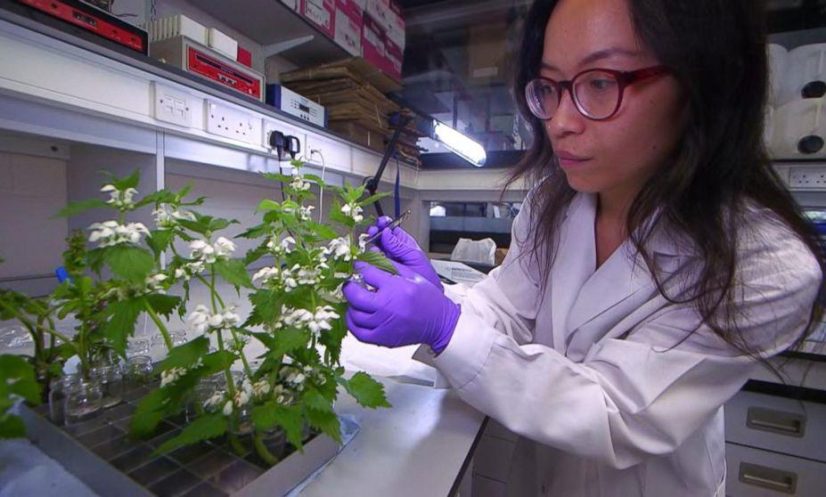
Scientists have discovered that two highly poisonous flowering plants—wolfsbane and larkspur—could help unlock new treatments for pain, malaria and cancer, while also offering safer methods for agricultural pest control.
The study, led by researchers from Michigan State University (MSU) and the Czech Academy of Sciences, identified a way to replicate part of the plants’ complex chemical processes in the laboratory. The findings were published in the journal Molecular Plant.
Although both plants can cause severe nerve damage and paralysis even in tiny amounts, they also produce natural compounds with significant medicinal potential.
“These plants have been used in different forms of medicine throughout the world for thousands of years,” said Garret Miller, a former MSU researcher and now an assistant professor of biotechnology at the University of Michigan-Flint. He added that understanding how these compounds are produced could open new frontiers in drug development.
Researchers highlighted that plants act as natural chemists, having evolved over millions of years to produce complex molecules for survival. Many widely used substances—such as caffeine, menthol and vanillin—either originate from plants or are inspired by plant chemistry.
The study focused on toxic compounds known as diterpenoid alkaloids, found in wolfsbane and larkspur. Despite their toxicity, scientists believe these compounds could have valuable medical applications.
For decades, researchers have struggled to understand how such complex molecules are formed. One well-known compound, aconitine, was first identified nearly 200 years ago, yet scientists have not been able to fully recreate it in a laboratory.
The breakthrough came through international collaboration, as researchers traced the plants’ natural chemical pathways. By studying multiple species and analysing thousands of genes, they identified those responsible for producing the toxic compounds.
The team then inserted key genes into tobacco plants, effectively turning them into “biofactories” to test whether they could reproduce the chemical process.
The modified plants successfully produced atisinium, a compound in the diterpenoid alkaloid family, using six different enzymes—marking a significant step forward in understanding plant-based chemical synthesis.
Scientists say this discovery could pave the way for sustainable production of plant-derived compounds, supporting future drug development while reducing the need to harvest toxic plants from the wild.