


 Play store

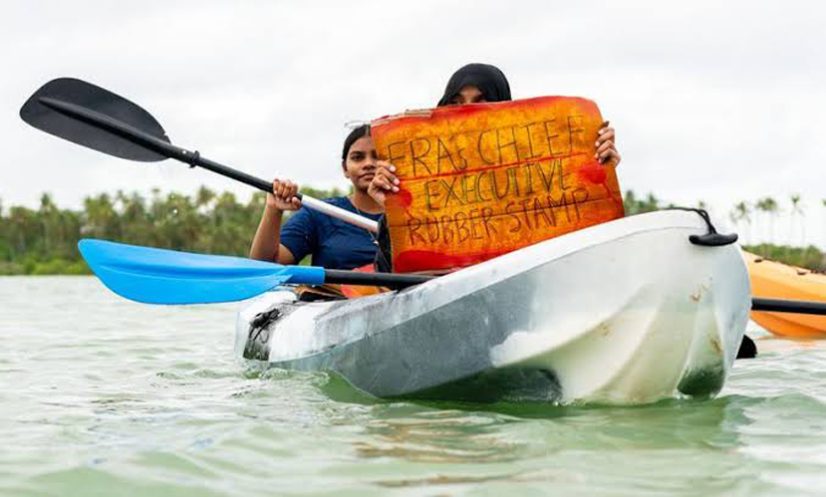
In the Maldives, a growing generation of young environmental activists is taking to the streets, beaches and even the water to challenge development projects and pollution threatening the island nation’s fragile ecosystems.
In Addu City in the south, members of the nonprofit Project ThimaaVeshi recently paddled kayaks to protest land reclamation work that was cutting through protected mangrove wetlands within a UNESCO biosphere reserve. They spray-painted “ECOCIDE” on a reclaimed section of land to draw attention to the environmental damage.
Project ThimaaVeshi, whose name means “self and surroundings,” emerged from a group of young people concerned about issues affecting their everyday lives, including coastal erosion, plastic pollution and damage to wetlands and coral reefs.
The group has documented the impact of development on Addu City’s wetlands and reefs, while youth activists in the capital, Male, have focused on plastic waste accumulating in streets, recreational areas and swimming spots.
Working with surfers and other volunteers, the activists organize cleanups, remove discarded fishing lines from coral reefs and collect thousands of plastic bottles. They also seek to educate young people about their right to a clean and healthy environment.
For many of these activists, climate change is no longer a distant threat. The Maldives, a low-lying archipelago in the Indian Ocean, is among the countries considered most vulnerable to rising sea levels.
Experts have warned that much of the country could become uninhabitable in the coming decades as sea levels rise. The government has repeatedly highlighted the country’s vulnerability, while also arguing that development is sometimes necessary to meet the needs of its growing population.
Activists, however, say environmental safeguards and climate protection measures are not being implemented quickly enough.
“It was just us and a bunch of hopes and dreams,” said Yameen Maumoon, a 21-year-old co-founder of Project ThimaaVeshi.
Maumoon and fellow founder Mishal Mushahid began their activism as student leaders working with the Addu City council. A group that started among friends eventually developed into a movement and became a registered nonprofit after they finished high school.
In Male and neighboring Hulhumale, another youth group called Ripple emerged after friends became increasingly concerned about trash piling up around places where they spent time.
“One day when we were playing Minecraft, we were joking around, saying we should start making TikToks and we should start cleaning up,” said co-founder Mariyam Maasha Waheed.
Their informal cleanups expanded after their TikTok videos attracted attention. Ripple now organizes weekly cleanups and campaigns against plastic pollution while working with other groups to recycle the waste they collect.
The activists say they want environmental action to be accessible, social and less intimidating for young people.
Another emerging group, Barnacles, focuses on climate education and youth leadership. Co-founder Yania Hussain Ishan said her interest in environmental issues began while preparing a school presentation about protecting nature.
Ishan said constant discussion of the climate emergency on social media and elsewhere has left many young people feeling powerless. The groups are trying to turn that frustration into action.
Their youth has sometimes drawn criticism, including from government officials who have questioned whether young activists have enough experience to influence environmental policy.
The activists have also been told that their efforts are pointless and that activities such as beach cleanups cannot solve the Maldives’ much larger environmental problems.
Climate Change Minister Ali Shareef said at a public forum last year that young people had too many emotions and could not be trusted with decision-making.
The activists acknowledge that they cannot solve the Maldives’ environmental challenges on their own. But they argue that waiting for governments and larger institutions to address every problem is not an option.
Their goal, they say, is to build a generation that understands its environmental rights and accepts responsibility for protecting the islands for those who come after them.
“We are deciding what kind of ancestors we will be,” Ishan said. “We are defending our home, our heritage and the right of every Maldivian child yet to be born to stand on these shores, look out at the sea and feel the same wonder and security that defines who we are.”