


 Play store

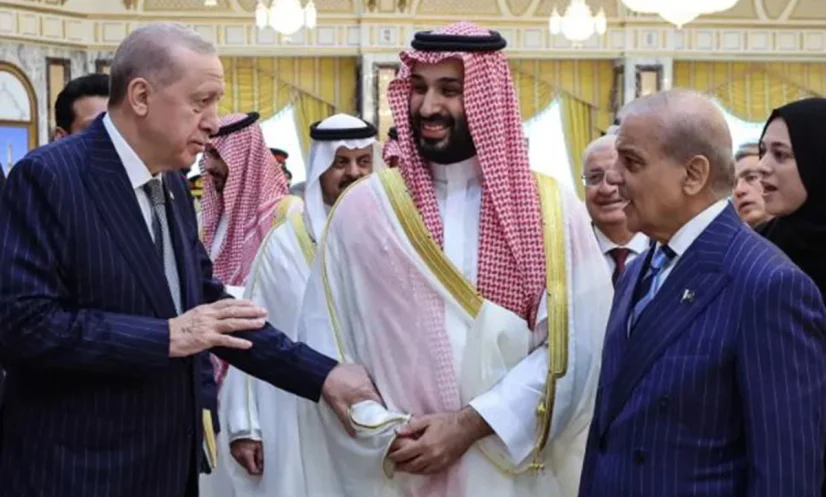
Saudi Arabia, Pakistan and Türkiye’s new mutual defence agreement could mark a significant shift in the strategic landscape of the Middle East, bringing together three influential Muslim-majority countries with considerable economic, military and diplomatic weight.
Under the pact, an armed attack against any one of the three countries would be considered an attack against all three. The collective-defence principle could strengthen deterrence, particularly if it is followed by greater military coordination, intelligence sharing, joint exercises and defence-industrial cooperation.
A Powerful Strategic Combination
The partnership brings together complementary capabilities. Saudi Arabia contributes enormous economic resources, energy wealth and growing investment in advanced military technology. Riyadh has also sought to diversify its international partnerships and reduce reliance on any single external security provider.
Pakistan brings significant military experience and strategic capabilities. It has one of the largest armed forces among Muslim-majority countries and maintains a nuclear deterrent. Islamabad also has decades of defence and security cooperation with Saudi Arabia.
Türkiye adds another major dimension as a NATO member with a large standing military and an expanding defence industry. Ankara has developed significant capabilities in drones, missiles, naval systems and other military technologies, while its diplomatic and military influence across the Middle East continues to grow.
Together, the three countries could create a formidable network combining Saudi Arabia’s financial resources, Pakistan’s military strength and Türkiye’s defence technology and strategic influence.
A Message of Strategic Autonomy
One of the agreement’s most important implications is its message about regional strategic autonomy.
For decades, the security architecture of the Gulf and wider Middle East has been heavily influenced by the United States and its military presence. The new pact does not necessarily mean Saudi Arabia, Pakistan or Türkiye are abandoning their existing relationships with Washington or other Western powers.
Instead, it suggests that regional states are increasingly interested in developing additional security mechanisms of their own.
For Saudi Arabia, maintaining multiple strategic partnerships could provide greater flexibility in dealing with Washington, Beijing, Moscow, Ankara and other major powers.
Implications for Iran
The agreement is also likely to be closely watched by Iran.
Although the three countries may describe the pact as defensive and not directed against any specific state, a collective-defence arrangement involving Saudi Arabia and two major military powers could strengthen deterrence against potential threats from Iran or Iranian-backed armed groups.
Its significance for Tehran will depend largely on implementation. A political declaration would have a more limited impact than joint command mechanisms, regular military exercises, intelligence cooperation or agreements on force deployment.
At the same time, the pact could complicate regional diplomacy if Iran interprets the new alignment as an attempt to contain its influence.
The Nuclear Dimension
Pakistan’s participation gives the agreement an additional strategic dimension because Pakistan is a nuclear-armed state.
However, a mutual-defence agreement does not automatically mean Pakistan’s nuclear capabilities would be extended to Saudi Arabia. The precise military obligations of the pact and the circumstances under which each country would respond to an attack remain crucial questions.
Nevertheless, Pakistan’s nuclear status could enhance the perceived deterrent value of the broader partnership.
Türkiye’s Expanding Role
For Türkiye, the agreement provides another avenue to expand its influence in the Gulf and wider Muslim world.
Ankara has increasingly positioned itself as an independent regional power capable of maintaining relations with competing blocs. Closer defence ties with Riyadh and Islamabad could strengthen Türkiye’s role in regional security while creating new markets and partnerships for its defence industry.
Saudi Arabia, meanwhile, has been developing its own defence capabilities and could benefit from deeper cooperation with Türkiye in areas such as drones, military technology and defence production.
Economic and Defence-Industrial Opportunities
The pact could eventually extend beyond traditional military cooperation.
Saudi Arabia has significant financial resources and ambitious plans to develop a domestic defence industry. Türkiye has developed a competitive defence-manufacturing sector, while Pakistan has extensive experience in military production and defence cooperation.
This combination could encourage joint ventures, technology partnerships, weapons production, training programmes and defence-related investment.
If such cooperation develops, the agreement could evolve from a military pact into a broader strategic partnership.
Limits and Challenges
Despite its potential, the agreement faces several challenges.
The three countries have different foreign-policy priorities and strategic interests. Türkiye is a NATO member, Pakistan’s security concerns are heavily focused on India and its western borders, while Saudi Arabia’s primary security interests centre on the Gulf, Iran, Yemen and the wider Arab world.
A major test could arise if one member became involved in a conflict that another considered unrelated to its own national interests. The practical meaning of the collective-defence commitment would then become critical.
The agreement could therefore be politically significant without immediately creating a fully integrated military alliance.
A Changing Regional Order
The broader importance of the pact lies in the changing nature of Middle Eastern geopolitics.
The region is increasingly characterised by flexible partnerships rather than rigid alliances. Countries are simultaneously maintaining relations with the United States, China, Russia and regional powers while seeking greater control over their own security.
The Saudi-Pakistan-Türkiye agreement fits into this wider trend.
If the three countries translate the pact into sustained military cooperation, intelligence coordination and defence-industrial integration, it could become an important pillar of a new regional security architecture.
For now, however, its long-term impact will depend on implementation. The agreement is potentially significant, but whether it truly reshapes the Middle East’s balance of power will ultimately be determined by what Saudi Arabia, Pakistan and Türkiye do after signing it.
SB Analysis