


 Play store

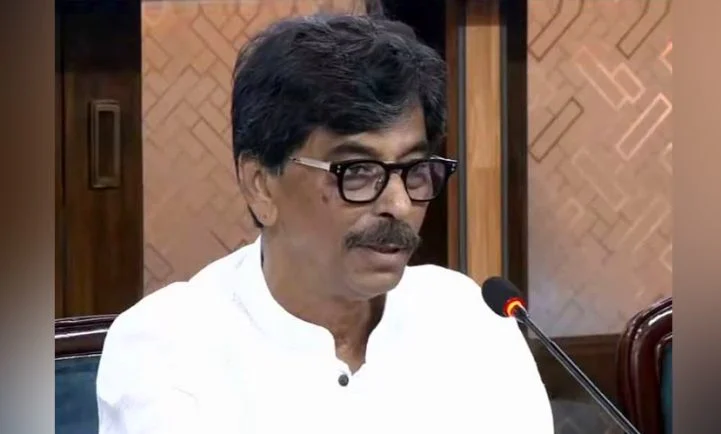
Agriculture Minister Mohammad Amin Ur Rashid has said the government will introduce a Farmer Card to bring Bangladesh’s agricultural management under an integrated, data-driven framework.
He made the remarks at a meeting with officials of the Department of Fisheries, Department of Livestock Services and other agencies under the Ministry of Agriculture at the Chattogram Circuit House on Saturday (July 4).
The minister said the Farmer Card would enable the government to maintain a comprehensive database on crop production and demand across the country, making it easier to align production with market needs and ensure farmers receive fair prices.
Under the initiative, not only growers of rice, wheat and jute, but also producers of salt, betel nut, coconut and betel leaf, as well as those involved in the fisheries and livestock sectors, will be brought under the scheme.
He said the database would record the number of genuine farmers, production patterns and crop-specific information. In the future, agricultural subsidies, incentives and other government support programmes will also be delivered through the Farmer Card.
The minister noted that farmers often incur losses due to a mismatch between production and market demand.
To address the problem, the government plans to establish solar-powered mini cold storage facilities at the union level, allowing farmers to store produce and sell it when market prices are more favourable.
Amin Ur Rashid also said the government has already waived agricultural loans of up to Tk 10,000 and reimbursed the concerned banks. In addition, it is implementing canal re-excavation projects, improving irrigation systems and continuing agricultural subsidy and incentive programmes.
Despite Bangladesh’s food self-sufficiency, he said imports remain necessary because of limited arable land and crop losses caused by natural disasters, particularly in the haor regions. Research is underway to develop early-maturing rice varieties and technologies, including harvesting machinery suitable for waterlogged areas.
Responding to allegations that the Chattogram Fish Landing Centre has come under the control of influential local groups, the minister said the government would investigate the matter and take legal action if any irregularities are found.
On declining hilsa production and rising prices, he said the government is providing support to fishermen during fishing bans imposed to protect juvenile hilsa and breeding seasons. Efforts are also underway to create alternative income opportunities to reduce fishermen’s dependence on informal lenders. The government’s long-term goal is not only to meet domestic demand but also to expand hilsa exports to international markets.
He added that new projects are being planned to restore river navigability, remove river shoals and strengthen coastal security. As part of the initiative, the government also plans to increase the manpower of the Coast Guard.