


 Play store

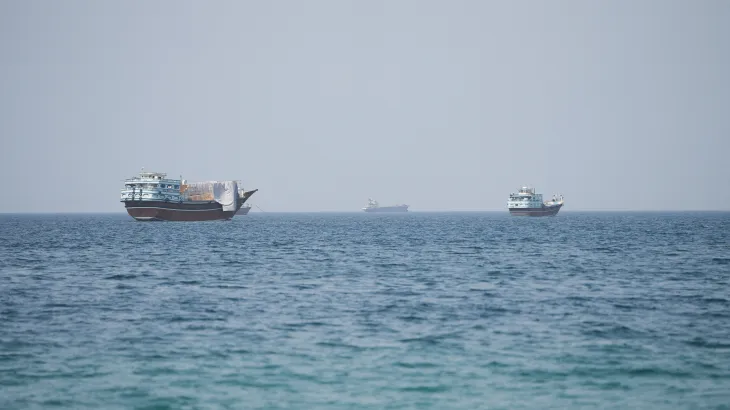
The United States has signalled that its naval blockade of Iran could continue indefinitely, escalating pressure on Tehran as ceasefire negotiations remain stalled and disruption around the Strait of Hormuz continues to threaten global energy supplies.
US Defence Secretary Pete Hegseth said on Thursday that the US military has sufficient assets to maintain a naval presence in the region for as long as necessary. He said ships could be rotated in and out of the area to sustain the blockade.
The comments marked a significant hardening of Washington’s position after negotiations aimed at ending the conflict failed to produce a breakthrough. The administration says its broader objectives include protecting US energy prices, preventing Iran from acquiring nuclear weapons and ensuring that Washington emerges from the conflict in a stronger position.
Vice President JD Vance has also defended the administration’s strategy, while Treasury Secretary Scott Bessent has pledged unprecedented economic pressure on Tehran.
The Strait of Hormuz has become the central economic and strategic flashpoint of the conflict. The narrow waterway is one of the world’s most important energy corridors, linking the Persian Gulf with global markets.
Although Washington says its blockade is directed at Iranian ports and shipping connected to Iran rather than all vessels transiting the strait, the broader security situation has sharply reduced commercial traffic.
Only nine commodity vessels passed through the Strait of Hormuz on Thursday, according to Kpler data cited by Reuters, compared with an August daily average of about 12. Shipping remains far below pre-war levels.
Iran, meanwhile, insists that the strait remains under its control and has maintained that reopening it depends on meeting its demands. The competing claims by Washington and Tehran have increased uncertainty for shipping companies, insurers and energy traders.
The disruption is already affecting oil markets. Brent crude rose slightly to about $87.08 a barrel on Friday, while US West Texas Intermediate traded around $81.31, as traders reassessed the risks to global supplies.
The blockade is also placing additional pressure on US naval forces.
The USS Abraham Lincoln has spent more than 260 days at sea supporting US operations in the conflict, prompting growing concern among lawmakers and military observers over crew welfare, maintenance and long-term readiness.
Reports have raised concerns about shortages, plumbing problems, mental-health pressures and fatigue among sailors. Hegseth has rejected some of the more serious allegations but acknowledged the need to rotate the Lincoln’s crew and bring the carrier home.
A replacement carrier, the USS George Washington, is heading towards the Middle East, a move that would allow the Lincoln to return after its exceptionally long deployment.
The prolonged deployment has raised a broader strategic question: how long can Washington sustain a major naval commitment in the Middle East without undermining readiness elsewhere?
The George Washington’s movement towards the region also illustrates the wider cost of maintaining the blockade. Shifting a carrier from the Pacific to the Middle East could reduce the US Navy’s flexibility in responding to other strategic challenges.
The blockade has inflicted severe economic pressure on Iran. The Financial Times reported that Iranian oil exports had come close to a standstill, with activity at the country’s major oil-export terminal at Kharg Island sharply reduced.
Washington is betting that sustained economic pressure will force Tehran to compromise. But the strategy carries significant risks. Prolonged disruption around Hormuz could keep energy prices elevated, increase shipping and insurance costs and add to inflationary pressures worldwide.
The diplomatic environment is also deteriorating. Russia has condemned maritime blockades in the region, while fighting and military incidents continue to spread beyond Iran’s immediate borders.
For now, neither side appears ready to retreat. Washington is preparing for a potentially open-ended naval commitment, while Tehran continues to use the Strait of Hormuz as a source of strategic leverage.
The result is a dangerous standoff in which the military pressure on Iran and the economic risks to the rest of the world are becoming increasingly difficult to separate.