


 Play store

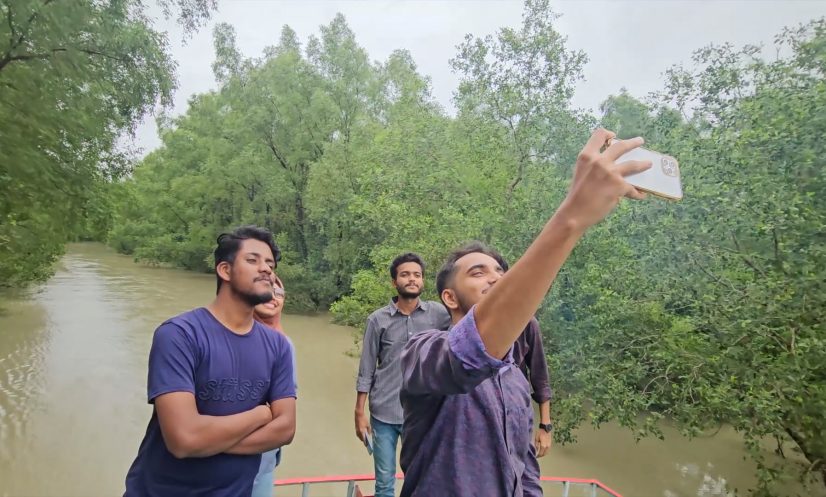
Beathy Islam: At the southern edge of Bangladesh, where the Meghna and Tetulia river systems meet the Bay of Bengal, lies Char Kukri-Mukri, a remote coastal island whose mangrove forests, winding canals, mudflats, beaches and abundant wildlife have made it one of the country’s most promising emerging eco-tourism destinations.
The island offers visitors something increasingly rare: an opportunity to experience a relatively undisturbed coastal landscape where spotted deer move through mangrove vegetation, migratory birds arrive in winter and the sea and river seem to merge into a single horizon.
But the very remoteness that has preserved much of Char Kukri-Mukri’s natural character is also its biggest obstacle to tourism development.
Poor transport links, limited accommodation, inadequate sanitation, weak waste management, unreliable mobile connectivity and insufficient tourism infrastructure continue to discourage visitors. The challenge for policymakers is therefore not simply how to bring more tourists to the island, but how to develop tourism without destroying the ecosystem that makes the destination attractive in the first place.
Char Kukri-Mukri is part of Char Fasson upazila in Bhola. The island is a dynamic coastal landform, constantly shaped by erosion, sediment deposition and tidal movements.
A government study on the hydro-morphological characteristics of the Meghna estuary found that the island’s land area increased from about 39.48 square kilometres in 2000 to 51.72 square kilometres in 2020 because of net accretion, although erosion has continued along some sections. The study cautioned that the island remains part of a highly dynamic coastal environment.
That constantly changing landscape is part of its attraction. Narrow canals cut through the mangrove forest, while beaches, mudflats and tidal waterways provide habitats for fish, birds and other wildlife.
The wider Kukri-Mukri area is also home to a sizeable human population whose livelihoods depend largely on agriculture, fishing and natural resources. A recent study estimated the population of the Kukri-Mukri union at more than 12,000, highlighting the need to ensure that tourism development benefits local communities rather than displacing them or restricting their traditional livelihoods.
Afforestation in Char Kukri-Mukri began in the 1970s, with the Forest Department planting mangrove and other coastal species. Today, the wider island is recognised for its extensive coastal forest, while the Char Kukri-Mukri Wildlife Sanctuary provides formal protection for an important part of the ecosystem.
The sanctuary was declared on December 19, 1981. Bangladesh Forest Department records and the country’s official tourism portal list the sanctuary’s area as 40 hectares. It is classified as an IUCN Category IV protected area and is managed by the Forest Department.
The sanctuary should not, however, be confused with the much larger forested and inhabited landscape of the Kukri-Mukri island. The distinction is important when discussing its size and conservation status.
The sanctuary is particularly important as a habitat for local and migratory birds. FAO documentation identifies Char Kukri-Mukri as a protected habitat for both resident and migratory birds and notes the presence of mangrove-associated vegetation including keora, hogla and hargoja.
A scientific survey of waterbirds conducted in 2005 recorded 46 wader species, including 39 migratory and seven resident species. Researchers also found evidence that the island served as a staging area for several migratory species.
More recently, Char Kukri-Mukri has continued to be identified as a winter destination for migratory birds. The Daily Star has reported sightings of waders, including the endangered spoon-billed sandpiper, between November and February.
These ecological values make the island far more than a scenic tourist destination. It is also an important coastal habitat and a potential site for environmental education, birdwatching and nature research.
For many visitors, however, the biggest attraction is the spotted deer. Herds can be seen moving through the forest, grazing along the edges of waterways and appearing near open areas. Forest Department officials and local sources have estimated the deer population in the wider Bhola coastal forests at thousands. A previous report citing the Forest Department estimated about 10,000 deer in 7,421 acres of reserved forest across the relevant coastal areas.
More recent local reports have put the number of deer in the Kukri-Mukri area at more than 15,000, although a systematic, recent population census would be needed before such figures can be treated as definitive.

The growing deer population also presents a management challenge. A large wildlife population in a confined coastal ecosystem can put pressure on natural vegetation and regeneration. At the same time, poaching remains a concern in parts of Bhola’s coastal forests.
That means tourism must be managed alongside wildlife conservation. Feeding animals, approaching deer too closely, making excessive noise or entering restricted forest areas could disturb the very wildlife that visitors come to see.
Among the most attractive locations is Narikel Bagan, where coconut trees, mangrove vegetation and the sea create a distinctive coastal landscape.
The beach has become increasingly popular with young travellers and camping groups because of its relative quietness and open surroundings. A watchtower in the Narikel Bagan area also offers visitors an opportunity to observe migratory birds as well as sunrise and sunset.
For many urban visitors, the absence of heavy traffic, high-rise buildings and industrial activity is itself an attraction.
But the absence of basic facilities can quickly turn that natural charm into discomfort.
Reaching Char Kukri-Mukri is still an adventure. Visitors travelling from Dhaka or other parts of the country generally have to reach Char Fasson and then travel to Kachhpia Ghat before crossing by trawler, speedboat or other small vessels.
The Bangladesh Tourism Board’s tourism portal similarly directs visitors from Bhola towards Char Kachhpiya before making the final water journey to Kukri-Mukri.
The problem is not simply the length of the journey. Visitors frequently complain about irregular services, high fares and a lack of predictable transport arrangements.
Farzana, a student of Patuakhali Science and Technology University, said she had to pay considerably higher fares than expected at several ghats during a monsoon trip to Kukri-Mukri.
She feared that unless the alleged influence of local transport syndicates was addressed, ordinary visitors would gradually lose interest in travelling to the island.
Humayra Mallika Aditi, who travelled from Rajshahi, said improved transportation and better accommodation were essential if the destination was to attract tourists from across the country.
Two visitors from Nepal, Emraj Dweetal and Sibakar Dev Chowdhury, said they were impressed by the island’s natural beauty but felt that tourism management needed substantial improvement if international visitors were to be encouraged to return.
Accommodation is another major constraint. The Forest Department’s facilities and a number of private establishments provide only limited capacity. During peak periods, demand can exceed available rooms, forcing many visitors to camp outdoors.
Camping itself can be an attractive form of nature tourism, but unmanaged camping creates environmental problems.

The shortage of toilets, safe drinking water and organised waste-disposal facilities means that increasing visitor numbers can quickly translate into plastic, food waste and human waste entering the coastal environment.
Businesses operating around Narikel Bagan say the absence of proper waste management and reliable drinking water makes it difficult to persuade families to stay for longer periods.
The problem is particularly acute because coastal ecosystems are highly sensitive to plastic and other forms of pollution.
The Forest Department’s development efforts have included the Char Kukri-Mukri Ecopark, intended to provide visitors with better facilities while promoting nature-based tourism. But infrastructure alone cannot create sustainable tourism.
Some structures and facilities have reportedly deteriorated or become overgrown because of inadequate maintenance, manpower and resources. Such neglect sends the wrong signal to visitors and raises questions about whether new infrastructure will be properly maintained after construction.
The lesson from Kukri-Mukri is clear: maintenance budgets, trained personnel and institutional responsibility must be built into tourism projects from the beginning.
Poor mobile connectivity presents another major challenge. Visitors say network coverage is weak or unreliable in parts of the island, particularly around Narikel Bagan and deeper forest areas. Mohammad Ejazur Rahman, who travelled from Sylhet, said he could barely maintain contact with his family during a two-day stay.
For tourists, poor connectivity is inconvenient. In a remote coastal area exposed to storms and tidal hazards, however, it can become a safety concern.
A reliable emergency communication system should therefore be considered an essential part of tourism infrastructure rather than a luxury.
Experts warn that conventional tourism development could easily destroy Char Kukri-Mukri’s greatest asset.
Dr Mozammel Haque, National Coordinator of UNDP, said large concrete structures should not be built in the environmentally sensitive area. Instead, he advocated community-based accommodation and environmentally friendly infrastructure.
He also stressed the importance of determining the number of visitors the ecosystem can safely accommodate and introducing an integrated mechanism to control plastic waste.
Professor Dr Mohammad Ruhul Amin of Patuakhali Science and Technology University said proper planning and transparent management could transform eco-tourism into a source of employment for local residents and contribute to the wider coastal economy.
His argument points to an important principle: local people should not merely be spectators to tourism development. They should be among its principal beneficiaries.
Homestays, trained local guides, boat services, handicrafts, food businesses, birdwatching tours and nature interpretation services could all create income opportunities while reducing the need for large-scale construction.
The most important question for Char Kukri-Mukri may therefore be how many tourists the island can accommodate without causing ecological damage.
There is a risk that success could become a threat. If visitor numbers rise rapidly without adequate toilets, waste collection, water supply, transport regulation and wildlife protection, the island could follow the familiar pattern of other popular destinations where uncontrolled tourism eventually damages the natural environment.

A carrying-capacity assessment should therefore precede major expansion. Visitor numbers could be regulated during sensitive periods, while designated camping zones, waste collection points, controlled boat routes and no-entry wildlife areas could be introduced.
The island’s status as a wildlife sanctuary also means tourism must remain subordinate to conservation objectives. The Wildlife (Conservation and Security) Act 2012 provides the broader legal framework governing wildlife protection in Bangladesh, while protected-area regulations restrict activities that can harm wildlife and habitats.
Bhola Deputy Commissioner and District Magistrate Dr Shamim Rahman acknowledged that some of the complaints raised by tourists were valid. He said the district administration was working with relevant government agencies to develop Char Kukri-Mukri as a planned eco-tourism destination and that identified problems could be addressed once necessary funding was available.
That planning needs to bring together agencies that have often worked separately: the Forest Department, district administration, Bangladesh Tourism Board, BIWTA, local government, telecommunications operators and community representatives.
Several practical measures could make an immediate difference. A regulated and safe water transport service with publicly displayed fares could reduce uncertainty for tourists. Permanent emergency communication facilities could improve safety. The beach could be declared a plastic-free zone, supported by adequate bins and a regular collection system. A dedicated local waste-management committee could be created, while residents could be trained to provide homestays, guiding and hospitality services.
Tourism facilities should be lightweight and environmentally appropriate rather than dominated by concrete structures.
Char Kukri-Mukri does not need to be transformed into another conventional tourist resort.
Its value lies precisely in what it still has: mangroves, deer, migratory birds, waterways, mudflats, coconut groves, open beaches and the experience of being far from the urban landscape.
The island has already demonstrated its appeal. Reports from previous years recorded around 30,000 visitors in a season, while more recent local accounts suggest that visitor numbers have continued to rise.
The next stage should not simply be about attracting more people. It should be about attracting visitors responsibly, keeping them longer, generating income for local communities and ensuring that tourism revenue helps conserve the ecosystem.
Char Kukri-Mukri’s future will ultimately depend on whether Bangladesh can resist the temptation to equate tourism development with heavy construction.
With reliable transport, regulated fares, adequate but low-impact accommodation, clean water, sanitation, waste management, emergency communications, trained local guides and meaningful community participation, the island could become a model for coastal eco-tourism.
But if visitor numbers grow faster than management capacity, the same tourism boom could threaten its forests, wildlife and beaches.
Char Kukri-Mukri already has what many destinations spend millions trying to create: an extraordinary natural landscape.
What it needs now is not more concrete, but better planning, better management and a commitment to protect nature while allowing local people to share in its economic benefits.