


 Play store

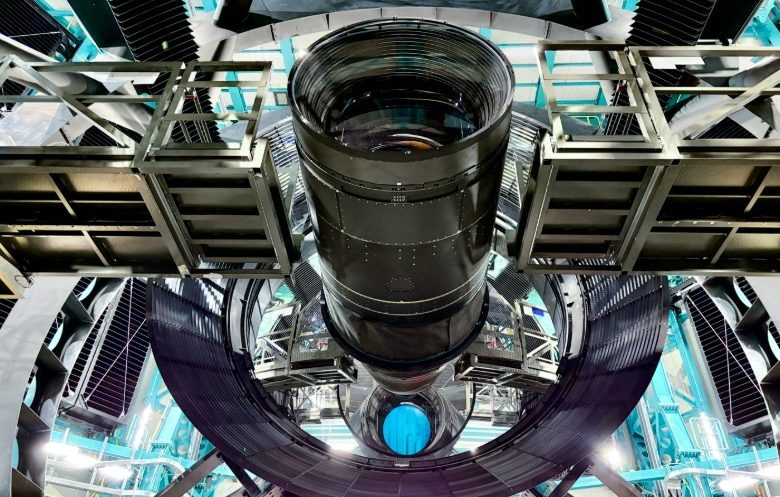
The Vera C. Rubin Observatory in Chile has officially launched a decade-long mission to create the most detailed time-lapse record of the universe ever assembled.
The observatory began its Legacy Survey of Space and Time (LSST) on June 30, marking the start of a 10-year project that scientists say could transform our understanding of the universe, including the mysteries of dark matter, dark energy and cosmic expansion.
Equipped with the world’s largest digital camera, boasting 3,200 megapixels, the observatory will capture a new image approximately every 40 seconds. It will scan the entire southern sky every few nights, revisiting each location around 800 times over the course of the survey to detect changes and transient cosmic events.
Scientists expect the observatory to take around 1,000 images each night, generating nearly 10 terabytes of data daily. The observations will produce an ultra-wide, ultra-high-definition time-lapse record of the cosmos, offering unprecedented insights into galaxies, stars, asteroids and other celestial objects.
“Today, we begin filming the greatest cosmic movie ever made,” said Brian Stone of the US National Science Foundation, describing the project’s historic significance.
During test operations last year, the observatory captured millions of galaxies and stars while identifying thousands of previously unknown asteroids, demonstrating its extraordinary capabilities.
US Department of Energy Under Secretary for Science Darío Gil said the mission is expected to redefine modern cosmology and astrophysics.
“By seeking to understand the enigmatic phenomena of dark energy and dark matter, we are not just observing the stars; we are striving to grasp the fundamental laws that govern our existence,” he said.