


 Play store

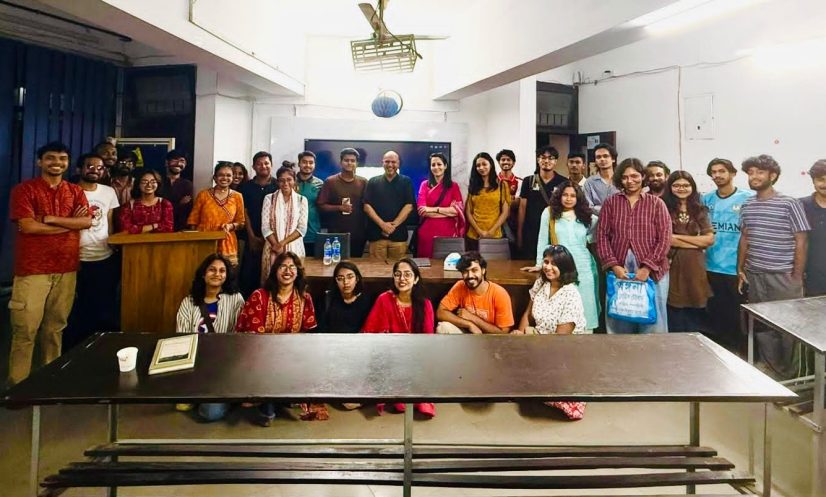
The Jahangirnagar University unit of the Bangladesh Chhatra Union organised a discussion on Tuesday on the historical context of employment generation in the informal sector and its contribution to the broader economy.
The discussion was held at 4:10pm in Room 129 of the Faculty of Social Sciences.
In his opening remarks, Imran Hasan Shuvo, education and research secretary of the Chhatra Union’s JU unit, criticised the government’s portrayal of battery-powered rickshaws and electricity use in the informal sector as wasteful.
“Of the nearly 80 million jobs in the country, around 60 million are in the informal sector. Millions of people depend on battery-powered rickshaws for their livelihoods. Although the sector consumes electricity, it also generates significant economic value. Therefore, instead of treating it as illegal or a burden, it should be brought under an appropriate policy framework,” he said.
He stressed that workers should not be displaced because of poor government management. Instead, he said, policies should protect their employment and livelihoods.
Speaking at the event, JU teacher and researcher Maha Mirza said the primary objective of mega projects and industrialisation should extend beyond profit to include employment generation.
Referring to railway development in India during the Nehru era, she said industries producing railway coaches, engines, steel and other related products had been developed around railway infrastructure, creating employment on a large scale.
“In Bangladesh, however, industries such as jute mills, sugar mills, paper mills and fertiliser factories were gradually privatised without effective expansion or modernisation. Rather than generating the expected growth in industry and employment, many of these institutions were eventually shut down, leading to a decline in employment,” she said.
She added that viewing subsidies for public mills solely as losses ignores the wider economic ecosystem built around them. A factory, she said, supports not only its workers but also local shops, hotels, transport services and other businesses. When a mill closes, the economy of the entire surrounding area suffers.
Mirza also questioned the effectiveness of policies designed to shift workers from agriculture to industry. While the garment sector has received various incentives and facilities, she said, state support for agriculture has declined.
Hasan Mehedi, member secretary of the Bangladesh Environment and Development Action Network, said ordinary people and informal-sector workers are often blamed for losses in the electricity system, even though major industrial establishments and management weaknesses are also significant factors.
“Many countries have effective mechanisms to reduce transmission and distribution losses and control electricity theft. But in Bangladesh, the burden is being placed on poor rickshaw pullers, small traders and informal-sector workers, while adequate measures to address arrears and wastage among large consumers are often lacking,” he said.
He called for battery-powered rickshaws and other informal-sector activities to be properly regulated rather than removed.
Mehedi also said greater use of renewable energy, particularly solar power, could reduce import costs and allow ordinary people to generate their own electricity. However, he said high taxes, policy complications and excessive regulatory restrictions were preventing the sector from reaching its potential.
He further stressed the need for increased investment in the rural economy to create future employment opportunities, address urban-management challenges, reduce pressure from rural-to-urban migration and support sustainable development.
Chhatra Union JU unit President Adri Ankur, Secretary Faizan Orko, Organising Secretary Maisha Moni, Publicity Secretary Anika Tabassum Farabi and students from various departments attended the discussion.