


 Play store

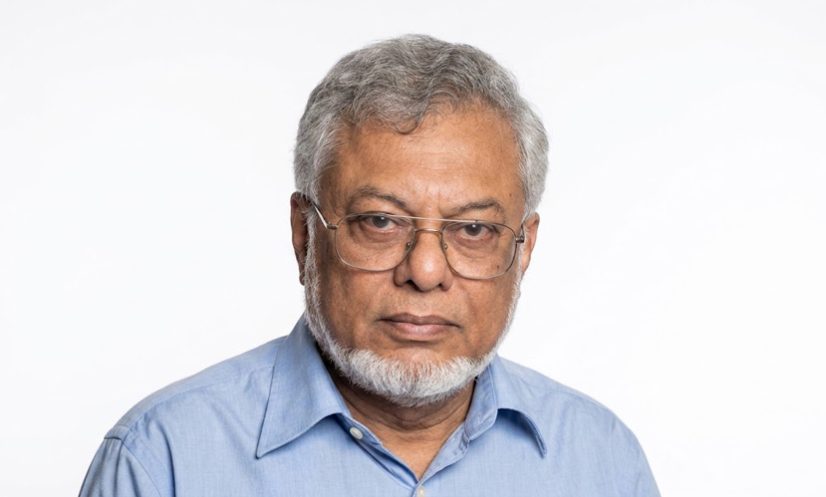
Engineer Quamrul Islam Siddique, widely recognised as a pioneer of Bangladesh’s rural infrastructure development, is being remembered today on the 18th anniversary of his death.
A patriotic engineer, urban and regional planner and administrator, Siddique was the founder and first Chief Engineer of the Local Government Engineering Department (LGED). He played a pioneering role in shaping Bangladesh’s rural infrastructure and is credited with laying the foundations for the country’s extensive rural road and connectivity network.
In recognition of his contribution to engineering, he was awarded an honorary fellowship by Bangla Academy in 2007.
Siddique, also a freedom fighter, died of cardiac arrest in the United States on 1 September 2008 at the age of 63.
Born in Kushtia on 20 January 1945, he was the second child of Nurul Islam Siddique and Begum Hamida Siddique. He completed his primary education in Kushtia and passed his secondary examination in 1960. He completed his higher secondary education from Kushtia College in 1962 and graduated in civil engineering from the then East Pakistan University of Engineering and Technology, now Bangladesh University of Engineering and Technology (BUET), in 1966.
He obtained a postgraduate degree in urban and regional planning from the University of Sheffield in 1977.
Siddique began his professional career in 1967 as an assistant engineer at the Kushtia District Council. When the Liberation War began in 1971, he joined the war on 30 April. As an engineer, he actively supported the freedom fighters by designing roads and bridges required for military operations.
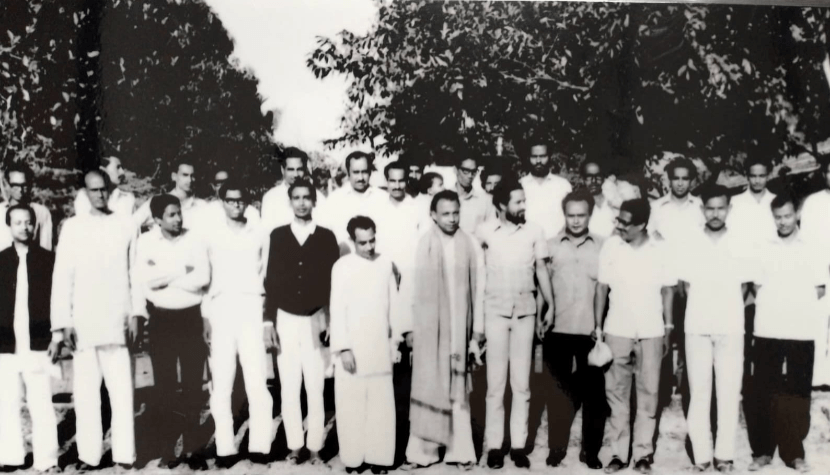
Engineer Quamrul Islam Siddique (fourth from left, front row) is seen in a photograph taken at the Ranaghat Youth Camp in Nadia district, India, at a training programme for freedom fighters during the Liberation War of Bangladesh in 1971. Archive Photo
From 1977 to 1985, he served first as deputy chief engineer of the Rural Development Programme and later as supervising engineer of the Urban Construction Programme under the Ministry of Local Government, Rural Development and Cooperatives.
After serving as engineering adviser at the Local Government Engineering Bureau until 1992, he undertook a major structural reform of the organisation and transformed it into the Local Government Engineering Department. He subsequently became its Chief Engineer and remained in the post until 1999.
Siddique later held several senior government positions. He served as chairman of the Bangladesh Power Development Board from 1999 to 2000, secretary of the Jamuna Bridge Division and the Ministry of Communications in 2000, and secretary of the Ministry of Housing and Public Works from 2000 to 2001.
In 2001, he became chairman of the Privatisation Commission under the Prime Minister’s Office. From 2002 to 2004, he served as Executive Director of the Dhaka Transport Coordination Authority.
He also served as Chairperson of the Global Water Partnership–South Asia from 2003 to 2004.
Siddique was not merely an accomplished engineer but also a capable administrator. His transformation of the Local Government Engineering Bureau into LGED demonstrated his administrative ability and vision, while his work helped establish a systematic approach to rural infrastructure development across Bangladesh.
He played a key role in formulating and implementing policies and projects for rural physical infrastructure, which contributed significantly to the transformation of the rural economy. Improved roads and connectivity helped bring greater dynamism to rural communities and made it easier for farmers to transport their produce to markets.
His initiatives also included the introduction of management information systems (MIS), which helped improve the movement and marketing of agricultural products. His vision for infrastructure and development took LGED from a fledgling organisation to one of the country’s key institutions for rural development.
Siddique was also a pioneer in the use of technology in development planning. In the 1990s, he introduced Geographic Information System (GIS) technology to create maps of the country, enabling planners to identify centrally where and what types of development work could be undertaken.
The present LGED headquarters building is also regarded as one of the projects associated with his vision and leadership.
Throughout his career, Siddique earned a reputation as a dedicated and principled public servant who refused to compromise in the face of injustice. He left his mark on LGED, the Privatisation Commission, urban transport and the power sector, among other areas.
For his contribution to road transport development in Bangladesh, the International Road Federation named him its Person of the Year in 1999, an honour supported by the World Bank.
Among his many honours were the Bhashani Gold Medal (1995), Kabi Jasimuddin Gold Medal (1995), IEB Gold Medal (1998), CR Das Gold Medal (1999), Abbasuddin Gold Medal (1999), Sher-e-Bangla Gold Medal (2000), Bangabandhu Engineering Gold Medal (2000), JICA Merit Award (2000), and a fellowship from the US-based Institute of Civil Engineers.
He was also made a Fellow of Bangla Academy in 2007.
In his personal life, Quamrul Islam Siddique was married to Sabera Siddique. They are blessed with one son and three daughters.