Play store

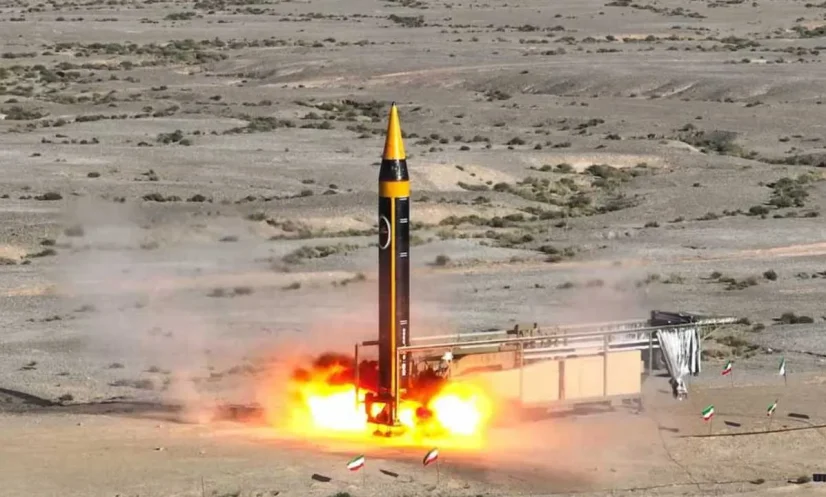
Iran has resumed assembling ballistic missiles using stockpiled components and is continuing production at underground facilities, according to US and Middle Eastern officials familiar with the matter, The Wall Street Journal reported.
The development is raising questions over claims by the United States and Israel that they had achieved a major wartime success by severely damaging Iran’s missile programme.
Although Iran’s missile facilities and industrial sites were heavily targeted at the beginning of the war, the country has now resumed assembling both liquid-fuel and solid-fuel ballistic missiles, according to officials familiar with the matter.
Liquid-fuel missiles have to be fuelled shortly before launch, while solid-fuel missiles can be stored in launch-ready condition.
US and regional intelligence indicates that activity has resumed at several underground Iranian facilities, including the Khojir missile complex in southeastern Iran. Tehran is also seeking to build new underground missile assembly facilities to make them harder to target in future attacks.
US and regional officials said Iran is currently relying mainly on components stockpiled before the war to assemble new missiles. Production remains limited compared with pre-war levels, however. US and Israeli strikes damaged missile components and several industrial facilities required for missile production, while a naval blockade has made it more difficult for Iran to import materials needed to manufacture solid fuel and other components.
The resumption of production highlights the difficulty of completely destroying Iran’s missile programme. One of the key objectives of the war launched by the United States and Israel on February 28 was to dismantle Iran’s missile capabilities.
As missile production resumes, Tehran may also be improving its ability to sustain a prolonged war of attrition. Iran is using missiles from its existing stockpile, while the United States and Gulf countries are also drawing down their supplies of missile-defence interceptors.
Tal Inbar, a senior analyst at the US-based Missile Defense Advocacy Alliance, said damaged infrastructure could be rebuilt if facilities were not completely destroyed and that Iran could acquire components from other countries.
A White House official declined to directly answer whether Tehran had resumed ballistic missile production. The official said, however, that Iran’s nuclear facilities had been completely destroyed and that its military had been severely weakened.
“Iran is weaker than at any time before, and President Trump will never allow Iran to acquire a nuclear weapon,” the official said.
Pentagon spokesman Sean Parnell said the United States had destroyed up to 90% of Iran’s “drone, ballistic missile and naval military-industrial base” and had significantly reduced the country’s ability to launch missiles and drones.
At the beginning of the war, US and Israeli forces carried out thousands of strikes against missile production centres, storage facilities, missiles and launch systems. But as the conflict eased somewhat during the summer, Iran began rebuilding parts of its military capabilities, believing that the current ceasefire may not last.
A US official said Iran may have resumed limited missile production after reaching an initial agreement with President Trump in mid-June. The proposed understanding involved reopening the Strait of Hormuz and beginning negotiations aimed at ending the war.
The official said Iran was likely capable of assembling at least several hundred missiles using components already in storage.
Jim Lamson, a visiting research fellow at King’s College London and a former CIA analyst specialising in Iran’s military, said Iran had stockpiled various missile components before the war, including complete warheads, missile bodies and guidance and control systems.
He pointed to old images and videos released by Iran showing large quantities of such components stored in rows along the walls of underground facilities.
The number of new missiles Iran can produce will depend on the size of its stockpiles and how many underground facilities remain operational. Lamson said the figure could range from several hundred to potentially several thousand missiles.
Iran used a large portion of its ready-to-launch missile stockpile during the war, forcing it to reduce the intensity of subsequent attacks. However, it still retains significant capabilities. Inbar estimates that Iran continues to have several thousand ballistic missiles in its arsenal.
Iran has continued launching missiles at US military bases across the Middle East, with the attacks demonstrating the diversity of its remaining arsenal. Among the missiles used is the Khaybar Shekan, which is considered mobile, relatively accurate and comparatively inexpensive to produce.
On Wednesday, Iran launched a major missile attack on a Jordanian airbase where US troops are stationed. Videos released after the attack appeared to show that some of the missiles were equipped with cluster warheads, which Iran had frequently used early in the war to challenge Israeli air-defence systems.
In April, US Defence Secretary Pete Hegseth said Iran’s missile programme had been “effectively destroyed” and that Tehran lacked the ability to produce new missiles.
“You’re digging up the remaining launchers and missiles, but you have no ability to replace them,” Hegseth said at the time, arguing that Iran no longer had the industrial capacity to replenish its offensive or defensive capabilities.
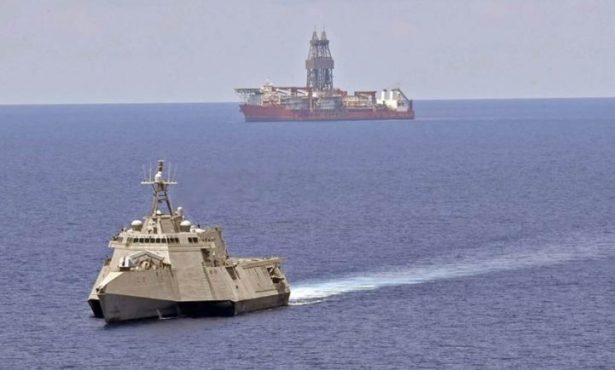
Arab and Israeli officials are now preparing for the possibility of a prolonged conflict and further Iranian escalation as US economic pressure increases. In recent days, Iran has launched repeated attacks targeting US warships. Although some attacks created potentially dangerous situations, none has struck a US warship.
Satellite imagery shows Iran rapidly rebuilding infrastructure, ranging from bridges and roads to missile production facilities, The Wall Street Journal reported. The pace of reconstruction has raised concerns among Israeli officials.
Iran has also reopened tunnel entrances at missile bases that had collapsed during US and Israeli airstrikes. According to Israeli military assessments, weapons stored inside the underground facilities are likely to remain in good condition.
However, Iran faces significant obstacles to returning to full-scale missile production. Arab officials said chemical facilities needed to produce liquid fuel had been damaged, while mixers used to manufacture solid fuel had also been hit.
Iran developed its missile programme during the 1980s war with Iraq because it lacked a modern air force. Since then, the country has increasingly relied on missiles as a means of deterring its adversaries.
Iran also demonstrated its ability to rebuild its missile programme after its 12-day war with Israel in June 2025. Although Israel targeted Iran’s missile capabilities during that conflict, Tehran was able to replenish its missile stockpile faster than expected, prompting Israel later that year to warn that further attacks might be necessary.
Nicole Grajewski, an Iran strategy specialist at Sciences Po in Paris, said destroying facilities and missiles was possible but rebuilding the missile programme was likely to be faster and more difficult to prevent because the infrastructure was widely dispersed.
She said Iran had deliberately developed such an extensive missile infrastructure because it had anticipated attacks of this kind.