Play store

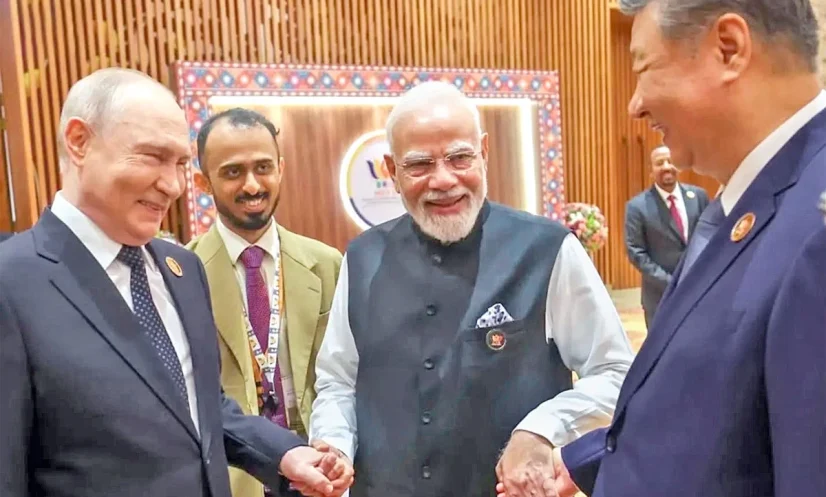
BRICS leaders have agreed on a joint declaration condemning “all forms of aggression” amid the ongoing conflict in West Asia, in what is being seen as a diplomatic success for host India.
The agreement was reached after prolonged negotiations at the 18th BRICS Summit in New Delhi, with leaders avoiding any reference to a specific country in the declaration and instead calling for dialogue and diplomacy to resolve conflicts.
The summit, which began on Friday and runs through September 13, is being held at Bharat Mandapam under India’s BRICS presidency. West Asia’s conflicts, global governance, trade, the economy and the role of the Global South are among the key issues on the agenda.
The consensus on the joint declaration was particularly significant as BRICS members had struggled to agree on a common position over the West Asia conflict. A meeting of the bloc’s foreign ministers in New Delhi in May failed to produce a joint statement because of differences among members, including over Iran.
After lengthy discussions that continued until early Saturday, the leaders agreed to adopt the “Delhi Declaration”, according to NDTV.
The decision to condemn “all forms of aggression” without naming any particular country and to emphasise dialogue and diplomacy was viewed as a compromise acceptable to the diverse BRICS membership.
Focus on Global South
Prime Minister Narendra Modi, addressing the summit, called for a stronger role for Global South countries in global decision-making.
He said India was ready to provide policymakers from the Global South with the skills and training needed to participate more effectively in global discussions.
Under its BRICS presidency, India has prioritised the interests of the Global South, reform of multilateral institutions and greater opportunities for developing countries.
Modi also called for BRICS to become a stronger platform for trade, investment and technological cooperation rather than functioning solely as a political grouping.
Speaking at the BRICS Business Forum, he urged member states to reduce trade barriers, increase transactions in local currencies and develop new business partnerships.
Modi-Putin talks focus on trade, energy
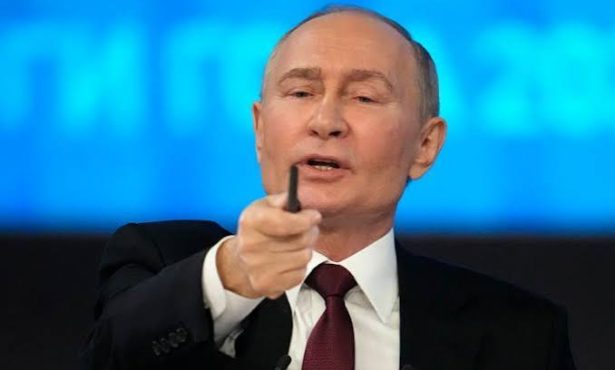
Ahead of the summit, Modi held bilateral talks with Russian President Vladimir Putin on Friday, discussing trade, energy, defence, technology and economic cooperation.
The two sides also discussed a target of increasing bilateral trade to $100 billion by 2030, according to NDTV, citing the Russian embassy.
Putin arrived in New Delhi on Friday morning and later travelled with Modi in the same vehicle to Bharat Mandapam after their bilateral meeting.
A photograph showing Modi holding hands with Putin and Chinese President Xi Jinping, alongside Iranian President Masoud Pezeshkian and Indonesian President Prabowo Subianto, also drew attention on social media.
Xi, Pezeshkian meetings
Xi arrived in New Delhi on Saturday to attend the BRICS summit, marking his first visit to India in seven years. He was scheduled to hold bilateral talks with Modi on Saturday evening, with regional stability and recent developments in India-China ties expected to feature in the discussions.
Modi also met Iranian President Masoud Pezeshkian on Friday. Their talks focused on bilateral relations and the situation in West Asia.
India has been closely watching the conflict because of its potential impact on energy supplies and the security of international shipping routes. New Delhi has stressed the need for safe passage of energy shipments and called for dialogue and diplomacy to resolve the crisis.