Play store

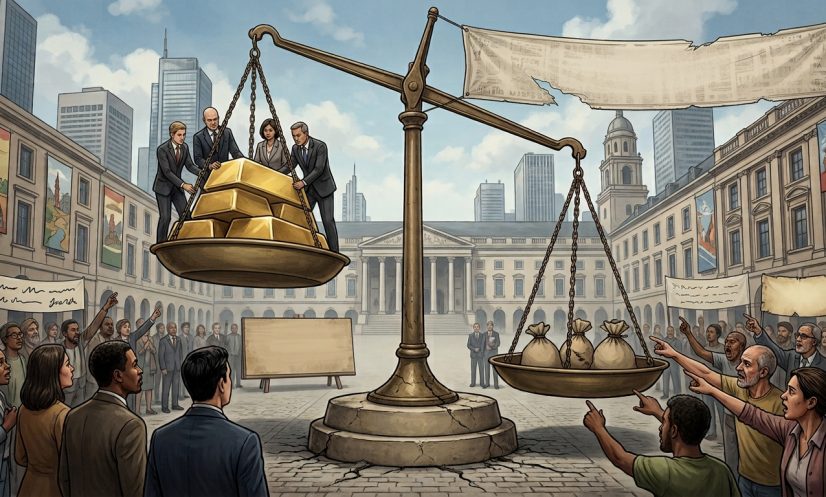
An international survey by Earth4All has found a deepening crisis of trust in governments, widespread anger over inequality and strong public support for major economic reforms, suggesting that many people around the world believe existing political and economic systems are failing to serve ordinary citizens.
The report, Rebuild Trust: Rigged Economies, Fractured Societies and the Case for Change, surveyed people in 17 countries representing 58 per cent of global GDP, 38 per cent of the world’s population and 37 per cent of global carbon emissions. Its findings depict societies that feel increasingly divided, economically insecure and disconnected from political institutions.
Nearly two-thirds of respondents said they believe their country’s economic system is “rigged” to benefit the rich and powerful. Seven in 10 said there is too much economic inequality in their country, while 69 per cent called for major changes to economic systems to improve life for most people.
“The survey results show a mismatch between public support for economic change and what mainstream political parties are willing to offer,” the report’s authors, Owen Gaffney and Kate Pickett, write.
They argue that the findings present governments with an opportunity to build new social contracts based on fairness, economic security and long-term wellbeing.
The survey comes as many countries grapple with rising living costs, political polarisation, climate pressures and growing public frustration with institutions.
One of the report’s most striking conclusions is that many people believe their societies are becoming increasingly fractured.
Across the 17 countries surveyed, 67 per cent said their country is more divided today than it was a decade ago. More than seven in 10 reported serious tensions between supporters of different political parties. Nearly two-thirds perceived conflict between rich and poor, while similar proportions saw tensions between immigrant and native-born populations.
The authors argue that these divisions are linked not only to economic conditions but also to a broader erosion of trust.
“Societies feel themselves coming apart. There is a trust deficit at the heart of societies,” the report says.
Only 31 per cent of respondents said they trust their governments to make decisions that will benefit the majority of people 20 or 30 years into the future—one of the lowest-rated measures in the survey.
The report also highlights a less visible but potentially significant issue: the feeling that people are not treated with respect and dignity.
Across all the countries surveyed, only 41 per cent agreed that people like them are treated with respect and dignity. The authors note that feelings of disrespect and humiliation can fuel political alienation and social resentment.
“A society in which one in four people feel they do not receive respect contains significant combustible material,” the report states. “Many people feel unseen, believe the system is rigged and do not experience their society as a collective enterprise.”
The Asian countries included in the survey displayed significant differences in public attitudes towards inequality, government and political systems.
Indonesia emerged as one of the strongest supporters of economic reform. Nearly three-quarters of Indonesians said there is too much inequality in their country, while 74 per cent believed the system benefits the wealthy. A remarkable 78 per cent supported major economic changes—the highest level among all countries surveyed.
Indonesians also showed strong support for climate action. Sixty-eight per cent said governments should take strong action against climate change even if it results in higher prices.
Yet Indonesia appeared less polarised than many Western countries. Only 53 per cent believed the country is more divided than it was 10 years ago, significantly below the global average.
Trust in government was among the lowest recorded in the survey. Only 19 per cent of Japanese respondents said they trusted their government to make long-term decisions benefiting the majority of citizens. Just one-fifth felt they were treated with respect and dignity.
The survey also found unexpectedly strong support for authoritarian-style leadership in Japan. Nearly half of respondents agreed that the country would be better off with a strong leader unconstrained by parliament and elections. Meanwhile, only half said democracy was the best system of government.
India also featured prominently in the survey. According to comparative data in the report, 66 per cent of Indian respondents agreed that there is too much economic inequality in the country, close to the international average.
India also ranked among the countries where a majority of respondents still felt they were treated with respect and dignity, recording one of the survey’s higher scores on that measure.
Despite widespread frustration with governments and economic systems, the survey found continued support for democracy.
Overall, 68 per cent of respondents said democracy remains the best way to govern their country. However, support was far from universal. Forty per cent also agreed that their country would be better off with a strong leader who does not have to worry about parliament or elections.
The authors describe this as a warning sign rather than an outright rejection of democracy.
In countries such as Brazil and Japan, support for strong leaders reached particularly high levels. In Brazil, 51 per cent backed the idea of a leader unconstrained by elections, while 63 per cent still supported democracy. In Japan, support for strong leadership stood at 46 per cent.
The United States presented a contrasting picture. Only 26 per cent favoured a strong leader outside democratic constraints, while 68 per cent supported democracy as the preferred form of government.
The report warns that declining trust in institutions can create openings for anti-democratic movements if governments fail to address public concerns about fairness and economic opportunity.
Despite growing economic anxieties, the survey found continued public support for climate action.
More than half of respondents said governments should take strong action to reduce greenhouse gas emissions even if doing so leads to higher prices. Support was strongest in middle-income countries and weaker among lower-income households and politically conservative respondents.
The authors argue that climate policies are more likely to succeed when combined with measures addressing economic inequality and social insecurity.
Public resistance to climate action can grow when people believe they are being asked to bear unfair costs while wealthier groups continue to benefit from the existing system, the report suggests.
Kate Pickett, one of the report’s authors and a prominent researcher on inequality and social wellbeing, has long argued that unequal societies tend to experience weaker social cohesion and lower levels of trust. The new survey findings appear to reinforce that argument.
Beyond questions of trust and politics, the survey highlights persistent concerns about basic economic security.
Across the countries surveyed, 41 per cent of respondents said they were concerned about having enough money to cover their basic needs over the coming year. Economic anxiety was particularly high in countries facing inflation and financial instability.
Argentina recorded the highest level of economic insecurity. More than two-thirds of respondents worried about covering basic needs, while 78 per cent supported major economic reforms.
Even in wealthier countries, concerns about inequality remained widespread.
In the United States, 62 per cent said there was too much inequality. In Sweden, often regarded as one of the world’s more equal societies, 71 per cent shared that view. Australia recorded 64 per cent.
The authors argue that economic growth alone is no longer enough to reassure citizens.
Instead, people increasingly judge economic systems by fairness, opportunity and whether prosperity is broadly shared.
The Earth4All initiative was launched by organisations including the Club of Rome, the Potsdam Institute for Climate Impact Research, the Stockholm Resilience Centre and the Norwegian Business School. It seeks to identify pathways towards sustainable prosperity and social wellbeing.
The report’s authors say the findings should serve as a wake-up call for political leaders.
Rather than viewing public frustration as a temporary reaction to economic shocks, they argue that governments should recognise it as evidence of deeper structural problems.
The survey reveals what the authors describe as a “near-universal diagnosis”: across different political systems, cultures and income levels, large majorities share the belief that current economic arrangements favour elites while leaving ordinary citizens behind. Source: IPS