


 Play store

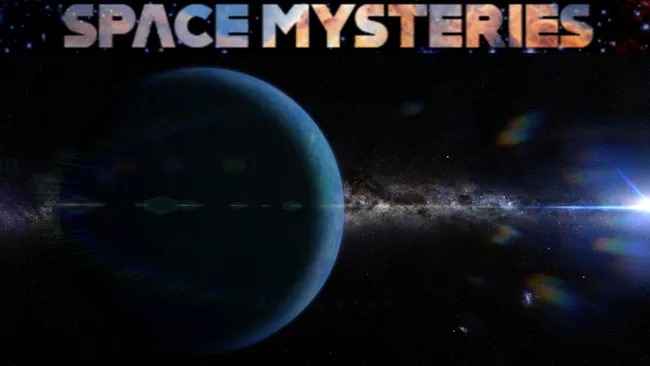
For more than a century, astronomers have searched for signs of a possible ninth planet hidden in the distant reaches of the solar system. Although the planet has never been observed directly, some scientists believe its gravitational influence may be visible through the unusual movements of smaller objects far beyond Neptune.
The idea of an unseen planet gained support after Neptune was discovered in 1846. Astronomers had predicted its existence from irregularities in the orbit of Uranus, showing that an unseen world’s gravity could reveal its presence.
The search for another distant planet continued into the 20th century. American astronomer Percival Lowell proposed the existence of a hypothetical “Planet X”, arguing that unexplained movements of Uranus and Neptune could be caused by a distant planet.
The search appeared to end in 1930, when astronomer Clyde W. Tombaugh discovered Pluto. Pluto was initially recognised as the solar system’s ninth planet.
However, Pluto’s status changed in August 2006, when the International Astronomical Union classified it as a dwarf planet. The decision remains controversial, but it also renewed interest in whether another planet could exist beyond Neptune.
Modern searches for “Planet Nine” differ from the earlier hunt for Planet X. Data from NASA’s Voyager 2 spacecraft showed that the movements of Uranus and Neptune could be explained without requiring another large planet.
Instead, scientists are now examining the orbits of small, icy bodies in the outer solar system.
In 2016, Caltech astronomers Konstantin Batygin and Michael Brown proposed that a large, undiscovered planet could explain the unusual orbital patterns of several extreme trans-Neptunian objects. These objects travel on highly elongated and tilted paths far beyond Neptune.
According to the Planet Nine hypothesis, the combined gravitational influence of a distant planet could be responsible for grouping or aligning the orbits of some of these objects.
The proposed planet would be extremely difficult to observe because it would be very far from the Sun and would reflect only a small amount of sunlight. Astronomers therefore continue to search for it using powerful ground- and space-based telescopes.
No direct observation has yet confirmed Planet Nine, and some researchers argue that the unusual orbits could have other explanations.
Still, the possibility of a hidden planet remains one of the most intriguing questions in planetary astronomy. As new sky surveys provide larger and more detailed maps of the outer solar system, astronomers hope they may finally determine whether Planet Nine exists — or whether the apparent evidence for it is the result of other processes.
For now, the solar system officially has eight planets, while the proposed ninth remains a fascinating but unconfirmed member of the cosmic neighbourhood.