


 Play store

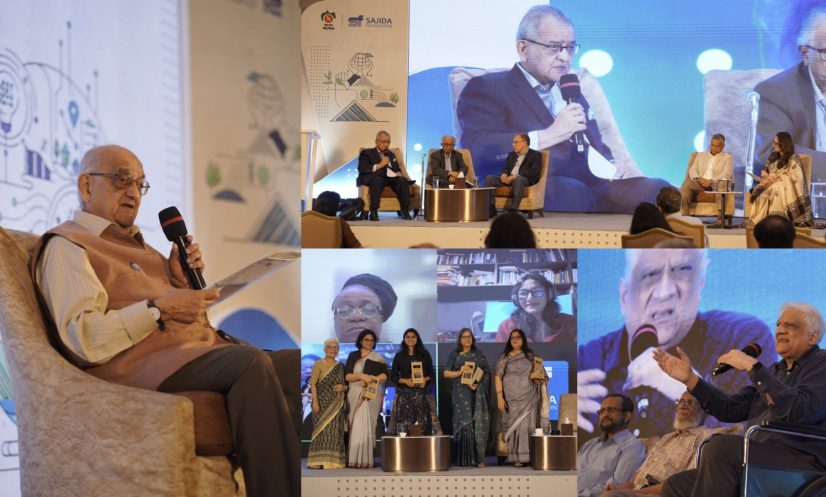
Bangladesh’s economic progress must ultimately be measured by how it improves people’s lives, speakers said at the Syed Humayun Kabir Memorial Research Symposium 2026, calling for evidence-based policymaking, stronger public institutions and greater attention to inequality.
Delivering the keynote address virtually, internationally acclaimed economist Professor Kaushik Basu said Bangladesh could take a leading role among emerging economies by strengthening fairness, justice, the rule of law and democratic institutions.
“GDP is not the only indicator; the real question is how progress translates into wellbeing,” said Basu, Professor of Economics at Cornell University and former Chief Economist of the World Bank.
He also warned that the rapid rise of artificial intelligence could create new forms of inequality, making it increasingly important to ensure that the benefits of economic and technological progress are broadly shared.
SAJIDA Foundation organised the daylong symposium in partnership with Banglar Pathshala Foundation at Dhaka Sheraton. Themed “Justice, Capabilities and Wellbeing: Rethinking Human Development for a More Just Bangladesh”, the symposium brought together researchers, policymakers, academics and development practitioners to examine how research can better inform programmes and national policy.
SAJIDA Foundation Chairman Farooq Sobhan stressed the importance of preserving the organisation’s founding values.
“Institutions earn public trust through leadership, accountability, and a system built on merit, driven by results,” he said.
Former finance minister M Syeduzzaman said improving public education and healthcare would require stronger government revenue mobilisation.
“We need a better tax-to-GDP ratio if government services are to improve,” he said.
In her closing remarks, SAJIDA Foundation CEO Zahida Fizza Kabir said the discussions had raised questions that would shape the organisation’s future work.
“How do we translate economic growth into wellbeing? Is inequality rising even as we grow?” she asked.
She said SAJIDA would draw on the symposium’s insights to strengthen its systems and carry forward the values of its founder.
Inspired by Professor Amartya Sen’s Capability Approach, the symposium explored a range of issues related to human development, including health and livelihoods, urban resilience, climate adaptation, institutional quality and governance.
Ahmed Javed Chowdhury, founder of Banglar Pathshala Foundation, delivered the welcome remarks.
Dr Sajeda Amin, sociologist, demographer and Senior Research Advisor at SAJIDA Foundation, underscored the importance of linking research with action.
“Doing good research is important, but communicating the research is equally, if not more, important,” she said.
The panel discussion titled “Leading with Purpose: Governance, Transparency & Accountability” was moderated by Barrister Rashna Imam, Senior Advocate of the Supreme Court of Bangladesh.
Panellists included Farooq Sobhan; M Syeduzzaman; Iftekharuzzaman, Executive Director of Transparency International Bangladesh; and Shehzad Munim, Independent Director of Linde Bangladesh Limited.
Journalist Farabi Hafiz moderated the session “Building for Tomorrow: Institutions, Innovation & Quality”, which featured Md Fazlul Kader, Managing Director of Palli Karma-Sahayak Foundation; Syed S Kaiser Kabir, MD and CEO of Renata Limited; Abdul Muyeed Chowdhury, Member of the Board of Trustees of BRAC University; human rights activist Dr Hameeda Hossain; and Dr Firdausi Qadri, Emeritus Scientist at icddr,b and Founding Chairman and Lead of iDeshi.
The “Health, Livelihood & Capability Expansion” session featured research presentations by SAJIDA Foundation’s Jyotirmoy Saha and Shamira Mostafa. Dr Kazi Iqbal, Research Director at the Bangladesh Institute of Development Studies, chaired the discussion, joined by Professor Dr A I Mahbub Uddin Ahmed of the University of Dhaka and Dr Imran Matin, Executive Director of BIGD.
At the session “Agency, Wellbeing & Urban Resilience”, Namira Shameem, Senior Research Associate at the Power and Participation Research Centre, presented research findings. Professor Sabina Faiz Rashid of the BRAC James P Grant School of Public Health chaired the session, with Barrister Sajeda Farisa Kabir of SAJIDA Foundation and Kabita Bose of Plan International Bangladesh serving as panellists.
The “Climate Adaptation, Knowledge & Structural Constraints” session opened with a presentation by SAJIDA Foundation Lead Researcher Md Nurul Islam. Dr Ainun Nishat, Professor Emeritus at BRAC University, chaired the discussion, with Md Shamsuddoha, Chief Executive of the Center for Participatory Research and Development, and Professor Shaheen Islam of the University of Dhaka as panellists.
Barrister Sara Hossain, Senior Advocate of the Supreme Court of Bangladesh and Honorary Executive Director of the Bangladesh Legal Aid and Services Trust, moderated the closing session, “From Evidence to Programme and Policy”.
The session featured Dr Shamaruh Mirza of the Australian Government Department of Health and Aged Care; Dr Foara Tasmim Palmy of the Directorate General of Health Services; Dr Leslye Obiora of the University of Arizona; Farah Kabir of ActionAid Bangladesh; Dr Malabika Sarker of Brown University; and physician and entrepreneur Dr Tasnim Jara.
The symposium highlighted a common thread across the discussions: economic growth, institutional development and technological progress need to be accompanied by improvements in people’s capabilities, wellbeing and access to opportunities.