


 Play store

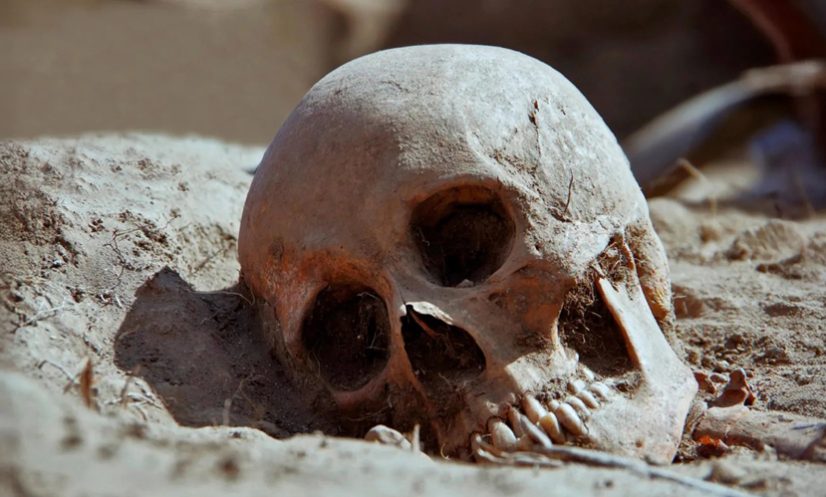
Ancient DNA from human remains is giving scientists a clearer picture of how plague spread and re-emerged across Europe for centuries after the Black Death.
Researchers led by the University of Tartu analysed DNA from Yersinia pestis, the bacterium that causes plague, and reconstructed 26 genomes from human remains found at 11 archaeological sites in Estonia, Russia, England, the Netherlands and Switzerland.
The samples date from the 14th to the 18th centuries, covering much of the period known as the Second Plague Pandemic.
The findings suggest that plague did not simply persist in a single location before repeatedly spreading across Europe. Instead, the disease appears to have been introduced into different areas multiple times, potentially creating new reservoirs where the bacterium could survive.
Estonia was repeatedly affected, with genetic evidence indicating that plague entered the region several times from the late 14th century onward. Researchers said the findings also highlight how Estonia’s connections with other parts of Europe may have contributed to the long-distance movement of the disease.
A particularly notable period came around 1450-1500, when plague lineages underwent a major expansion and divided into three significant branches. These lineages may have contributed to the establishment of new Y. pestis reservoirs among wild rodent populations.
Climate could also have played a role. The researchers identified the Great Renaissance Drought as a possible factor behind the expansion, noting that studies of modern plague systems have shown that climate changes can influence outbreaks among wild rodents, which serve as natural hosts for the bacterium.
“We found evidence for repeated introductions of plague into Estonia starting already in the late 14th century and identified several previously unknown genetic lineages, both in urban and rural settings,” said senior author Prof Kristiina Tambets.
The researchers also highlighted the difficulty of determining the precise timing of ancient disease outbreaks.
Unlike during the COVID-19 pandemic, when genome sequences could often be linked to specific dates, ancient disease samples are usually recovered from archaeological remains whose ages are estimated using radiocarbon dating. Such methods can produce date ranges spanning several decades or even more than a century.
The study’s genetic evidence therefore provides an important tool for reconstructing how plague evolved and moved across Europe during the centuries following the Black Death.