


 Play store

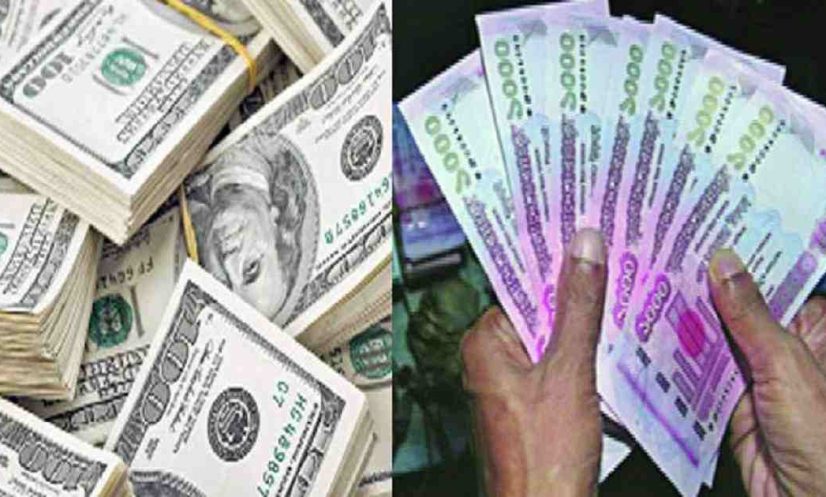
The Bangladeshi taka has appreciated against the US dollar after five and a half years of continuous depreciation, with stronger remittance inflows, improved dollar liquidity and rising foreign exchange reserves easing pressure on the local currency.
According to the latest Bangladesh Bank report, the taka appreciated by 0.06 percent against the US dollar on a point-to-point basis between June 2025 and June 2026.
The local currency strengthened further by 0.77 percent between August 30 and September 17 this year, as the dollar rate fell from Tk123.95 to Tk123.00.
Bangladesh Bank data show that the taka had depreciated continuously since 2021, with the exchange rate rising from Tk85.80 per dollar to a record Tk123.95. The increase of Tk38.20 represented a 45.05 percent depreciation of the local currency.
The reversal began in the second half of this year, with the dollar rate declining by 95 paisa between August 30 and September 17.
The central bank’s regional comparison showed that between June 2025 and June 2026, the Indian rupee depreciated by nearly 9.5 percent, the Sri Lankan rupee by more than 10 percent and the Indonesian rupiah by around 9 percent. In contrast, the Malaysian ringgit and Chinese yuan appreciated by nearly 4 percent each, while the Pakistani rupee gained around 2 percent.
NRBC Bank Chairman Md Ali Hossain Prodhania said the stronger taka, along with rising remittances and foreign exchange reserves, would contribute to greater stability in the country’s external sector.
He said stronger remittance inflows were increasing the supply of foreign currency through formal banking channels, while higher reserves were strengthening Bangladesh’s ability to meet import and other external payment obligations.
A more stable exchange rate would also improve confidence among foreign investors and businesses involved in international trade, he said.
Prodhania said the appreciation of the taka would reduce the local-currency cost of imports, particularly fuel, food, industrial raw materials and machinery, helping businesses manage import bills and easing cost pressures.
Lower import costs could also help contain inflationary pressure, particularly when global commodity prices remain volatile, he added.
He, however, stressed that the improvement should be supported by continued growth in remittances and exports, prudent import management and sustained accumulation of foreign exchange reserves.
Bangladesh Bank spokesperson and Executive Director Arif Hossain Khan said the improved external position reflected stronger remittance inflows, better foreign exchange liquidity and closer monitoring of foreign exchange transactions.
He said the central bank was monitoring remittances, import payments and foreign exchange transactions to ensure that increased dollar supply was channelled through formal banking channels and legitimate foreign exchange requirements were met smoothly.
The central bank was also monitoring transactions to prevent money laundering, trade-based financial irregularities and misuse of the foreign exchange market, he said.
Bangladesh received $7.702 billion in workers’ remittances between July 1 and September 19 of FY2026-27, up 13.8 percent year on year.
Foreign exchange reserves have also risen substantially. Bangladesh Bank data showed gross reserves at $36.44 billion on September 8, up 46.6 percent from $24.86 billion in September 2024. Reserves calculated under the IMF’s BPM6 methodology rose 58.8 percent to $31.53 billion during the same period.
The stronger taka could reduce the domestic cost of imported fuel, food, industrial inputs and machinery, while lowering the taka burden of servicing foreign-currency obligations.
The recent appreciation, coupled with stronger remittances, improved dollar liquidity and higher reserves, indicates an improved external-sector position and provides greater scope for stability in the foreign exchange market.