


 Play store

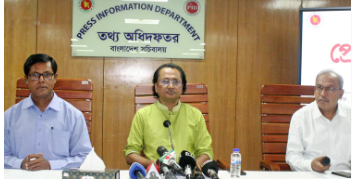
Information and Broadcasting Adviser Dr Zahed Ur Rahman today said the government has decided to adjust fuel subsidies to maintain a balance in the use of the country’s limited resources.
He said the decision was taken in view of rising fuel prices in the international market, the need to conserve foreign currency, the risk of fuel smuggling to neighbouring countries and the need for equitable budget allocation among sectors such as healthcare and social safety-net programmes, including the family card scheme.
Dr Zahed made the remarks at the weekly press briefing held at the conference room of the Press Information Department (PID) here this afternoon.
“Reducing subsidies in the energy sector is a highly complex issue. However, the state cannot dedicate all its resources to keeping just one sector entirely comfortable,” he said.
He said maintaining economic balance in a country with limited resources is a challenging task.
“So, alongside ensuring the equitable distribution of limited resources, the government must also consider rising fuel prices and the need to conserve foreign currency reserves,” the adviser said.
Regarding comparisons of fuel prices with neighbouring countries, he said: “If fuel prices are higher in neighbouring countries, it creates a significant risk of fuel being smuggled across the border.
“Price comparisons are drawn to highlight the need to prevent such smuggling and to contextualise the international situation.”
At the same time, he said, the government is also recognising the purchasing power of the people.
To address this, he said, the government is seeking to strike a balance by increasing the healthcare budget, including through the establishment of specialised hospitals at the divisional level, and ensuring equitable budget allocations for various social safety-net programmes.
Outlining the government’s policy on tackling inflation caused by fuel price hikes, he said: “When inflation rises, the government’s primary objective is to ensure that the daily essential needs of the common people are met. To this end, the government is expanding the scope of the Open Market Sale (OMS) and TCB’s food assistance programmes.”
In addition, Dr Zahed said there are plans to increase the number of family cards, currently issued to 41 lakh families, in the upcoming fiscal year, which will help people with fixed incomes.
Asked whether the decision was linked to conditions set by the International Monetary Fund (IMF), the adviser clarified: “This is not being done due to any IMF condition. The government is making these economic decisions based on its own priorities, taking into account public social welfare, foreign reserve savings and the country’s financial capacity.”
On investment and employment, Dr Zahed said: “Local investment will rise once the temporary fuel crisis is resolved. Family cards and government assistance will generate market demand. At the same time, this will play a significant role in creating employment opportunities for the youth and the general people.”
Responding to another question, the information adviser said that during the tenure of the previous government, a culture of using the police force to oppress ordinary citizens was established.
“We want to move away from that stance and see the police become a force truly dedicated to serving the people. Although there is currently some lack of morale among police personnel at the field level, normal policing operations will quickly resume if the general people stand by them,” he said.
Syed Abdal Ahmad, Principal Information Officer, and Dr Md Alam Mostafa, Joint Secretary of the Ministry of Information and Broadcasting, were present at the briefing.