


 Play store

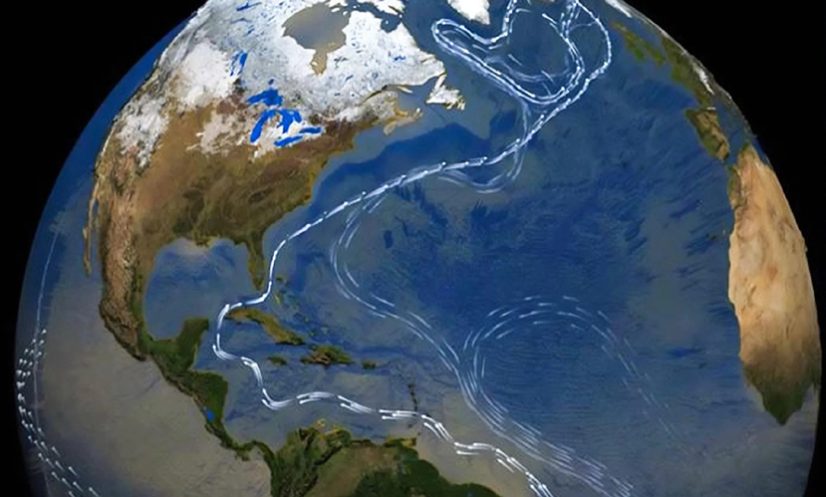
A major Atlantic Ocean circulation system that helps regulate Earth’s climate has weakened across a broad region for nearly two decades, according to a new study, raising concerns about potential changes in weather, rainfall, storms and sea levels.
Researchers at the University of Miami Rosenstiel School of Marine, Atmospheric and Earth Science found observational evidence that the Atlantic Meridional Overturning Circulation (AMOC) is losing strength.
The AMOC is a vast system of ocean currents that carries warm surface water northward and returns colder, denser water southward at depth. By redistributing heat through the Atlantic, it influences temperatures, rainfall, storms and sea levels across the region and beyond.
“A weaker AMOC can shift weather patterns, potentially leading to more extreme storms, changes in rainfall, or colder winters in some regions,” said Shane Elipot, a senior author of the study and physical oceanographer at the Rosenstiel School.
“It can also influence sea-level rise along coastlines, affecting communities and infrastructure,” he said.
The researchers examined long-term observations from four ocean monitoring arrays along the western edge of the North Atlantic, stretching from tropical waters to higher latitudes.
The instruments, anchored to the seafloor, continuously record pressure, temperature, density and ocean currents. Researchers used changes in deep-ocean pressure to estimate the movement of water below about 1,000 metres.
The data showed a consistent decline in a key component of the AMOC across several latitudes, from about 16.5°N to 42.5°N.
The researchers said the broad geographic pattern is more consistent with a large-scale change in Atlantic circulation than with a temporary regional fluctuation.
Changes in the AMOC could affect climate conditions across the North Atlantic, including European and North American temperatures, rainfall patterns, storm activity and coastal sea levels.
The findings also suggest that monitoring the western boundary of the Atlantic could provide an early indication of broader changes in the climate-regulating circulation system.
“This research helps scientists better predict how the climate may change in the coming decades—information that governments, businesses, and communities use to prepare for future environmental conditions,” Elipot said.
The study, titled “Meridionally consistent decline in the observed western boundary contribution to the Atlantic Meridional Overturning Circulation,” was published in Science Advances.