


 Play store


The conflict involving Yemen’s Houthi movement, formally known as Ansar Allah, cannot be adequately explained as simply a confrontation between the Houthis and Saudi Arabia or between the Houthis and Israel.
It is a layered conflict in which Yemen’s internal struggle for power overlaps with regional competition, the Israel-Palestine conflict, maritime security and the economic interests of major trading nations.
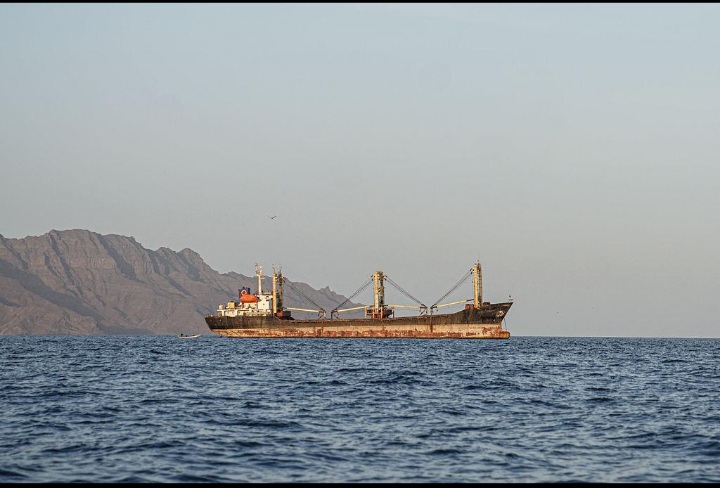
The strategic importance of the conflict extends well beyond Yemen because of the Bab el-Mandeb Strait, the narrow maritime passage linking the Red Sea with the Gulf of Aden and the wider Indian Ocean.
Disruption there can affect shipping routes, insurance costs, energy markets and supply chains far beyond the Middle East.
As of September 2026, Houthi activity around the Red Sea and attacks involving Saudi Arabia and commercial shipping have again placed the conflict at the centre of regional security concerns.
The UN Security Council has also maintained international monitoring of Houthi attacks on merchant and commercial vessels, with the reporting mechanism extended into 2027.
A conflict with several layers
The Houthis emerged from Yemen’s Zaydi Shia religious and political milieu and became the dominant force in much of northern Yemen after seizing Sanaa in 2014.
Their objectives include maintaining territorial and political control, preserving their military capability, securing recognition and bargaining power, and protecting their leadership from external threats.
The movement also uses its military activities and rhetoric against Israel and Western influence to project itself as part of a wider regional “resistance” front.
But this does not mean that every Houthi decision is simply directed by Iran. Iran provides important political and military support, while the Houthis retain their own leadership, ideology and Yemeni political interests.
Analysts have therefore generally treated the relationship as one of strategic partnership and support rather than assuming that the Houthis have no independent decision-making capacity.
Iran’s strategic calculation
Iran is one of the most consequential external actors in the conflict.
Its interests include maintaining pressure on regional rivals without necessarily entering direct war with them, strengthening relationships with armed partners, and expanding its strategic influence around important waterways.
Reports in 2026 about Iranian personnel and missile-related equipment being transferred to Yemen have further highlighted the military dimension of the relationship. Any such claims, however, require careful attribution and verification.
The broader strategic value for Tehran is that the Houthi position provides another pressure point in a region where Iran competes with Israel, the United States and Saudi Arabia.
Saudi Arabia: security on its southern border
For Saudi Arabia, Yemen is not a distant conflict. It is a neighbouring state directly connected to Saudi national security.
Riyadh’s principal concerns include preventing a hostile armed movement from consolidating power along its southern border, protecting its territory from missiles and drones, safeguarding energy infrastructure and maintaining security in the Red Sea.
Saudi Arabia also has a broader economic interest in regional stability as it pursues major economic-development and diversification programmes.
Renewed Houthi attacks on Saudi territory or energy infrastructure therefore carry consequences extending beyond the immediate military confrontation.
Yemen’s unresolved political struggle
At the heart of the crisis remains Yemen itself.The internationally recognised Yemeni government seeks to restore state authority, preserve Yemen’s territorial integrity and contain or end Houthi military dominance. But Yemen’s political landscape is fragmented, involving competing political, tribal, military and regional interests.
This fragmentation is one reason why describing the conflict as a simple Houthi-government confrontation can be misleading.
The UN has repeatedly stressed the importance of a Yemeni-led political process and warned against allowing Yemen to become another arena for wider regional confrontation.
The United States and freedom of navigation
For Washington, Houthi attacks have transformed the Yemen conflict into an international maritime-security issue.
US interests include protecting commercial navigation, safeguarding American personnel and partners, countering threats linked to Iran, and maintaining security around the Red Sea and Gulf.
The US also has strategic commitments concerning Israel. Consequently, the Houthi issue sits at the intersection of maritime security, regional deterrence and the wider Israel-Iran confrontation.
This creates a difficult policy equation: military measures may seek to deter attacks, while sustained escalation can simultaneously increase the risk of a broader regional conflict.
Israel and the wider regional war
Israel views the Houthis as another source of missile and drone threats.
Since the Gaza war began, the Houthis have repeatedly linked their attacks to the Palestinian issue and have targeted shipping they associate with Israel or its interests. This has connected Yemen directly to the wider regional conflict.
At the same time, the Houthi movement’s activities cannot be understood exclusively through the Israel-Palestine conflict. The movement has longstanding Yemeni political objectives and a broader regional agenda.
Egypt’s economic stake
Egypt is another major stakeholder, largely because of the Suez Canal.
The Red Sea–Bab el-Mandeb–Suez route is a critical commercial corridor between Asia and Europe. When shipping companies avoid the Red Sea because of security risks, vessels may travel around the Cape of Good Hope, adding distance, fuel consumption, transit time and other costs.
Reduced traffic through the Suez Canal can also affect Egypt’s foreign-exchange earnings.
Thus, maritime instability in waters far from Cairo can have direct economic consequences for Egypt.
Global shipping and trade
Shipping companies have perhaps the most straightforward objective: predictability and safety.
Container vessels, tankers and other commercial ships require secure passage, manageable insurance costs and reliable schedules. Missile and drone attacks, threats of boarding and other security risks can make the Red Sea commercially unattractive.
The consequences can spread through global supply chains as companies reroute vessels, increasing voyage times, fuel costs, freight rates and insurance premiums.
The crisis therefore demonstrates how a regional conflict can become a global economic issue.
China, Russia and Europe
China has a strong interest in protecting maritime trade and energy supplies. It also maintains economic relationships with Gulf states and Iran. Beijing therefore has incentives to support regional stability and avoid a wider war that could disrupt international commerce.
Russia’s interests are more geopolitical. Moscow has sought to maintain relationships with Iran and Arab states while challenging US influence in the Middle East. The crisis consequently provides Russia with diplomatic opportunities, although its ability to shape events remains different from that of the principal military actors.
European countries have similarly strong interests in maritime security because the Red Sea is an important trade corridor linking Europe with Asian markets.
Prolonged disruption can increase transportation costs and contribute to wider inflationary pressures.
The missing stakeholder: Yemen’s civilians
The most important stakeholder is often the least visible in geopolitical analysis: the Yemeni population.
For ordinary Yemenis, the central issues are not strategic chokepoints or regional influence but food, employment, healthcare, education, electricity, security and functioning public institutions.
Yemen remains one of the world’s most severe humanitarian crises, with widespread food insecurity and prolonged economic and institutional disruption.
Any analysis that measures the conflict only through missiles, military capabilities, oil prices and shipping routes therefore leaves out its most important human dimension.
A five-part strategic framework
The conflict can be understood through five overlapping dimensions:
1. Yemeni conflict — Authority
Who controls Yemen’s territory and state institutions?
2. Saudi-Houthi confrontation — Security
How can Saudi Arabia protect its border and infrastructure from attacks?
3. Iran-US-Saudi regional competition — Influence
How does Yemen function as a pressure point in the wider struggle for regional influence?
4. Israel-Houthi confrontation — Regional escalation
How has the Gaza conflict connected Yemen to the broader Israel-Iran confrontation?
5. Red Sea maritime crisis — Global commerce
How can international shipping remain secure through the Bab el-Mandeb and Red Sea?
Why Bab el-Mandeb matters
The strategic importance of Bab el-Mandeb is disproportionate to its geographical size.
A disruption there can create a chain reaction:
Houthi military activity
↓
Risk to Red Sea shipping
↓
Vessel diversions and higher insurance costs
↓
Longer shipping routes and higher transport costs
↓
Potential pressure on energy and commodity markets
↓
Greater international pressure for deterrence and diplomacy
This is why the conflict cannot be treated as a purely local Yemeni security problem.
The road to de-escalation
Military power may shape the immediate balance, but it cannot by itself resolve Yemen’s underlying political crisis.
A sustainable settlement would ultimately require progress on Yemen’s internal political arrangements, security guarantees, the status of armed forces, economic governance and humanitarian needs, while also reducing the risk that Yemen becomes a permanent arena for regional confrontation.
For international actors, protecting commercial shipping is an immediate concern. For Yemenis, however, the longer-term objective is fundamentally different: a functioning state and an end to prolonged conflicts.
The Houthi conflict is best understood not as a single war but as several interconnected conflicts operating simultaneously.
The Houthis seek political authority, military security and regional leverage. Iran seeks strategic influence and pressure points against its rivals. Saudi Arabia seeks border, energy and regional security.
Yemen’s internationally recognised government seeks to restore state authority. The United States and its partners seek freedom of navigation and regional security. Israel seeks protection from attacks originating in Yemen.
Egypt has a direct economic interest in Suez Canal traffic, while China, Europe and global shipping companies depend on stable maritime commerce.
Above all, Yemen’s civilian population bears the human cost.
The essential analytical point is therefore clear: the conflict is simultaneously about Yemen’s political future, regional power competition, maritime security and global economic interests.
Reducing it to a simple Iran-versus-Saudi Arabia or Israel-versus-Houthis narrative obscures the different interests driving the actors—and makes the prospects for a durable political solution harder to understand.