


 Play store

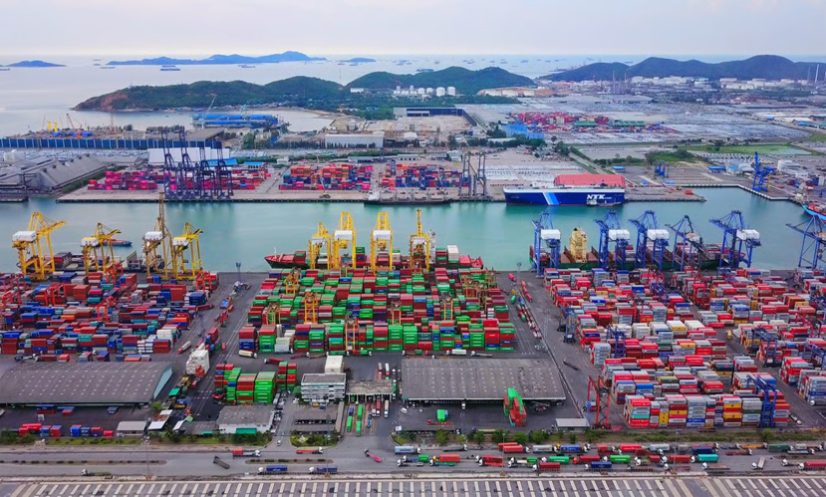
Bilateral trade between Bangladesh and China reached a record US$12.8 billion in January-June 2026, rising 10.6 per cent year on year, the Chinese embassy in Dhaka said on Thursday.
The growth came as Bangladesh seeks to expand exports to the huge Chinese market while narrowing a trade gap that remains heavily tilted in China’s favour.
China has remained Bangladesh’s largest trading partner for 16 consecutive years from 2010 to 2025, according to the embassy.
Bangladesh’s trade with China, however, remains significantly import-dependent. In FY2024-25, Bangladesh exported goods worth US$694.49 million to China against imports of US$18.56 billion, leaving a trade deficit of about US$17.87 billion, according to data placed in parliament by the commerce minister.
Bangladesh’s exports to China have shown some improvement in the current fiscal year. During July-May of FY2025-26, Bangladeshi exporters shipped goods worth US$742.5 million to China, up 16 per cent from the same period a year earlier. The figure was already higher than the full-year export earnings of previous fiscal years except the record level of US$949.4 million in FY2016-17.
The Bangladesh embassy in Beijing said the bilateral trade relationship is still significantly skewed towards imports, with Chinese raw materials and other inputs playing an important role in Bangladesh’s manufacturing and export industries. Bangladesh mainly exports knit and woven garments, jute and jute products, shrimp and other fisheries products, leather and footwear to China.
The Chinese embassy said Bangladeshi agricultural products, including fresh mangoes and jackfruits, have gained access to the Chinese market. Efforts are underway to secure market access for guavas and aromatic rice.
The two countries are also implementing a joint action plan to enhance Bangladesh’s export capacity and improve the structure of bilateral trade, the embassy said.
During Prime Minister Tarique Rahman’s visit to China in June, the two sides agreed to strengthen cooperation in trade, e-commerce, industrial and supply chains and investment. China also agreed to support Bangladesh’s efforts to upgrade its export capacity.
Alongside trade, China’s cumulative investment in Bangladesh reached approximately US$3.6 billion as of June 2026, according to the embassy. Chinese direct investment in Bangladesh increased by around 50 per cent year on year in 2025.
Since the establishment of the new government, five Chinese-invested enterprises have invested more than US$100 million in Bangladesh, creating nearly 20,000 jobs, the embassy said.
The China Economic and Industrial Zone in Chattogram, officially launched in July 2026, has attracted intended investments totalling US$500 million. The zone is focused on textiles and garments, machinery manufacturing, electronics and information technology, biomedicine and green energy.
The embassy also highlighted Chinese involvement in major infrastructure and power projects in Bangladesh, including the Padma Bridge and power projects with combined installed capacity exceeding 1,000 megawatts.
Several China-aided projects are also progressing, including a burn unit at Chattogram Medical College Hospital, renovation of Bangladesh-China Friendship Bridge-6, a 1,000-bed general hospital, a women’s hall of residence at the University of Dhaka, Bangladesh-China Friendship Bridge-9 and an emergency management centre.
The embassy said China has also provided more than US$4 million in healthcare and humanitarian assistance to Bangladesh in recent years, including medical supplies, testing kits, ventilators, rehabilitation equipment and flood relief.