


 Play store

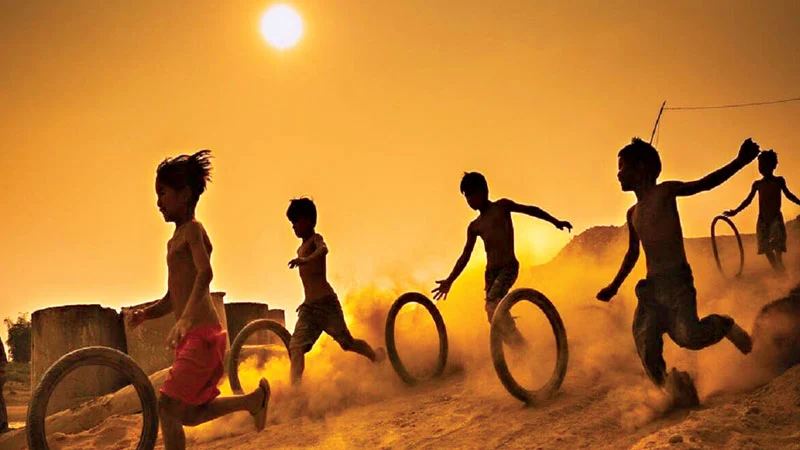
World Children’s Day is being observed in Bangladesh today, October 5, with the latest data highlighting persistent inequalities in children’s access to education, nutrition, safety and other basic rights.
In Bangladesh, the day is observed on the first Monday of October every year, focusing on children’s rights, protection and wellbeing. The observance has also renewed concerns over whether children across the country are growing up with equal rights and opportunities.
The final report of the Bangladesh Multiple Indicator Cluster Survey (MICS) 2025, conducted by the Bangladesh Bureau of Statistics (BBS) and UNICEF Bangladesh, provides a comprehensive picture of children’s lives. The survey successfully collected data from 61,207 of 62,980 sampled households and covered 173 indicators.
Education gap remains
Although Bangladesh has made progress in education, school attendance declines significantly at higher levels.
The attendance rate is 85% at the primary level, compared with 60.1% at lower secondary and 50.8% at upper secondary level.
Among children of upper-secondary-school age, 33.9% are out of school. Meanwhile, only 50.2% of children aged 7–14 have foundational reading skills, while 39.2% have foundational numeracy skills.
Working parents also face challenges in providing adequate time and support to their children. Shahana Zaman, a working parent employed at a private school, said balancing schoolwork, online classes, food and safety can be difficult for working families.
She said children’s opportunities can vary significantly even when they live in the same city, depending on the level of support available at home.
Child labour and early marriage
Child labour remains another major manifestation of inequality. According to MICS 2025, 9.2% of children aged 5–17 are engaged in child labour, up from 6.8% in 2019.
Early marriage also remains a major challenge for girls. Some 47.2% of women aged 20–24 were married before turning 18, while 38.9% of girls aged 15–19 are currently married.
Although the rate of child marriage has declined compared with 2019, the findings indicate that it remains a significant concern.
Violence and birth registration
Children’s safety remains another area of concern. Some 85.7% of children aged 1–14 experienced violent discipline, including physical punishment or psychological aggression, during the month preceding the survey.
The survey also found that only 59.2% of children under five have birth registration, leaving a substantial proportion without formal registration.
Nutrition remains a challenge
Nutrition indicators also reveal significant challenges. About 24% of children under five are stunted, 12.9% are wasted and 23% are underweight.
Among children aged 6–23 months, only 29.5% receive a minimum acceptable diet, indicating gaps in access to adequate and nutritious food during a critical stage of development.
Fahmida Haque, a parent and gym trainer, said working parents need greater social and institutional support to ensure children receive nutritious food, quality education, safety, emotional development and a healthy environment.
Water contamination and lead exposure
The survey also raises concerns about children’s access to safe water and a healthy environment.
Although many people use improved water sources, only 42.6% have access to safely managed drinking water. E. coli contamination was detected in 47.1% of water sources.
In addition, 38.4% of children aged 12–59 months were found to have elevated levels of lead in their blood.
Children still being left behind
Overall, the MICS 2025 findings show that Bangladesh has made progress in improving children’s lives, but significant inequalities and risks remain.
While some children attend school, others are engaged in labour; some receive nutritious food, while others suffer from malnutrition; and some grow up in safe environments, while others experience violence.
The latest data indicate that a significant number of children are still being left behind, highlighting the need for targeted support and better access to essential services.
Although children may grow up in different family circumstances, ensuring their fundamental rights and equal opportunities remains equally important. On World Children’s Day 2026, reducing disparities in children’s rights, opportunities and access to essential services remains a key concern.