


 Play store

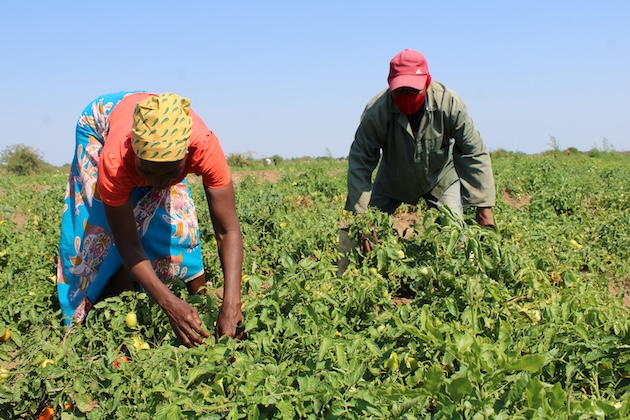
More than 1.4 billion people work across the global food system, making it the world’s largest employer, yet they face widespread exploitation, poverty wages and dangerous working conditions, according to a new report.
The report, Food Work: The Workers Behind Our Food and the Exploitation They Face, published this week by the International Panel of Experts on Sustainable Food Systems (IPES-Food), warns that the global food system exploits more workers than any other economic sector.
It says such exploitation is not accidental but deeply embedded in a business model that keeps labour costs low while maximising profits.
“Often hidden from view, food workers face low pay, wage theft, forced labour, human trafficking, discrimination, sexual violence, dangerous working conditions, and exclusion from social safety nets,” the report says.
“From farmworkers, fishers, and slaughterhouse staff to delivery drivers, restaurant and supermarket employees, and domestic workers, labour abuse is rife at every link in the food chain.”
The report highlights how migrants, women, refugees and racialised workers are disproportionately pushed into the worst working conditions, where speaking out can mean losing their jobs, facing deportation or being blacklisted.
IPES-Food co-chair Olivier De Schutter said one of the most striking findings was the “deep hypocrisy” of governments over migrant farmworkers.
Many countries rely heavily on migrant labour, particularly for fruit and vegetable production, as became evident during the Covid-19 pandemic. Yet governments often allow migrant workers to stay only for short-term or seasonal periods.
“These workers are routinely subject to forms of exploitation and abuse that would be unimaginable if they were natives, housed in poor conditions, paid poverty wages, and working in often dangerous conditions,” said De Schutter, a former UN Special Rapporteur on the right to food.
He said migrant workers were often treated as second-class workers because they were considered unskilled and had limited connections to the communities in their host countries, making them less likely to complain about abuse.
“This practice is a form of trafficking in human beings, except that it’s legal and officially encouraged,” De Schutter told IPS.
According to the UN Food and Agriculture Organisation (FAO), the gross value of global agricultural production is estimated at just over $5 trillion, while the World Bank puts agricultural value-added at about $3.2 trillion.
The global food system is valued at more than $8 trillion, yet many of the people who produce, process and market food continue to survive on poverty wages, the report says.
De Schutter identified three mutually reinforcing challenges: loopholes in legislation that exclude workers from minimum wage and working-hour protections, weak enforcement of existing laws, and difficulties in organising workers in countries where trade unions are discouraged or repressed.
“Governments routinely take the position that, where workers are informal, labour legislation does not apply, and labour inspectorates have no role to play,” he said, describing the situation as absurd.
“It’s like saying that if you don’t have a driver’s licence, you can ignore the traffic rules. In fact, international human rights law requires that basic labour legislation be extended to informal workers and that incentives be given to employers to register their workers to ensure informality does not pay and that formalisation instead be rewarded.”
Unfair employment arrangements, off-the-books work and a lack of basic job security further entrench workers’ vulnerability, he said.
“Governments directly enable this abuse through legal carve-outs that explicitly exempt food and farm workers from basic protections on wages, workplace safety, and union rights,” De Schutter said.
The report says that even where protective laws exist, weak public enforcement and widespread informal employment leave millions of workers without adequate protection.
Migrant workers are essential to modern food systems, but they face some of the highest rates of workplace abuse, wage theft, forced labour, injury and death, it says.
Climate Change Turns Up the Heat
The report warns that these structural abuses are being compounded by climate change and other emerging pressures, making food work increasingly hazardous and exploitative.
“Climate change is becoming a workers’ rights crisis,” said Mamadou Goïta, an IPES-Food panel expert.
“Farmworkers already face poverty wages, toxic pesticides, and gruelling conditions. Now climate change is turning up the heat and making their work even more dangerous.”
Goïta said governments were still failing to guarantee workers basic, lifesaving protections such as access to shade, rest and drinking water.
“The people producing our food should not have to risk their health or their lives to earn a living,” he said.
The impacts of extreme heat and drought are often measured in terms of lost crops and declining harvests. But the human toll on the world’s 928 million agricultural workers is also mounting, with heat stress becoming the most common health threat facing farmworkers, according to the report.
The health consequences range from dizziness, vomiting and exhaustion to heatstroke and kidney disease. In the United States, farmworkers are 35 times more likely to die from heat stress than other workers, the report says.
Agricultural regions across Africa, the Americas and southern Europe now experience up to 50 more days of dangerous heat each year than they did in the 1970s. In Africa, 93% of workers are exposed to dangerous heat, most of them working in food systems, according to the report.
The report warns that while climate change exposes workers to extreme heat, severe weather and toxic wildfire smoke, corporate power is suppressing wages, undermining collective bargaining and shifting risks onto workers in an effort to prioritise shareholder returns over decent work.
Digital technologies are also creating new forms of exploitation through gig-based platform work, automation, algorithmic management and workplace surveillance, the report says.
These trends can isolate workers, intensify productivity pressures, increase injury rates and erode their bargaining power.
Despite these challenges, workers are fighting back by forming unions and cooperatives, staging strikes, pursuing legal action and building alliances to demand stronger labour standards that recognise their value and dignity.
The report says comprehensive labour standards, living wages and the right to collective bargaining can transform the world’s largest workforce from some of the food system’s most invisible victims into a source of resilience.
It identifies five key policy priorities for lasting transformation of food systems.
These include strengthening trade unions and expanding collective bargaining to increase workers’ power, eliminating legal carve-outs for food and farm workers, and guaranteeing equal rights for migrant workers.
The report also calls for an end to policies that criminalise migrants and the dismantling of employer-tied visa schemes so that all workers, regardless of status, can enjoy equal labour rights and social protections.
It further urges governments to curb corporate power and hold companies accountable for labour abuses throughout their supply chains.
“The people who feed the world deserve safe, fairly paid, and dignified work,” the report says.
“Food systems must never depend on low wages, hazardous conditions, or invisible labour. Achieving this requires changing who holds power, who profits, and who bears the costs.” Source: IPS News