


 Play store

Sixty-nine Palestinians, more than half of them children, were displaced on Tuesday after Israeli authorities approved the demolition of their residential building in the At Tur area of occupied East Jerusalem, according to the UN aid coordination office (OCHA).
It was the largest number of people displaced in a single demolition in occupied East Jerusalem since UN records began in 2009, OCHA said.
Families told UN and humanitarian partners that Israeli forces prevented them from retrieving their belongings, which were buried under the rubble following the demolition.
Humanitarian agencies assessed the immediate needs of the displaced families and provided rental assistance and other essential supplies.
So far this year, Israeli authorities have demolished, or forced owners to demolish, the homes of more than 1,800 Palestinians across the occupied West Bank and East Jerusalem. Most of the demolitions were carried out because the properties lacked Israeli-issued building permits, which Palestinian residents in the affected areas rarely receive.
Aid agencies have provided emergency shelter, essential items and psychosocial support to families affected by the demolitions.
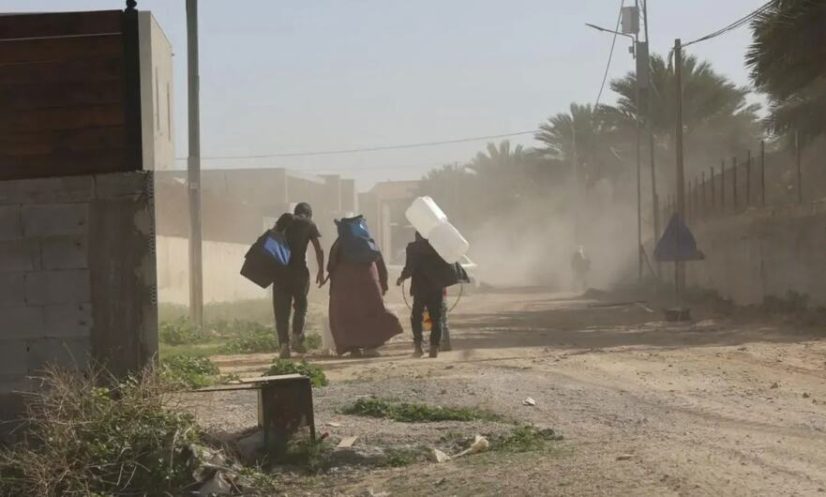
Meanwhile, in Gaza, water and sanitation services are being hampered by funding shortages and restrictions on the entry of essential supplies, OCHA said.
Among the restricted items are engine oil, spare parts and other equipment needed to keep vehicles and machinery operating.
Humanitarian partners said shortages had reduced water production at two desalination plants in southern Gaza because essential equipment could not be properly maintained. This has led to rationing of drinking water for about 500,000 people in Deir al Balah and Khan Younis.
Across the devastated Gaza Strip, an estimated three in four families depend on water delivered by truck until damaged water infrastructure can be fully restored.
Humanitarian partners are currently delivering about 25,000 cubic metres of drinking water a day through 3,200 collection points. However, the vehicles used for the deliveries require regular maintenance, while access to some areas is frequently suspended because of insecurity.
Aid agencies have also distributed thousands of rubbish bins, bags, sponges and dusters, along with 3,000 litres of washing-up liquid, 4,600 gloves and face masks, nearly 1,300 litres of bleach, more than 200 latrines and hundreds of hygiene kits.
Shortages of items subject to import restrictions have recently prevented vehicles from collecting and transferring solid waste, forcing aid agencies to rely on donkey carts and UN trucks.
OCHA said approvals for restricted supplies were urgently needed, along with restored access to Gaza’s two landfills near the perimeter of the Strip, to prevent waste from accumulating in densely populated areas.
Sustained funding for fuel is also critical to maintaining essential water, sanitation and waste-management services, it said. Source: UN News