Play store

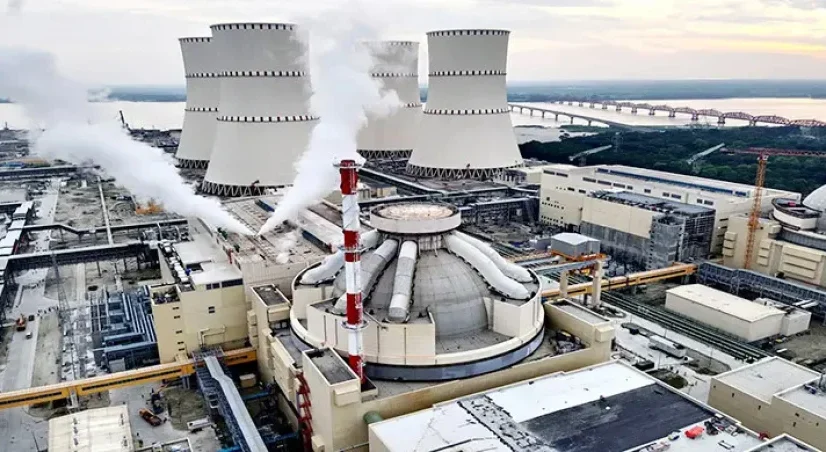
Rooppur Nuclear Power Plant’s Unit-1 has completed all major commissioning tests and is now awaiting a licence from the Bangladesh Atomic Energy Regulatory Authority (BAERA) to begin physics testing and physical startup, bringing Bangladesh closer to its first nuclear power generation.
Senior officials of Nuclear Power Plant Company Bangladesh Limited (NPCBL) disclosed the development on Wednesday night, October 7.
As part of the latest commissioning programme, 12 tests were successfully completed on September 30 at an operating pressure of 16.1 megapascals and a temperature of 280 degrees Celsius.
Another test at 18.65 megapascals initially encountered technical problems but was later completed successfully.
The tests were conducted from both the Main Control Room and Emergency Control Room. Engineers examined pressure-control and pressure-relief systems, including valve opening and closing times, response speed, warning signals and the pressure and temperature required for different operations.
Earlier, technical problems involving valves prompted assistance from Russian specialists, who carried out repairs before the systems underwent further testing.
The next major milestone is first criticality, when the reactor achieves a stable, self-sustaining nuclear chain reaction.
Unit-1 cannot proceed to first criticality without the required BAERA licence. Once approved, the reactor will enter the physical startup and physics-testing phase.
During physical startup, the reactor will initially operate at less than 1 percent of its rated thermal power before reaching initial criticality. Engineers will closely monitor reactor parameters, safety systems and control equipment.
The physical startup process, including first criticality, could take around 30 to 40 days.
If the results are satisfactory, reactor power will be gradually increased before the project enters the power startup phase.
The power startup phase will involve raising reactor power, synchronising the turbine and eventually connecting the generator to the national grid.
The operating organisation will require a trial operational licence from BAERA. The process will also require coordination among BAERA, the Ministry of Science and Technology, national grid agencies, the armed forces, security and law-enforcement agencies, nuclear emergency management authorities and other government bodies.
Officials said Unit-1 will initially be operated at around 3 percent power after safe grid connection before gradually increasing output to 20–25 percent.
If these stages are completed successfully, electricity can be supplied to the national grid.
Trial generation could continue for several months after grid connection before commercial operation begins.
Trial electricity supply could start by the end of December, although the timeline depends on first criticality, physics testing, power startup and regulatory approvals.
Security concerns over uranium transport
Meanwhile, the transportation of nuclear fuel has raised security concerns.
On October 3, uranium fuel arriving from Russia was transported from Dhaka to Rooppur in three specialised vehicles over a distance of about 216 kilometres under security provided by the Army, police, security units and intelligence agencies.
Officials said security was strengthened and traffic was controlled along the route. Nuclear experts, however, have raised concerns over accident and security risks associated with road transportation.
University of Dhaka nuclear engineering professor Shafiqul Islam said nuclear fuel is transported under strict confidentiality in many countries and that publicly disclosing shipment schedules and routes could create security vulnerabilities.
He suggested upgrading Ishwardi Airport for future nuclear-fuel transportation by air.
Located about nine kilometres from Rooppur, the airport could potentially be upgraded, although its runway and other infrastructure would need improvements to handle large aircraft, officials said.
The Rooppur project was originally scheduled for completion by December 2025. Its deadline has since been extended twice, with the latest target set for June 2028.
Although the contractor agreement does not allow the contract price to be increased because of the extension, the project’s taka-denominated cost has risen by around Tk26,000 crore due to depreciation of the local currency against the dollar.
The current total construction cost stands at Tk138,686 crore.
Completion of the major commissioning tests marks a significant milestone for Bangladesh’s nuclear power programme. The project now awaits regulatory approval to proceed with physical startup, physics testing and, ultimately, first electricity generation.