


 Play store

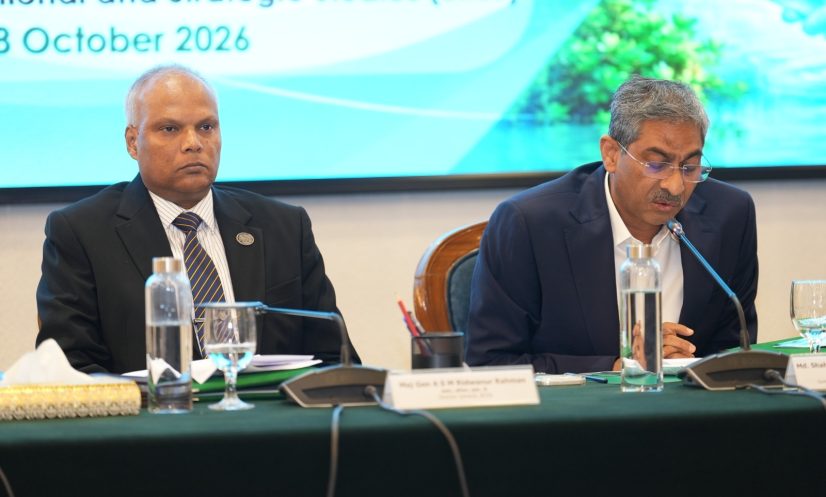
Bangladesh is hopeful of concluding a new Ganges water-sharing treaty with India before the existing agreement expires on December 12, with the restoration of a guarantee clause similar to the one included in the 1977 accord being its key priority, Water Resources Minister Shahid Uddin Chowdhury Anee has said.
He also said work on the proposed Padma Barrage could become visible by January, February or March next year, while the government plans to begin the main work on the Teesta Multipurpose Project after completing a feasibility study.
The minister made the remarks while speaking to journalists after a seminar titled “Rethinking the Future of Water: Youth Leadership, Justice and Cooperation”, organised by the Bangladesh Institute of International and Strategic Studies (BIISS) in Dhaka on Thursday.
On the Ganges treaty, Anee said the 30-year agreement signed in 1996 would expire on December 12 and that Bangladesh and India were continuing negotiations through the Joint Rivers Commission (JRC).
“We have to conclude a new agreement before December 12. Accordingly, Bangladesh and India are working continuously through the Joint Rivers Commission,” he said.
“We are hopeful, based on the discussions, that the agreement will be concluded before December 12, 2026. Our main priority there will be to bring back the guarantee clause, as was present in the 1977 agreement,” the minister said.
The 1977 Ganges water-sharing agreement contained a guarantee provision concerning the availability of water to Bangladesh. The 1996 treaty, which replaced the earlier arrangements, did not retain the same provision.
The minister’s remarks came as Bangladesh prepares for a crucial phase of negotiations with India over the future management of Ganges waters ahead of the expiry of the existing treaty.
Turning to the Padma Barrage, Anee described it and the Teesta Multipurpose Project as major strategic projects, saying their benefits could extend to a significant portion of the country’s population.
He said the Padma Barrage project had already been approved by the Executive Committee of the National Economic Council (ECNEC).
“The work on the Padma Barrage will become visible in January, February or March next year,” he said.
According to the minister, the Padma Barrage and Teesta projects are among the government’s key mega projects and could benefit people across nearly one-third of Bangladesh.
Asked whether Bangladesh was facing pressure or obstacles from external actors over the two projects, Anee said the government’s primary consideration was the interests of people living along the rivers.
“The people living along the Padma and Teesta are the people of our country. The interest and pressure of my country’s people are the biggest pressure for me,” he said.
“Our main objective is to carry that responsibility and work for the welfare of the people.”
On the Teesta Multipurpose Project, the minister said the government was preparing to conduct a feasibility study with assistance from domestic and international experts.
He described the Teesta as a fast-flowing river and said communities in northern Bangladesh had long faced difficulties because of the pattern of upstream water flows into downstream areas.
“We have discussed the master plan extensively and many seminars have been held and are still being held,” he said.
Anee said he had consulted experts from Bangladesh University of Engineering and Technology (BUET) and assigned them responsibilities relating to the project. The government was also in discussions with foreign experts to obtain the necessary technical assistance.
“The feasibility study has to be undertaken very soon. We will start the project work on the basis of the study,” he said.
The minister acknowledged that completing the study would take time but said the government was keen to complete the process within 2027 and begin the main project work that year.
He also stressed that major water projects could not be prepared overnight.
Anee said the study for the Padma Barrage had taken 12 years, from 2004 to 2016, but the project was not subsequently implemented. After taking office, the current government moved to finalise the project within a few months and initiate its implementation process, he said.
“Technical studies for a mega project like the Teesta cannot be completed overnight or within one or two months,” he said.
The minister criticised previous administrations for failing to complete the necessary work with adequate technical support and said the current government would take the initiative to complete the process itself.
His comments placed the Ganges treaty, Padma Barrage and Teesta project within a broader strategy of safeguarding Bangladesh’s water interests through negotiations, technical preparation and infrastructure development, while keeping the interests of communities dependent on the country’s major rivers at the centre of policy.