


 Play store

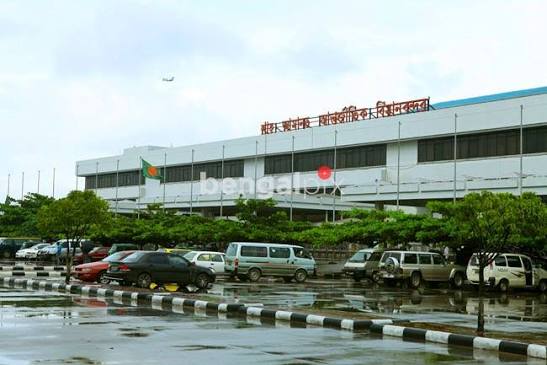
The government has launched an initiative to develop Shah Amanat International Airport in Chattogram into a regional aviation hub by 2035, with an estimated investment of $300 million to expand infrastructure, cargo facilities and international connectivity.
The proposed Chittagong Regional Air Hub Project aims to establish direct air links between the port city and destinations across South and Southeast Asia, the Middle East and China, leveraging Chattogram’s strategic location, seaport and special economic zones.
Under a Preliminary Development Project Proposal (PDPP), prepared jointly by the Ministry of Civil Aviation and Tourism and the Civil Aviation Authority of Bangladesh (CAAB), the airport’s runway will be extended in phases from 2,940 metres to 3,600 metres. The plan also includes strengthening the runway and constructing a parallel taxiway and a rapid-exit taxiway.
The project envisages 11 parking stands for narrow-body aircraft and eight for wide-body aircraft. Annual passenger-handling capacity is expected to rise from five million to between eight million and 10 million, while the number of boarding bridges will increase from two to six, including four suitable for wide-body aircraft.
The upgraded facilities are expected to accommodate aircraft such as the Boeing 777 and 787 and the Airbus A330 and A350.
The initial, or “quick-win”, phase will focus on preparing the airport to handle wide-body aircraft, transit passengers and cargo. A dedicated transit centre, estimated to cost $10 million, and a new cargo village will also be developed.
The first phase of cargo facilities is expected to provide annual handling capacity of 75,000 to 100,000 tonnes, supported by cold-chain infrastructure and bonded warehouses.
Of the estimated $300 million project cost, the government will contribute $75 million. The Economic Relations Division (ERD) has requested a loan or financial assistance of around $175 million from the Asian Development Bank (ADB). Another $30 million to $50 million could be mobilised through a public-private partnership to develop hotels, shopping malls, commercial spaces and other service facilities near the airport.
Boost to trade and investment
The proposed hub is expected to improve access to regional markets, including India, Nepal, Sri Lanka, Singapore, Indonesia, Thailand, Malaysia, Japan, Vietnam, China, the United Arab Emirates, Saudi Arabia, Qatar and Oman.
Expanded cargo facilities could facilitate direct exports of perishable agricultural products, frozen foods and pharmaceuticals, while reducing travel time for investors and entrepreneurs.
Improved connectivity could also make it easier for foreign buyers in the ready-made garment (RMG) sector to visit Chattogram and lower the cost of importing garment-industry raw materials directly from China.
Mohammad Amirul Haque, president of the Chittagong Chamber of Commerce and Industry (CCC&I), told BSS that the chamber had submitted a development roadmap to Finance and Planning Minister Amir Khasru Mahmud Chowdhury.
“Given its geographical location, Chattogram should have become an aviation hub for this region much earlier. It is unfortunate that this has not yet happened,” he said, adding that the government led by Prime Minister Tarique Rahman had taken steps to address the long-standing demand.
Describing the initiative as historic, Amirul Haque said its swift implementation could transform local trade and business and inject fresh momentum into the national economy.
He also pointed to the growing presence of Chinese investors and personnel in economic zones in Chattogram and Cox’s Bazar, saying the lack of direct air connections had created difficulties for businesses on both sides.
Md Asif Chowdhury, president of the Chittagong Aviation Club, said infrastructure expansion must be accompanied by competitive services, including modern cargo facilities, check-in counters, boarding bridges, baggage belts and quality passenger lounges.
He said the airport, which currently operates from 6:00 am to midnight, should remain open around the clock.
Competitive landing charges, aviation fuel prices aligned with international rates, and effective marketing and branding would also be necessary to attract international airlines, particularly from East Asia, he added.
Group Captain Nur Hossain, director of Shah Amanat International Airport, told BSS that airlines needed hotel, refuelling and maintenance facilities to use the airport as a hub and attract transit traffic.
He said the airport had the infrastructure to accommodate additional flights, including two to three cargo flights a week, but airlines needed to come forward with commercially viable plans.
As an initial step, he suggested prioritising technical stopover services, including aircraft refuelling, catering and rest facilities for flight crews, while gradually expanding passenger demand and supporting infrastructure.
Despite its international designation, Shah Amanat International Airport has largely served routes to the Middle East. Direct services to China, Thailand and Singapore have been discontinued amid infrastructure and operational constraints.
As a result, many travellers and exporters from Chattogram depend on Dhaka’s Hazrat Shahjalal International Airport or international transit hubs for overseas travel and shipments.
The airport handled 977,000 international passengers in 2023, while the figure remained around one million in 2025, highlighting the scope for expanding its role in regional aviation.