


 Play store


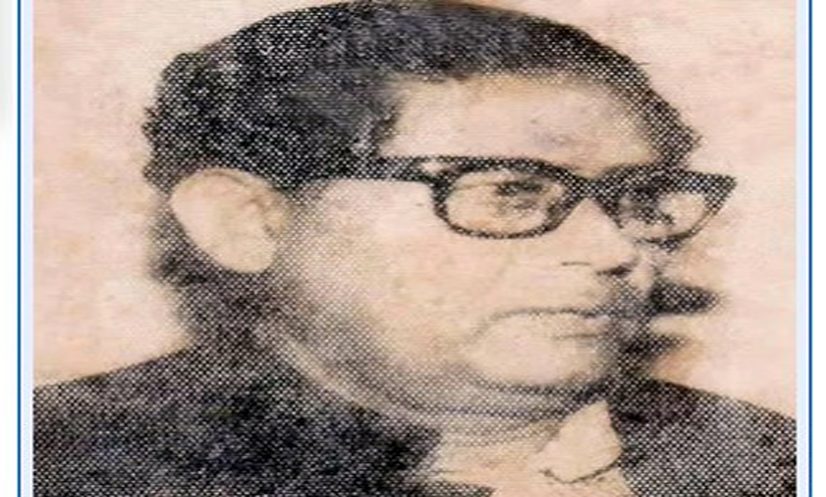
Politics is often judged by electoral victories, ministerial positions and the ability to remain close to power. Yet history offers a different measure of political success: the courage to defend one’s principles, even at the cost of personal freedom, political influence and a comfortable life.
Oli Ahad, one of the leading figures of Bangladesh’s Language Movement, embodied this rare ideal. Fourteen years after his death, his life remains a powerful reminder that principled politics is ultimately about serving people, not securing positions.
Born in 1928 in Islampur, Brahmanbaria, Oli Ahad demonstrated exceptional academic ability from an early age. He could have pursued a secure professional career, but he chose politics, driven by a commitment to people’s rights and freedom. His political journey began during the movement for the creation of Pakistan.
However, he soon became deeply involved in the struggle to establish Bangla as the state language of what was then East Pakistan, placing him at the forefront of a movement that would shape the nation’s identity.
Oli Ahad was among the pioneering leaders who challenged the Pakistani authorities’ attempts to suppress the Language Movement. On 11 March 1948, he was arrested for his involvement in the struggle. His political activities also led to his expulsion from Dhaka University, where he had excelled academically. Although he completed his B.Com degree, the authorities denied him the opportunity to pursue an M.Com degree. The university eventually withdrew the expulsion order in 2006, nearly six decades later.
These experiences did not weaken his resolve. Instead, they strengthened his conviction that rights could not be secured without resistance. As the Language Movement reached its decisive moment in February 1952, the government imposed Section 144 in Dhaka to prevent public gatherings. While some political leaders favoured compliance, Oli Ahad and other student leaders supported defying the restriction.
His determination was rooted in the belief that submission to injustice was worse than the personal risks of resistance. Recalling the days before 21 February, the article describes how journalist Zahur Hossain Chowdhury warned him that the government might deploy the army and even tanks to crush the movement. Oli Ahad’s reported response was unequivocal: “Death is better than slavery.”
That conviction captured the spirit of a generation that refused to surrender its linguistic and cultural identity. The Language Movement was not simply a demand for recognition of Bangla; it became a defining struggle for dignity, democratic rights and political self-determination. Oli Ahad’s role in that struggle established his place in the history of Bangladesh.
His contribution, however, extended far beyond the Language Movement. He was one of the founders of the East Pakistan Muslim Students League, established in January 1948, and later served as a founding leader and general secretary of the East Pakistan Youth League, which played an important role in the 1952 movement. He also served as publicity secretary and organisational secretary of the Awami League.
Yet Oli Ahad’s political identity was never confined to one party. His commitment to political principles repeatedly brought him into conflict with powerful leaders and governments. During the 1957 Kagmari Conference, disagreements over foreign policy and the SEATO and CENTO alliances contributed to a political divide between him and sections of the Awami League leadership. His support for Maulana Abdul Hamid Khan Bhashani’s position reflected his opposition to what he regarded as unacceptable political compromises.
That decision came at a cost. While others continued to occupy influential positions, Oli Ahad increasingly found himself outside the centres of political power. He later formed the Democratic League and remained active in national politics, refusing to treat political accommodation as an end in itself.
His experience raises an important question: should political success be measured by the offices a leader holds, or by the principles the leader upholds?
In contemporary politics, public office is often regarded as the ultimate achievement. Political influence, access to state resources and proximity to the ruling establishment can overshadow questions of integrity and public service. Oli Ahad’s life challenges this narrow understanding of success. He demonstrated that a politician may remain outside the corridors of power and still make a lasting contribution to a nation’s political consciousness.
His opposition to authoritarianism was equally consistent. Following Bangladesh’s independence, he criticised government policies and challenged restrictions on civil liberties. In 1974, he filed a writ petition against the imposition of Section 144 to restrict public meetings. The High Court subsequently declared the restriction unlawful, although Oli Ahad had already been arrested under the Special Powers Act.
He also opposed the establishment of a one-party system under the Fourth Amendment to the Constitution, defending freedom of expression, individual liberty, democracy and press freedom. During the military rule of the 1980s, he continued to speak out against authoritarianism, despite repeated arrests and persecution.
His weekly publication, Ittehad, became a platform for dissent and opposition to authoritarian rule. The newspaper was eventually banned, but its history reflected the risks Oli Ahad was prepared to take in defence of free expression. In 1984, when he appeared before a military tribunal under the Ershad regime, he delivered a forceful statement rejecting military rule as a legitimate system of government, regardless of which general imposed it.
His opposition to military rule was not merely a reaction to a particular government. It was grounded in a broader democratic principle: the legitimacy of political authority cannot rest solely on force. His arguments drew on historical examples to demonstrate how military rulers had brought devastation to nations and undermined democratic institutions.
Oli Ahad also believed that political leadership required intellectual discipline. He read widely, followed international affairs and encouraged his colleagues to study. His book, “Jatiya Rajniti 1945–1975” (National Politics 1945–1975), remains an important record of the political developments he witnessed and participated in. His commitment to political education reflected his conviction that public life demanded knowledge, critical thinking and a clear understanding of history.
He spent a total of 19 years in prison during his political life. Yet imprisonment, political isolation and the suppression of his newspaper failed to silence him. Offers of positions and opportunities to join those in power reportedly did not persuade him to abandon his convictions.
This refusal to compromise may have limited his prospects in conventional power politics. But it strengthened his legacy as a leader who placed principles above personal advancement. His life demonstrates that the influence of a political figure cannot always be measured by election results, government positions or party strength. Sometimes, the most enduring contribution lies in the example a person leaves behind.
Oli Ahad died at a hospital in Dhaka on 20 October 2012, aged 83. In recognition of his contribution to the country’s independence and Liberation War, he was awarded the Independence Award in 2004.
His legacy deserves renewed attention at a time when democratic institutions, political accountability and freedom of expression remain essential to the country’s future. Remembering him should mean more than paying tribute on an anniversary. It should prompt a serious examination of the standards by which political leaders are judged and the values that guide public life.
Bangladesh’s history was shaped by people who risked their freedom and security to challenge injustice. Oli Ahad was among them. His unwavering opposition to authoritarianism and his commitment to democratic rights offer a lesson that remains relevant across generations.
A healthy democracy needs political leaders who can compromise when compromise serves the public interest, but who refuse to surrender fundamental principles for personal gain. It needs people who regard power as a responsibility rather than a prize and public service as a commitment rather than a route to privilege.
Oli Ahad’s life reminds us that political success is not simply about reaching the highest office. It is about remaining faithful to the public good, even when doing so brings isolation and hardship. His courage, intellectual integrity and lifelong resistance to authoritarian rule deserve a place not only in the history books but also in the continuing debate over the future of democratic politics in Bangladesh.