Play store

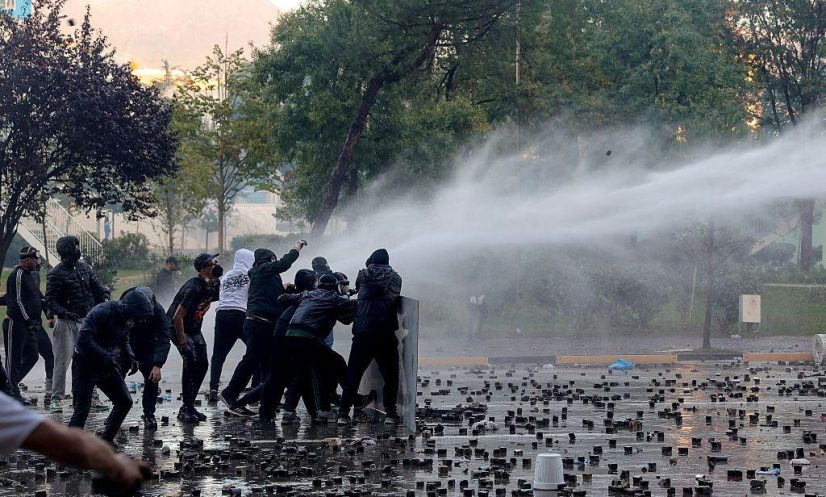
Europe is facing a wave of protests over rising living costs, unaffordable housing, education and public services, with demonstrations turning violent in parts of France and Italy.
Protests have also been reported in Belgium, Spain, Portugal, Greece and Albania, reflecting growing public frustration over economic pressures and government policies.
In France, demonstrations over fuel prices, living costs and school conditions escalated into violence in several cities, including Paris, Marseille, Lyon and Bordeaux. Looting, fires and clashes with police were reported, prompting the government to consider additional security measures.
Student groups and the Yellow Vest movement have called for further rallies on October 24, while trade unions are planning a general strike on November 5.
Italy has also experienced violent confrontations in cities including Milan, Turin and Bologna. Incidents involved shop looting, damaged property and fires, while police reported injuries among security personnel.
Prime Minister Giorgia Meloni’s government has approved tougher measures against violence at demonstrations and plans to deploy 500 troops in Milan through the end of the year. Protesters have raised concerns about high rents, low wages, education and public services.
Elsewhere, housing affordability has emerged as a major concern in Spain and Portugal, particularly in Madrid, Barcelona, Lisbon and Porto. Demonstrators are demanding affordable accommodation and better living conditions, while trade unions are pressing for higher wages and stronger social support.
In Greece, thousands of students and teachers marched in Athens, Thessaloniki and Patras on October 21, calling for improved school facilities, greater public investment and affordable student accommodation. Teachers also staged a strike.
In Belgium, student demonstrations have focused on school conditions and austerity measures, while protests over living costs have also been reported. Albania has witnessed anti-government demonstrations driven by allegations of corruption and dissatisfaction with the political leadership.
The unrest has been fuelled by a combination of economic hardship, housing shortages, pressure on public services and political discontent. However, the protests remain largely national movements rather than a single coordinated campaign across Europe.
European authorities have also raised concerns about attempts by outside actors to exploit the unrest online, although reports indicate that conclusive evidence linking foreign powers to the violence has not been established.
Further demonstrations are expected in the coming weeks, including planned rallies in France on October 24 and labour actions in November.
The scale of the protests and the authorities’ response are likely to shape the next phase of the unrest, as governments face mounting pressure to address public grievances.