Play store

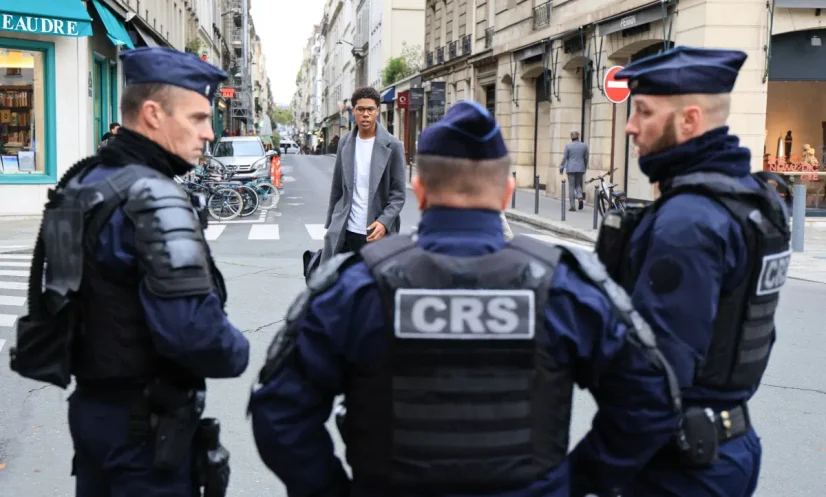
France will deploy around 70,000 police and security personnel nationwide on Saturday as authorities brace for a new wave of protests following some of the country’s worst urban violence in years, the government said Friday.
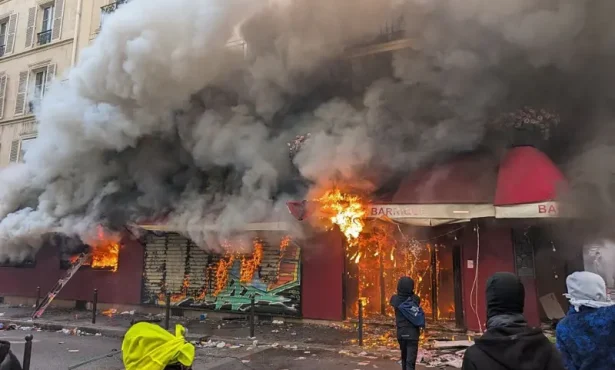
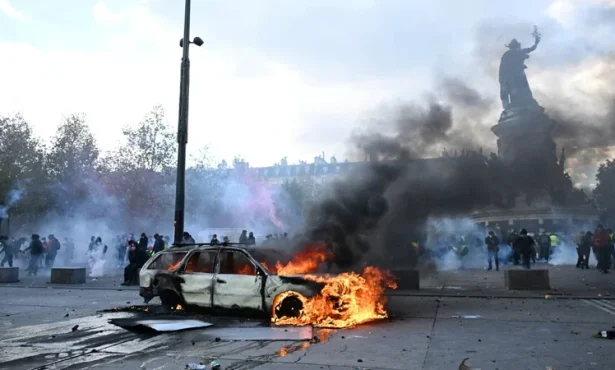
The latest security measures come a week after demonstrations over school conditions and the rising cost of living escalated into widespread looting, arson and vandalism.
Interior Minister Laurent Nunez announced the deployment at a news conference in Paris, warning that calls for violence and looting were circulating on social media. Security personnel will be increased by around 20 percent compared with last weekend.
President Emmanuel Macron convened a defence council meeting with senior ministers and officials and was scheduled to meet security forces. Aides said he was postponing a planned visit to Nigeria and Senegal later this month amid the crisis.
Macron also met representatives of high school students for the first time since their protests helped trigger a broader movement against the government.
Nathanael Combary, president of Renouveau Lyceen, said students would press for improvements to school infrastructure and reforms to the Parcoursup university admissions system.
The government has sought to distinguish legitimate protest demands from the violence that erupted on the sidelines of demonstrations last Saturday.
Justice Minister Gerald Darmanin said courts had already sentenced 217 people, around half of them first-time offenders, to prison over the unrest.
Macron on Thursday called for the “utmost severity” against criminal acts, accusing far-left groups of seeking to undermine the republic.
Authorities have imposed restrictions on demonstrations in several cities ahead of Saturday’s rallies.
In Orleans, where Marine Le Pen’s National Rally (RN) is holding its party congress, between 20,000 and 30,000 opponents were expected to demonstrate. The protest will be barred from the city centre, authorities said, amid fears of clashes with party supporters.
Central areas of Lyon will also be off-limits to demonstrators, while Paris protesters will be restricted to a route between Bastille and Nation squares.
Marseille authorities, who initially banned demonstrations, later granted exceptional permission for a union-organised rally. They also reversed plans to suspend all public transport on Saturday.
In Paris, major museums, including the Louvre, will close for the day, while the Art Basel art fair is being cut short.
Human Rights Watch expressed concern over reports of children suffering severe injuries from crowd-control weapons.
“In a country governed by the rule of law, the police have a responsibility both to ensure that protests can take place peacefully and safely and to protect the public from violent disorder,” said Eva Cosse, the group’s senior Europe researcher.
The unrest has heightened political tensions ahead of elections to replace Macron and raised concerns over France’s international image and public finances.
A Harris Interactive poll for M6/RTL conducted after the violence put Le Pen at 33-35 percent in the first round of the presidential election, strengthening her position as the frontrunner.
The survey projected hard-left leader Jean-Luc Melenchon as her likely runoff opponent and suggested Le Pen could win the second round with around 70 percent of the vote.