Play store

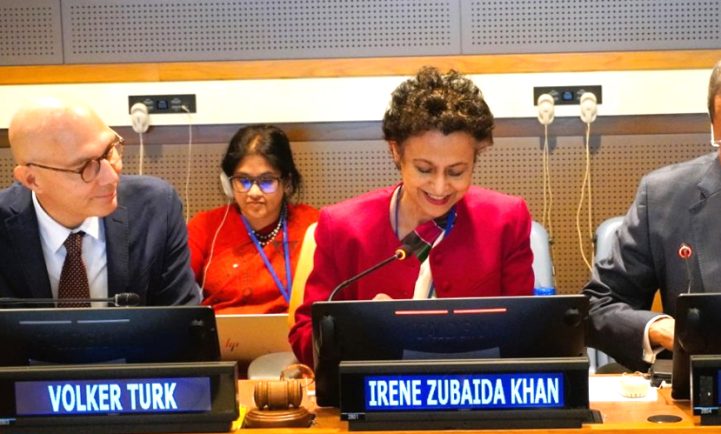
Bangladesh’s Permanent Representative to the United Nations, Ambassador Ireen Zubaida Khan, has called for prioritising human rights in economic policymaking and global financial governance.
She made the call at a high-level dialogue titled “The Political Economy of Human Rights” at the UN headquarters in New York on Tuesday (October 27).
Khan said economic progress should not be measured by growth alone, but also by its contribution to improving people’s living standards, reducing inequality and ensuring human dignity and fundamental rights.
She emphasised the need for fair taxation, affordable development financing, sustainable debt management and reforms to the international financial architecture.
UN High Commissioner for Human Rights Volker Türk, speaking at the event, said economic and political power was increasingly concentrated in the hands of a small number of individuals and groups. Rising military expenditure, mounting debt burdens and economic inequality were also posing major obstacles to human rights protection, he added.
Participants said conflicts, high debt-servicing costs and declining development assistance were constraining investment in education, healthcare, social protection and sustainable peace.
They stressed the importance of equitable international tax systems, fair debt restructuring, transparency and accountability in financial governance, and meaningful participation by civil society to address these challenges, tackle structural inequalities and protect vulnerable communities.
The dialogue was jointly organised by the permanent missions of Bangladesh, Morocco, South Africa and Uruguay to the United Nations. Ambassadors from the participating countries, representatives of the European Union, and human rights and development experts attended the event.
Discussions also highlighted the need to reform international economic governance and place human rights at the centre of the global development agenda beyond 2030.