Play store

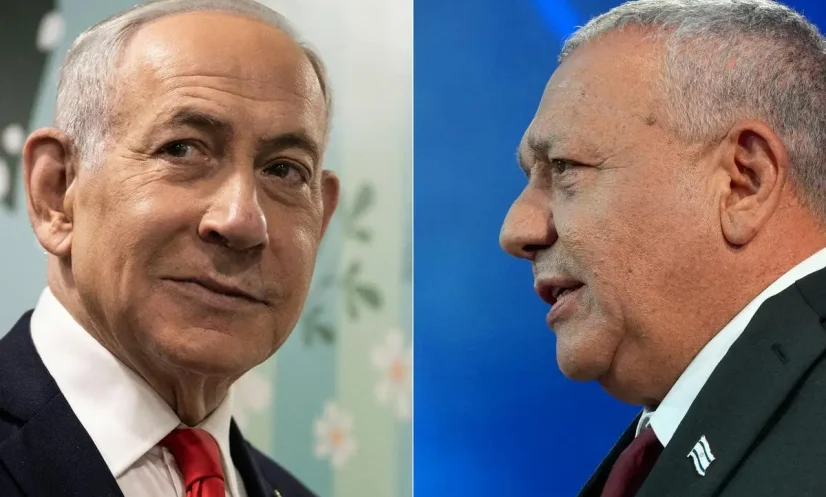
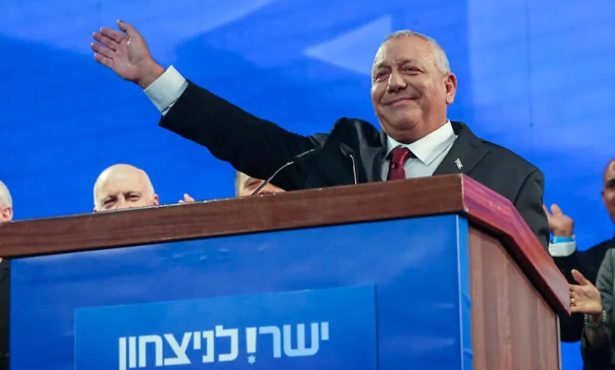
Israel is facing renewed political uncertainty as neither Prime Minister Benjamin Netanyahu’s right-wing bloc nor the opposition alliance led by Gadi Eisenkot appears to have secured the 61 seats needed to form a government, with Arab parties emerging as potential kingmakers.
With about 90 per cent of the votes counted, Netanyahu’s bloc was projected to win 53 seats in the 120-member Knesset, while the opposition alliance led by Eisenkot’s Yashar party was heading for 48 seats, according to figures released by Israel’s Central Elections Committee.
The results have contradicted pre-election opinion polls, which had suggested that Eisenkot’s alliance would outperform Netanyahu’s bloc. Exit polls released by major television networks after voting also indicated that Eisenkot’s party could win two to three more seats than Likud. However, as the counting of regular ballots continued overnight and into the following afternoon, Netanyahu’s bloc moved ahead.
The biggest surprise of the election has been the strong performance of Arab political parties. The Joint List, led by Yousef Jabareen, was projected to win 12 seats, while Mansour Abbas’s Ra’am party was heading for seven, giving Arab parties a combined record of 19 seats.
The previous record for Arab parties was 15 seats. Their gains reflect strong turnout and support among Arab voters seeking to remove Netanyahu and his far-right allies from power.
Among individual parties, Netanyahu’s Likud emerged as the largest, with 26 seats, followed by Eisenkot’s Yashar with 21. Former prime minister Naftali Bennett’s Be-Yahad and the Joint List were each projected to win 12 seats, while the left-wing Democrats were heading for eight.
Several smaller parties, including far-right Otzma Yehudit, ultra-Orthodox Shas and United Torah Judaism, Ra’am and Avigdor Lieberman’s Yisrael Beiteinu, were each projected to secure seven seats. Finance Minister Bezalel Smotrich’s Religious Zionism party was expected to win six.
Three parties failed to cross the 3.25 per cent electoral threshold and were set to remain outside the Knesset: Yoaz Hendel’s Reservists-Economic party, with 2.63 per cent; Ofer Winter’s People of Israel, with 1.61 per cent; and the Haredi Public party, with 0.19 per cent.
The outcome represents a major setback for Netanyahu’s bloc, which held 68 seats in the outgoing Knesset but is now projected to fall to 53. It needs eight additional seats to reach a majority, while the opposition alliance requires another 13.
In theory, the opposition could secure a comfortable majority if the Arab parties joined it. However, that scenario appears unlikely. Before the election, most Zionist or Jewish parties in the opposition camp, except the Democrats, had ruled out relying on support from Ra’am or the Joint List to form a government.
The final outcome remains uncertain. Election officials said more than 99 per cent of regular ballots had been counted, but additional checks and recounts were still required in some ballot boxes.
Between 430,000 and 480,000 special double-envelope ballots also remained uncounted. These include votes cast by military personnel, prisoners, diplomats serving abroad and other voters unable to vote at their regular polling stations.
Officials must verify that voters have not cast ballots more than once before counting these special votes. As roughly 40,000 votes are typically needed to secure a Knesset seat, the outstanding ballots could alter the distribution of seats and affect coalition calculations.
The final and official results are scheduled to be announced on November 4, according to the election timetable cited in the report.
Unless Netanyahu and Eisenkot reach an agreement or one side secures sufficient support through negotiations with other parties, Israel could face another political deadlock and the prospect of an early election.