


 Play store

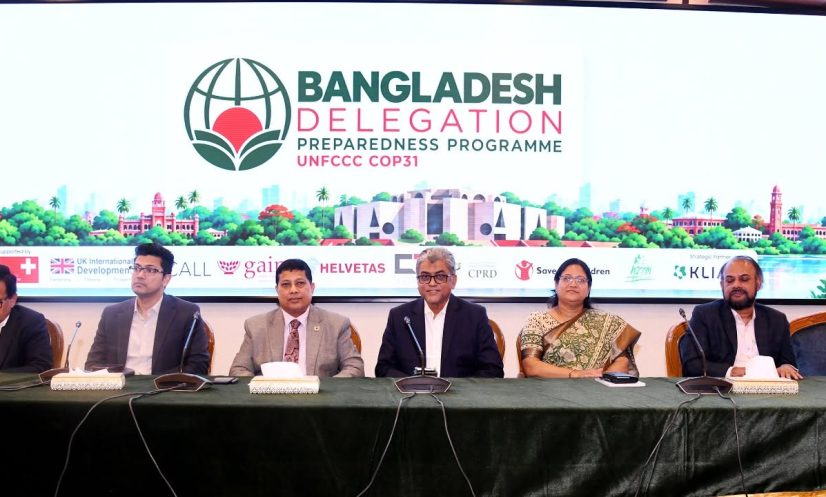
DHAKA: Bangladesh has concluded its first government-hosted inter-ministerial training programme specifically designed to prepare climate negotiators for the 31st UN Climate Change Conference (COP31), with the government committing to organise the initiative annually ahead of future climate summits.
The two-day Bangladesh Delegation Preparedness Programme–UNFCCC COP31 concluded on Wednesday at the Bangladesh Institute of International and Strategic Studies (BIISS) in Dhaka, aiming to strengthen the country’s negotiating capacity, improve coordination among ministries and prepare a new generation of climate negotiators.
The programme was held on October 27-28 and organised by the National Institute of Environment and Climate Change (NIECC) under the Ministry of Environment, Forest and Climate Change (MoEFCC), with KLIMA, a climate initiative of The Bangladesh Dialogue Foundation, serving as strategic partner.
Recognising the programme’s effectiveness, the environment ministry confirmed that it would organise the initiative every year before the annual Conference of the Parties (COP), establishing a framework for sustained institutional preparation and continuity in Bangladesh’s engagement in international climate negotiations.
A stream-based team approach will also be introduced, pairing experienced negotiators with associate members to facilitate knowledge transfer and strengthen the country’s negotiating capacity. Under the approach, experienced negotiators will lead teams while associates learn through direct engagement and contribute to negotiation preparation.
The initiative is intended to preserve institutional knowledge, strengthen coordination and develop the next generation of skilled Bangladeshi negotiators.
The programme was supported by the Embassy of Switzerland in Bangladesh, the British High Commission in Dhaka through UK International Development, the Global Alliance for Improved Nutrition (GAIN), Climate Action at Local Level (CALL), HELVETAS Swiss Intercooperation, the Center for Participatory Research and Development (CPRD), Save the Children and Nature Conservation Management (NACOM).
The Department of Environment, technical experts and resource persons also contributed to the programme. KLIMA coordinated engagement among government institutions, development partners, national and international non-governmental organisations, experts and participants.
The opening ceremony on October 27 was attended by Mohammad Navid Shafiullah, additional secretary to the MoEFCC, as chief guest and chaired by Monira Sultana, joint secretary to the ministry.
Remarks were delivered by Dr S. M. Munjurul Hannan Khan, executive director of NACOM; Major General A S M Ridwanur Rahman, director general of BIISS; a representative of the British High Commission in Dhaka; Muhammad Solaiman Haydar, additional director general (current charge) of the Department of Environment; and Lisa-Tanita Greminger, deputy head of cooperation at the Swiss embassy.
Abdul Awal Mintoo, MP, minister for environment, forest and climate change, and Dr Saimum Parvez, special assistant to the prime minister for environment, forest and climate change, were unable to attend in person but conveyed their greetings and best wishes.
The training covered the negotiating processes under the United Nations Framework Convention on Climate Change (UNFCCC) and the Paris Agreement, COP31 priorities, climate finance, the New Collective Quantified Goal, adaptation, resilience, loss and damage, mitigation, carbon markets and just transition.
Participants also discussed climate diplomacy, coalition building, Bangladesh’s strategic positioning, international cooperation and the inclusion of women, children and young people in climate action. Practical negotiation exercises were included to help translate technical knowledge into effective negotiating skills.
A central message was the need for Bangladesh to negotiate as a coordinated national team, develop evidence-based positions and clearly identify its priorities, potential compromises and non-negotiable positions.
The programme also highlighted the importance of strengthening engagement with the Least Developed Countries Group, the G77 and China, regional partners and other climate-vulnerable countries.
Negotiating success, participants were told, should be assessed not simply by participation in international meetings but by the ability to influence decisions, build partnerships and secure meaningful outcomes for Bangladesh.
The closing ceremony on October 28 was attended by Mohammad Navid Shafiullah, additional secretary to the MoEFCC; A S M Marjan Nur, climate and environment adviser at the Foreign, Commonwealth and Development Office (FCDO); Monira Sultana, joint secretary to the ministry; and Kaji Rounukul Islam, managing director of the Bangladesh Climate Change Trust.
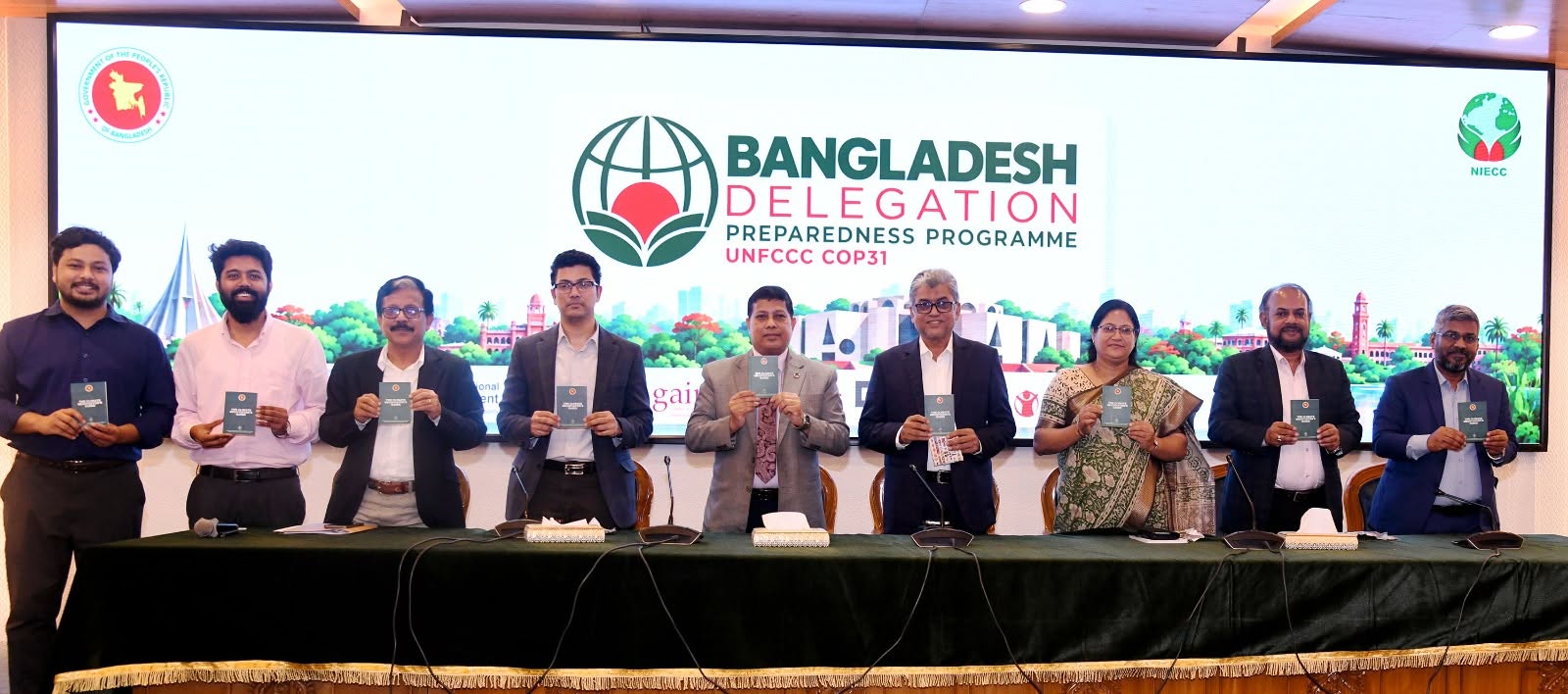
A key highlight was the official unveiling of The Climate Negotiator’s Guide, a resource intended to provide negotiators with practical knowledge and insights for international climate discussions.
The programme reaffirmed Bangladesh’s priorities for predictable and accessible climate finance, stronger implementation of the Global Goal on Adaptation and an effective Fund for Responding to Loss and Damage.
It also underscored opportunities for international cooperation on renewable energy, technology transfer, capacity building, just transition and credible carbon markets, alongside the pursuit of climate justice.
The concluding discussions stressed that preparation must continue beyond the two-day programme through knowledge sharing, technical coordination and the development of a sustained national pool of skilled negotiators.
The initiative concluded with a commitment to better connect international climate negotiations with national implementation needs and strengthen Bangladesh’s capacity to contribute to global solutions, build consensus and exercise regional and international leadership on climate action.