


 Play store

Dhaka: Cyber hygiene should be recognised not merely as a technical concern but as an essential issue of economic development, particularly for micro, small and medium enterprises (MSMEs) increasingly adopting digital technologies to expand their businesses.
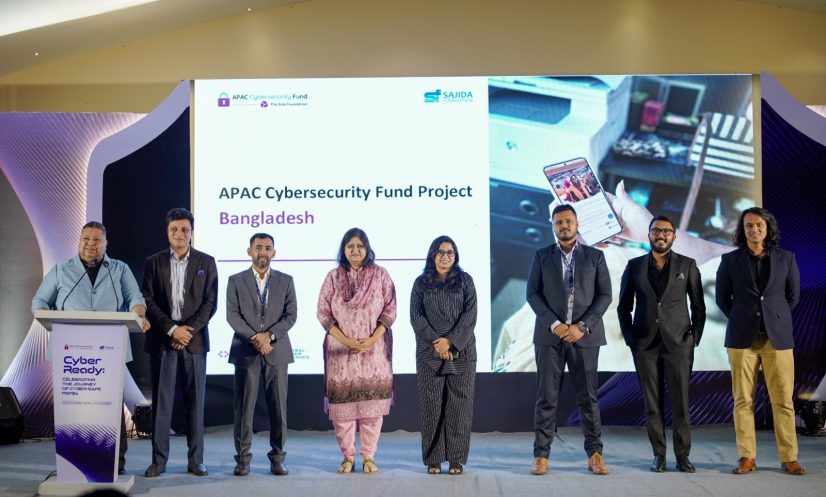
This was a key message at the closing event of the APAC Cybersecurity Fund (ACF) project, titled “CyberReady: Celebrating the Journey of Cyber-Safe MSMEs”, held in Dhaka on Wednesday.
Speakers at the event, organised by The Asia Foundation and SAJIDA Foundation, said that as cyber threats become more sophisticated and widespread, protecting MSMEs is critical to safeguarding livelihoods, sustaining economic activities and building trust in the country’s growing digital economy.
Between July 2024 and November 2026, the project trained more than 90,000 entrepreneurs through online and offline cyber hygiene sessions.
Speaking at the event, Anthea Mulakala, Senior Director of Digital Economy Programs at The Asia Foundation, said cyber hygiene was closely linked to economic development as it protected livelihoods, created opportunities and strengthened trust in digital systems.
“For a small business, a compromised account, a phishing attack, a fraudulent transaction can mean lost income, damaged customer relationships, or can even mean the survival of the business is at threat. And often we think of it as a technical issue, but it really is an economic development issue,” she said.
She also noted that the experience in Bangladesh demonstrated how partnering with a trusted, community-rooted organisation such as SAJIDA Foundation could significantly enhance a programme’s reach, effectiveness and impact.
Md Nomanuzzaman, Senior Director at SAJIDA Foundation, and Izlal Husain, Senior Program Manager at The Asia Foundation, presented the project and its key achievements, outlining the training activities and the programme’s contribution to raising cyber hygiene awareness among MSMEs and other participants.
They said deploying microfinance staff as trainers had made the programme’s outreach and knowledge transfer more effective, thanks to their established relationships with and understanding of local communities.
A panel discussion titled “Building a Cyber-Resilient Digital Ecosystem for MSMEs in Bangladesh” was also held at the event. It brought together Fazlul Hoque, Deputy CEO of SAJIDA Foundation; Md Khairul Anam, Additional Director of Bangladesh Bank; Nadya Subramaniam, Director of Digital Skills at The Asia Foundation; and Sohel Rana of Palli Karma-Sahayak Foundation.
The discussion was moderated by Muntasir Tahmeed Chowdhury, Co-Founder and Managing Director of Inspira Advisory and Consulting Ltd.
Muntasir Tahmeed Chowdhury observed that cybercrime had become a threat not only to large enterprises but also to small businesses in remote communities across emerging economies.
He discussed the growing exposure of smaller businesses to cyber threats and the importance of greater awareness, practical safeguards and cooperation among stakeholders in making the digital ecosystem safer.
Fazlul Hoque stressed the need to integrate cyber hygiene into regular financial and digital literacy programmes rather than treating it as a time-bound project.
Drawing on SAJIDA Foundation’s experience in microfinance and digital financial services, he observed that many participants had adopted digital services without adequate knowledge of password protection, account security and online risks.
He said cyber hygiene training needed to be continuous because scammers constantly changed their methods. The training had also benefited field-level staff, while the risks extended to families receiving remittances, who could be targeted through information about migrant workers, he added.
Kazi Faisal Bin Seraj, Country Representative of The Asia Foundation, also spoke at the event.
He said, “For generations, societies have developed social norms and systems to protect people from fraud and exploitation. Today, similar protection is essential in the digital space. Safety and security are no longer needed only in our physical lives, they are equally important online.”
The APAC Cybersecurity Fund is an initiative of The Asia Foundation, supported by Google.org, Google’s philanthropic arm, to build inclusive and sustainable cybersecurity ecosystems across the Asia-Pacific region. SAJIDA Foundation is the implementing partner of the project in Bangladesh.