


 Play store

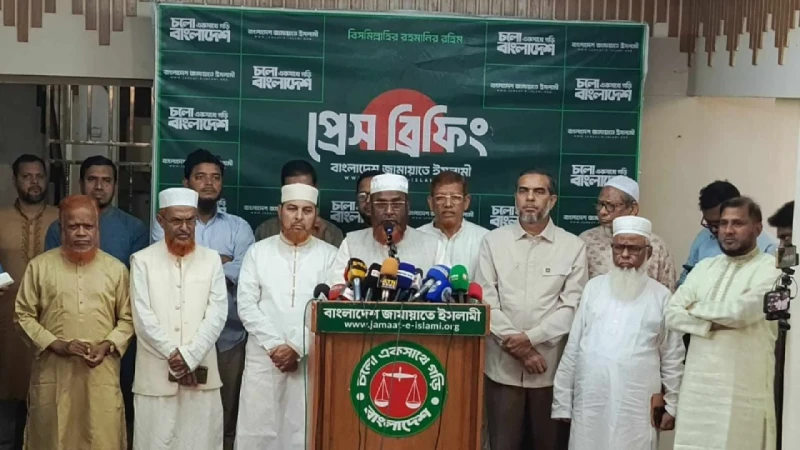
Bangladesh Jamaat-e-Islami has placed a 15-point set of demands, including setting the minimum monthly wage for garment workers at Tk30,000, ensuring a fair investigation into the killing of worker Taufiq Sheikh in Gazipur and reopening factories that have remained closed.
The party also called for fair wages for workers and effective measures to prevent vandalism, arson and sabotage at industrial establishments.
The demands were announced at a press conference on Thursday (November 5) on the current situation in the garment industry.
The party said ensuring workers’ rights and maintaining industrial stability were not contradictory. Rather, long-term stability in the garment sector would not be possible without improving workers’ living standards.
It noted that the costs of essential commodities, housing, healthcare, education and transportation had increased, while workers’ incomes had not risen accordingly. As a result, many garment workers were struggling to meet their families’ basic needs.
Jamaat Secretary General Mia Golam Porwar said the government formed a six-member wage board on November 1, with its first meeting held on November 4.
He urged the board to make impartial and acceptable recommendations based on workers’ actual living costs, market prices, family sizes and basic needs.
The party called for effective representation of workers in the process, an early announcement of the revised minimum wage and its implementation from January 2027.
The press conference also expressed deep concern over clashes and casualties during workers’ protests demanding higher wages in Gazipur.
Jamaat mourned the death of Taufiq Sheikh, 21, who sustained critical injuries during the unrest and later died while undergoing treatment. The party demanded adequate compensation and rehabilitation for his family, as well as proper medical treatment for injured workers.
It also called for an impartial investigation to establish the circumstances surrounding the death and identify those responsible, urging authorities to bring the perpetrators to justice.
While expressing support for workers’ demands, Jamaat said vandalism, arson, looting and attacks on vehicles could not help establish workers’ rights. Such incidents put jobs at risk, damage investment and adversely affect the national economy.
The party called for an impartial investigation into whether the banned Awami League, Jubo League, Sramik League or other vested groups were attempting to incite unrest or carry out sabotage amid the ongoing labour disputes.
However, it cautioned against blaming ordinary workers without evidence and demanded that those responsible be brought to justice regardless of their political affiliations.
The party also opposed harassment, torture, excessive use of force and mass arrests in the name of suppressing legitimate workers’ protests. It demanded the release of innocent workers and labour leaders arrested during the unrest and the withdrawal of harassment-related cases.
Describing the situation in the garment sector, Jamaat said production had been disrupted at more than 1,000 factories in industrial areas, including Savar, Ashulia, Gazipur, Narayanganj and Mirpur. Hundreds of factories had been temporarily shut, preventing thousands of workers from joining their workplaces.
Citing the Centre for Policy Dialogue (CPD), the party also said more than 100 garment factories had permanently closed in recent times due to gas and electricity shortages, resulting in around 62,000 job losses.
It warned that continued disruption could lead to cancellations of orders by international buyers, delays in product deliveries and a decline in Bangladesh’s competitiveness in global markets.
To resolve the crisis, Jamaat called for an immediate tripartite dialogue involving the government, factory owners and workers’ representatives, saying a sustainable solution could only be achieved through discussion, mutual trust and understanding.
The party also demanded payment of outstanding wages, allowances and overtime, an end to unjustified worker layoffs, opportunities for blacklisted workers to return to their jobs and the reopening of closed factories.
Other demands in the 15-point charter include ensuring the security of workers, factories and vehicles in industrial zones; introducing a rationing system to supply essential food items at affordable prices; expanding healthcare, housing and social security facilities for workers; and ensuring safe and healthy working conditions for women workers.
Jamaat urged the government to implement workers’ legitimate demands, ensure justice for the killing of workers and take initiatives to reopen closed factories. It also called on factory owners to treat workers as essential partners in the industry rather than adversaries and urged labour organisations to conduct their movements peacefully and responsibly.
Among those present at the press conference were Jamaat Nayeb-e-Ameer and former MP Maulana ANM Shamsul Islam, Assistant Secretary General Maulana Rafiqul Islam Khan, former MP Dr AHM Hamidur Rahman Azad, Maulana Abdul Halim, Advocate Ehsanul Mahbub Zubair and other central and metropolitan leaders.