Play store

Human Rights Watch (HRW), a US-based international human rights organisation, has urged the Bangladesh authorities to ensure that police do not use excessive force against garment workers protesting for higher wages. The organisation has also called for those responsible for violence to be held accountable.
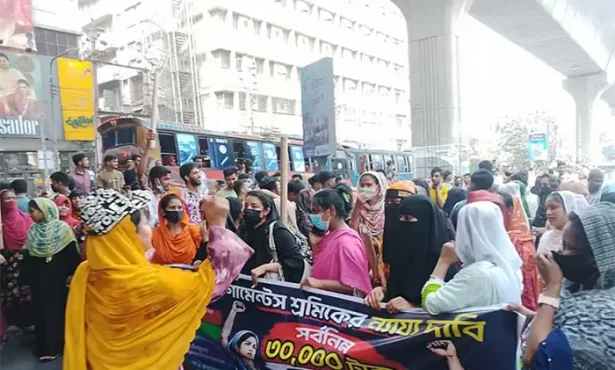
In a report published on its website on Thursday, HRW said police had used batons and tear gas to disperse thousands of garment workers demonstrating for increased wages.
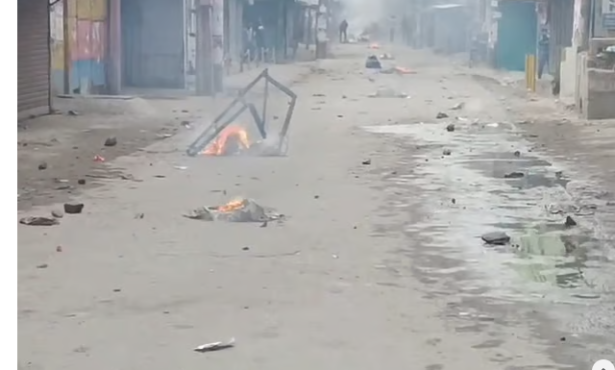
Reports of arson, vandalism at factories and attacks on police emerged during the protests. Factory owners and alleged perpetrators linked to political parties have also been accused of involvement in the violence.
HRW said the Bangladesh authorities should ensure, in line with international standards, that police use force only when necessary and that any force employed is proportionate to the circumstances. It also called for those responsible for violence to face accountability.
On November 3, a garment worker named Taufiq Hossain died. One of his colleagues told HRW: “We were returning to the factory after lunch when Taufiq got caught between the protesting workers and people hired from another garment factory to suppress the demonstration. When I turned around, I saw Taufiq lying on the ground. The hired men had beaten him brutally.”
The protesting workers are demanding a monthly minimum wage of Tk 30,000. In 2023, the minimum monthly wage for garment workers was set at Tk 12,500. On November 1, the government formed a wage board, which said the new wage structure would come into effect in December once it is finalised.
A 31-year-old sewing machine operator told HRW: “My house rent is Tk 6,000. Cooking gas now costs Tk 2,300. I earn Tk 13,500 a month. This year, I cannot afford my children’s education expenses. Tell me, how much money is left for food?”
According to the HRW report, instead of addressing workers’ legitimate demands for a living wage, the Bangladesh authorities have blamed political opponents for instigating the protests.
On November 3, the Dhaka Metropolitan Police (DMP) said it had arrested 33 supporters of the ousted Awami League, whose activities are currently banned, on allegations of sabotage.
Meanwhile, members of the youth wing of the ruling Bangladesh Nationalist Party (BNP) have reportedly staged demonstrations against the protesting workers.
Three labour leaders were reportedly detained in Ashulia on November 3 on allegations of inciting unrest. Police have also filed cases under the Anti-Terrorism Act against thousands of unidentified individuals.
The 28-year-old wife of one of the arrested men told HRW: “They took my husband away. He joined the protest for only a short time. He was not involved in any kind of violence.”
Before the national election in February, the BNP had pledged to increase wages in line with inflation. An amendment to the Labour Act adopted in April introduced a provision for wage reviews every three years. It also prohibited the blacklisting of trade union organisers.
HRW said the Bangladesh authorities must break the cycle of violence and impunity surrounding wage negotiations. International brands also have a role to play, it added.
The organisation urged global brands to ensure that their contracts with suppliers do not encourage the mistreatment of workers or make it impossible for them to receive wages sufficient to meet their basic living needs.