Play store

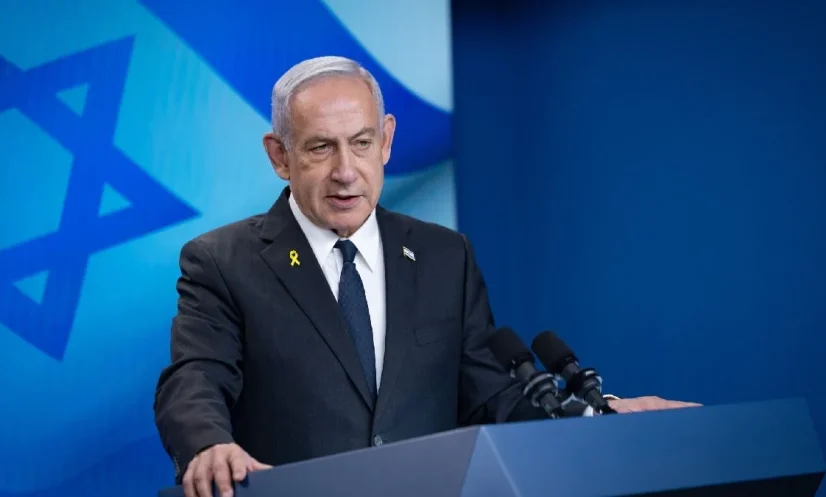
Israeli President Isaac Herzog has delivered a major setback to incumbent Prime Minister Benjamin Netanyahu by revealing that 67 lawmakers have recommended his rival, Gadi Eisenkot, for the premiership, compared with 46 lawmakers who backed Netanyahu.
According to The Times of Israel, the final decision on who will be tasked with forming the next government will be announced on Sunday.
Herzog disclosed the figures on Thursday (November 5) following consultations with representatives of the country’s political parties.
He said parties representing 67 lawmakers had recommended Eisenkot as prime minister, while those representing 46 lawmakers had expressed support for Netanyahu.
Despite the clear gap in support, the president has not yet formally tasked either candidate with forming a government. He said he would hold further consultations with political party leaders before announcing his decision on Sunday.
Eisenkot has urged Herzog to give him the mandate to form a government without delay. He said the recommendations represented the highest number of lawmakers ever secured by a candidate for prime minister since 2015.
However, despite securing recommendations from a majority of lawmakers, Eisenkot faces significant challenges in forming a government.
The anti-Netanyahu bloc comprises 48 lawmakers from four predominantly Jewish parties and 19 lawmakers from two predominantly Arab parties. All six parties have backed Eisenkot. However, three of the Jewish-majority parties have so far refused to join a coalition government with Arab parties.
Meanwhile, Netanyahu’s outgoing coalition won 53 seats in the election. However, United Torah Judaism, which holds seven seats, did not recommend Netanyahu for prime minister. This has opened up the possibility of the party joining forces with Eisenkot.
Avigdor Lieberman, leader of the Yisrael Beiteinu party, has also reportedly softened his longstanding opposition to forming a coalition with Haredi parties, Channel 12 reported.
Lieberman is giving greater priority to removing Netanyahu from power. Such an alliance could even lead to a power-sharing arrangement between Eisenkot and Lieberman, with both taking turns as prime minister.
On the other hand, Netanyahu’s Likud Party has called for the formation of a broader national unity government involving opposition parties. However, Eisenkot’s supporters have ruled out the possibility of forming such a government with Netanyahu.
Members of the new Knesset, Israel’s parliament, are scheduled to be sworn in on November 10. A new speaker will be elected afterwards.
Despite Eisenkot receiving recommendations from 67 lawmakers, the political uncertainty will continue until Sunday, when President Herzog is expected to announce who will receive the mandate to form the next government.