Play store

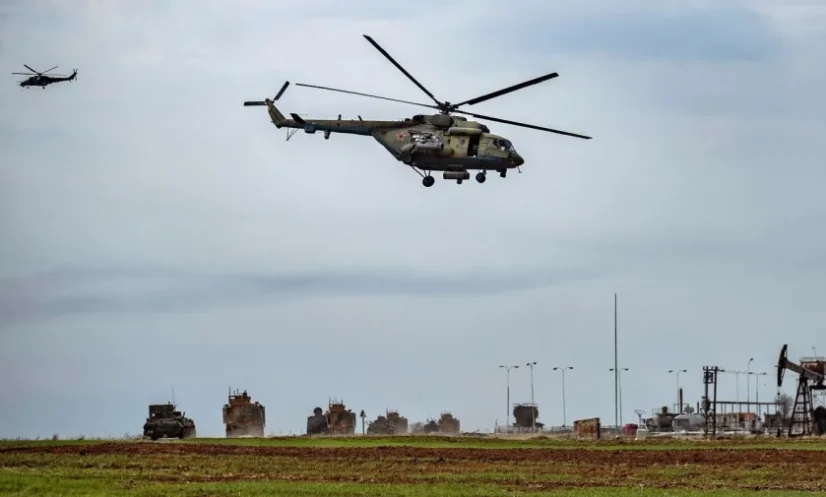
Russia has agreed to supply Iran with 90 precision-guided missile launchers designed for use on helicopters, signalling closer military cooperation between the two countries amid rising regional tensions, the Financial Times reported on Thursday.
The report, citing confidential export contract documents from a Russian defence equipment manufacturer, said the order was included in production schedules for 2024 and 2025 at the Vympel State Machine-Building Design Bureau, a subsidiary of Russia’s state-owned Tactical Missiles Corporation (KTRV).
The documents refer to a customer identified by the code “K-10”, which Russian defence records use to designate Iran. They list an order for 90 APU-L missile launchers, alongside orders for seven other Russian customers, including China, which reportedly ordered 192 APU-305 launchers.
The launchers are designed for Russia’s Mi-28 attack helicopters and can carry the Izdeliye 305, also known as the LMUR, a lightweight multipurpose guided missile. The missile can strike moving targets at distances of up to 14 kilometres (8.7 miles).
Ukrainian intelligence firm Dallas Analytics provided the documents to the Financial Times and subsequently published them on its website.
It remains unclear whether the equipment has already been delivered to Iran.
Reports of Russian military assistance to Tehran have increased since joint US-Israeli strikes against Iran began on February 28. Moscow has reportedly provided weapons, satellite imagery and intelligence support, although Russia has repeatedly denied supplying arms to Iran.
In May, Russian President Vladimir Putin specifically rejected claims that Moscow was providing weapons to Tehran.
Military ties between the two countries have deepened since Russia launched its full-scale invasion of Ukraine in 2022.
Iran finalised an agreement in November 2023 to purchase Russian Su-35 fighter jets, Mi-28 helicopters and Yak-130 training aircraft. Iranian army spokesman Mohammad Akraminia recently said the purchase of Su-35 jets had been completed, but their delivery would take place after the ongoing war ends.
High-level contacts between Moscow and Tehran have also intensified in recent months.
On Tuesday, Iranian President Masoud Pezeshkian met Putin in Moscow on the sidelines of a forum of gas-exporting countries. The two sides also discussed strengthening economic and strategic cooperation during talks in October.
Earlier on Monday, Iran’s Supreme National Security Council chief Mohsen Rezaei held a telephone conversation with Putin and praised his support for the role of Supreme Leader Ayatollah Ali Khamenei, who was killed at the beginning of the war.