Play store

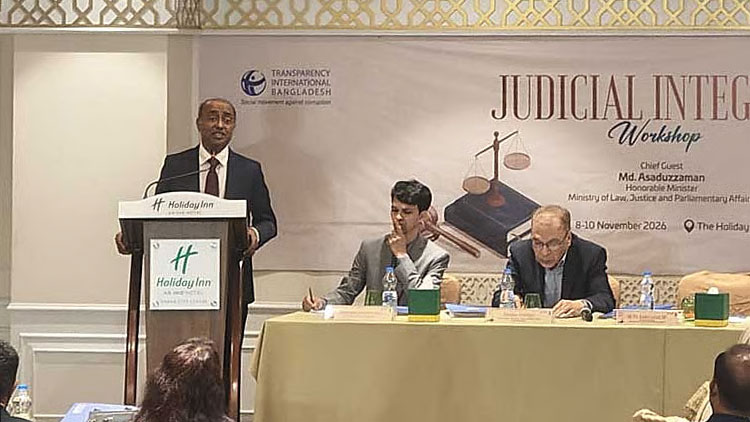
Law Minister Md Asaduzzaman has said the government will take all necessary steps to bring former prime minister Sheikh Hasina back to Bangladesh from India under the prisoner exchange agreement, expressing hope that the Indian government will hand her over.
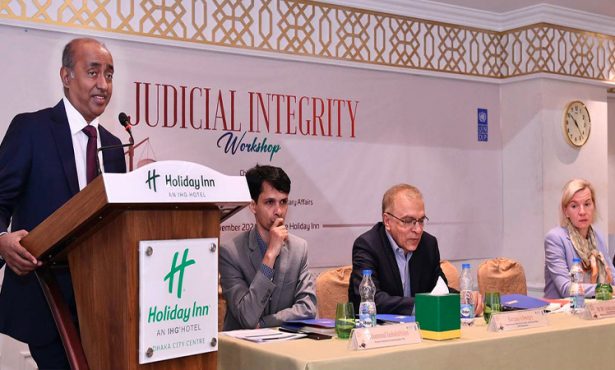
He made the remarks while addressing a judicial integrity workshop for judges at a hotel in the capital on Sunday (November 8).
The minister also said Bangladesh expects justice in the Rohingya genocide case at the International Court of Justice (ICJ), with a verdict scheduled for November 19.
Referring to the Liberation War of 1971 and the killings during the 2024 mass uprising, Asaduzzaman called for speaking out against those responsible for atrocities and ensuring justice for the victims.
He said those who opposed the Liberation War and were involved in genocide in 1971 must be held accountable. Similarly, those responsible for killings during various movements and protests should face justice.
Mentioning several martyrs of the Liberation War, including Jafar, Joynail, Dipali Saha, Kanchan, Rafun, Basunia, Jihad and Dr Milon, he also referred to the deaths of Abu Sayed, Mugdh and Anas during the 2024 mass uprising.
According to the minister, more than 1,400 people were killed and around 300 others were left disabled during the uprising. He urged society to develop a culture of demanding justice for those responsible.
On judicial integrity, Asaduzzaman said society had been intellectually divided, while a section of intellectuals remained silent despite the large number of deaths and injuries during the July uprising.
Speaking about corruption in the judiciary, he said intellectual corruption deserved as much attention as financial corruption.
Referring to questions raised by Transparency International about judicial integrity, he said the discussion should cover not only financial corruption but also the integrity of judicial decisions and thinking.
The minister argued that intellectual corruption had been more damaging to Bangladesh’s judiciary and the country than financial corruption.