


 Play store

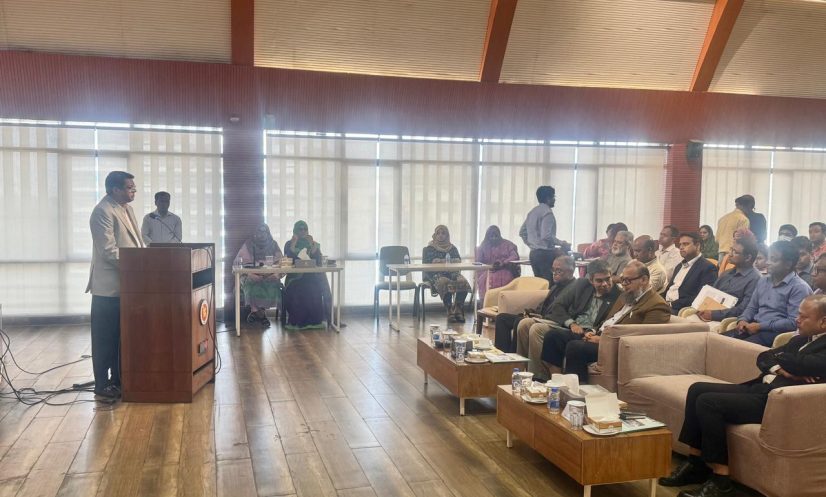
Dhaka: Housing and Public Works Minister Zakaria Taher said on Sunday that the government’s objective is not centralised urbanisation but decentralised and balanced urban and regional development across the country.
He said master plans were being prepared for every city corporation and district to ensure sustainable urbanisation and balanced development.
The minister made the remarks at a seminar titled “Introducing a Uniform Spatial Planning System in Bangladesh”, organised by the Urban Development Directorate (UDD) under the Ministry of Housing and Public Works at Segunbagicha in the capital to mark World Town Planning Day 2026.
“Work is underway to prepare master plans for every city corporation and district in the country to ensure sustainable urbanisation. Alongside plans to develop secondary townships around Dhaka, the Urban Development Directorate has, for the first time, adopted a 10-year plan. It will be extended step by step, from metropolitan cities down to the upazila level,” he said.
The minister said housing should not be viewed merely as four walls and a roof. Rather, it encompasses access to safe water, electricity, sanitation, public transport, education, healthcare and employment, as well as an environment that ensures a dignified life.
He said the Spatial Planning Act, 2026 had been enacted, prioritising sustainable development, economic growth, biodiversity conservation, climate and disaster resilience, and the protection of agricultural land and the environment.
Under the law, the UDD will prepare national and regional spatial plans and develop the necessary policy framework, he added.
A keynote paper presented at the seminar highlighted the lack of uniformity in spatial planning across different government agencies.
It noted that several organisations, including RAJUK, CDA, KDA, RDA, CoxDA, the Local Government Engineering Department (LGED), city corporations and the UDD, are currently preparing spatial plans under their respective legal frameworks and terms of reference (ToRs).
Although these agencies conduct similar surveys, their final outputs differ in terms of climate and disaster risk management strategies, land-use classifications, map scales and data formats, the paper said.
As a result, integrating planning data into the Sustainable Development Goals (SDG) tracker has become complicated, while overlapping responsibilities have emerged in government planning activities at national and regional levels.
To address these challenges, the UDD has drafted a proposal for introducing a Uniform Spatial Planning System to establish common standards for survey methods, data formats, map scales, land-use classifications and approval procedures across all relevant agencies.
The directorate has set a target of preparing spatial plans for the entire country, including all districts, by 2035.
To achieve this goal, the keynote paper recommended preparing standard terms of reference and rate schedules, introducing uniform planning standards and map schemes, establishing a clear institutional framework and strengthening planning capacity at the local level.
World Town Planning Day was initiated in 1949 by Carlos María della Paolera, a professor at the University of Buenos Aires in Argentina and a graduate professor at the Institute of Urbanism in Paris.
Observed worldwide on November 8 each year, the day aims to promote environmentally sustainable urban development. This year’s theme is “Great Communities Are Built on Planning.”