


 Play store

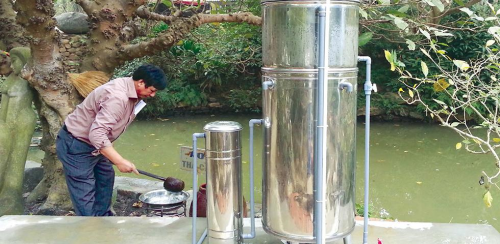
Three-year initiative aims to expand safe drinking water facilities in rural areas and tackle arsenic and iron contamination
DHAKA: The government has taken an initiative to undertake a Tk3,545 crore project to ensure safe and arsenic-free drinking water across the country, with a particular focus on rural communities.
The proposed project, titled ‘Priority Rural Water Supply Project’, is currently under consideration by the Planning Commission. It is scheduled to be implemented over three years, from November 2026 to June 2029, subject to approval.
If approved, the project will create new sources of safe drinking water, expand existing water supply facilities and develop infrastructure to address shortages in areas affected by arsenic and excessive iron contamination.
Increasing access to safe drinking water among rural communities and reducing the risk of waterborne diseases are among the key objectives of the initiative.
State Minister for Local Government, Rural Development and Cooperatives Mir Shah Alam disclosed the information in Parliament on Monday while responding to a question from Sylhet-6 lawmaker Emran Ahmed Chowdhury during the question-and-answer session of the fourth session of the 13th Parliament.
Presided over by Speaker Hafiz Uddin Ahmad, the session heard the state minister respond on behalf of Local Government Minister Dr Abdul Moin Khan.
According to the state minister, the proposed project has an estimated cost of Tk354,471.67 lakh, equivalent to approximately Tk3,545 crore. The proposal is now being examined by the Planning Commission, and implementation will begin within the proposed timeframe once it receives government approval.
The state minister also informed Parliament that three development projects are currently being implemented under the Department of Public Health Engineering (DPHE) to address shortages of safe drinking water in arsenic- and iron-affected areas, including Golapganj and Beanibazar upazilas of Sylhet district.
Under the ongoing Safe Water Supply Project, scheduled for implementation from 2020 to 2028, a total of 1,562 tube wells have already been installed in Golapganj and 1,420 in Beanibazar.
In addition, 36 community-based water supply units have been allocated to the two upazilas, he said.
The state minister further said that various small- and large-scale piped water supply schemes were being implemented in Golapganj and Beanibazar under the Rural Water Supply, Sanitation and Hygiene Project.
These initiatives are aimed at developing integrated water supply systems in areas where households face difficulties in accessing safe drinking water through individual tube wells.
Another emergency assistance project, scheduled for implementation from 2023 to 2026, is being carried out to reconstruct and rehabilitate water supply infrastructure damaged by recent floods.
Under this project, several hundred submersible and deep tube wells have been allocated to Golapganj and Beanibazar, according to the state minister.
Once the newly proposed project is approved, the two upazilas will receive further opportunities to expand access to safe drinking water.
According to the information presented in Parliament, an additional 458 water sources could be installed in Golapganj and 416 in Beanibazar under the proposed project.
The expansion is expected to improve the availability of safe drinking water in areas affected by arsenic and iron contamination and help address longstanding water shortages among local communities.
A significant portion of rural Bangladesh remains heavily dependent on groundwater for drinking and household use. However, the presence of arsenic and excessive iron in groundwater in different parts of the country continues to pose a major challenge to safe water access.
Prolonged consumption of arsenic-contaminated water can cause serious health complications, making the development of alternative safe water sources, expansion of supply infrastructure and regular monitoring of water quality essential.
If implemented, the proposed project is expected to expand safe drinking water coverage in rural areas and contribute to improving the long-term availability of arsenic-free water.
However, the final project cost, geographical coverage and implementation arrangements will depend on the Planning Commission’s assessment and subsequent government approval.