


 Play store


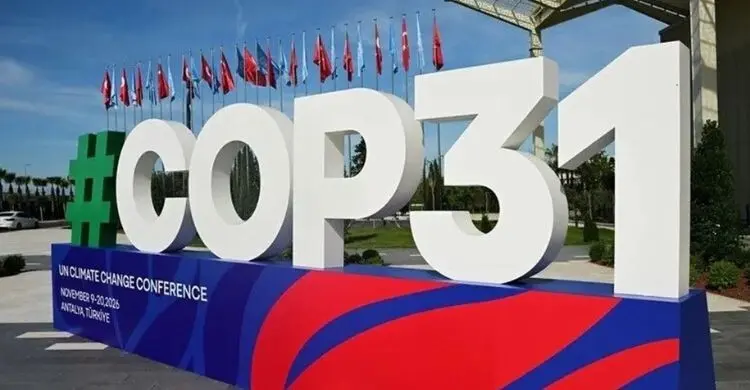
The UN Climate Change Conference (COP31), underway in Antalya, Türkiye, has renewed the global debate over climate finance, accountability and support for vulnerable countries, with Bangladesh pressing for fairer funding to tackle the growing impacts of climate change.
The conference, which began on November 9 and will continue until November 20, has brought together government leaders, climate experts, development organisations and environmental activists to discuss ways to address the climate crisis and translate previous international commitments into concrete action.
Despite years of pledges, however, the delivery of promised climate finance remains a major concern, particularly for developing countries that contribute relatively little to global emissions but face disproportionate climate risks.
For Bangladesh, one of the countries most vulnerable to climate change, the central demand at COP31 is to ensure accessible, predictable and grant-based climate financing rather than additional loans that could deepen its debt burden.
Finance, food security, agriculture, public health and climate adaptation are among the key issues dominating this year’s discussions. However, developing countries remain concerned about the gap between financial commitments made by wealthy nations and the actual funds delivered.
At the previous climate summit, countries agreed to mobilise at least $300 billion annually for developing nations by 2035. They also called for scaling up climate finance from all sources to $1.3 trillion a year.
But questions remain over how much of the funding will come as grants or loans, how it will be distributed and whether the most climate-vulnerable countries will receive adequate support.
Developing countries argue that meaningful progress on climate action will remain difficult without a clear and effective financing mechanism.
Bangladesh is already experiencing the consequences of rising temperatures, salinity intrusion, river erosion, cyclones, storm surges, floods and droughts.
Coastal districts, including Satkhira, Khulna, Bagerhat, Patuakhali, Barguna and Bhola, are particularly exposed. Increasing salinity is affecting agricultural land, while shortages of safe drinking water and river erosion are threatening livelihoods and forcing communities to relocate.
Against this backdrop, Bangladesh is expected to push for increased grant-based financing, easier access to the Loss and Damage Fund and greater technological support for climate adaptation.
Complex procedures and stringent conditions attached to international climate funds remain major obstacles for developing countries. Bangladesh argues that financial assistance should reflect the scale of climate-related losses and the limited resources available to vulnerable nations.
The financing structure of climate-related investments has also emerged as a concern.
According to civil society organisations Change Initiative and Young Power in Social Action (YPSA), loans accounted for 90.4% of Bangladesh’s total investment in the renewable energy sector since 2000.
They have called for greater grant-based climate financing, alongside stronger transparency and accountability in the management of climate funds.
Their concern is that countries already struggling with climate-related losses should not be forced to accumulate additional debt to finance adaptation and clean energy projects.
The absence of several influential world leaders has also drawn attention at the conference.
US President Donald Trump, Chinese President Xi Jinping and Indian Prime Minister Narendra Modi are not expected to attend. The absence of top leaders from France, Germany and Canada has also featured in discussions.
Their absence has raised questions about the level of political engagement by major economies and some of the world’s largest greenhouse gas emitters in addressing the climate crisis.
Türkiye’s Environment Minister Murat Kurum is presiding over the conference, while Australian Climate and Energy Minister Chris Bowen is leading the formal negotiations.
Representatives from 77 countries are scheduled to deliver statements during high-level discussions on November 11 and 12.
A central objective of the Paris Agreement is to limit global warming to well below 2 degrees Celsius while pursuing efforts to keep the increase within 1.5 degrees Celsius above pre-industrial levels.
However, the latest climate assessments point to a widening gap between global commitments and actual progress. The past 12 years have ranked among the warmest on record, while projections suggest that current policies could lead to around 2.8 degrees Celsius of warming by the end of the century.
For Bangladesh and other climate-vulnerable countries, the stakes go far beyond diplomatic negotiations. The effectiveness of COP31 will ultimately be measured not by the number of promises made but by whether financial resources, technology and practical support reach the communities that need them most.
The challenge is clear: climate justice cannot be achieved through pledges alone. It requires wealthy nations to honour their commitments and turn financial promises into tangible action.