Play store

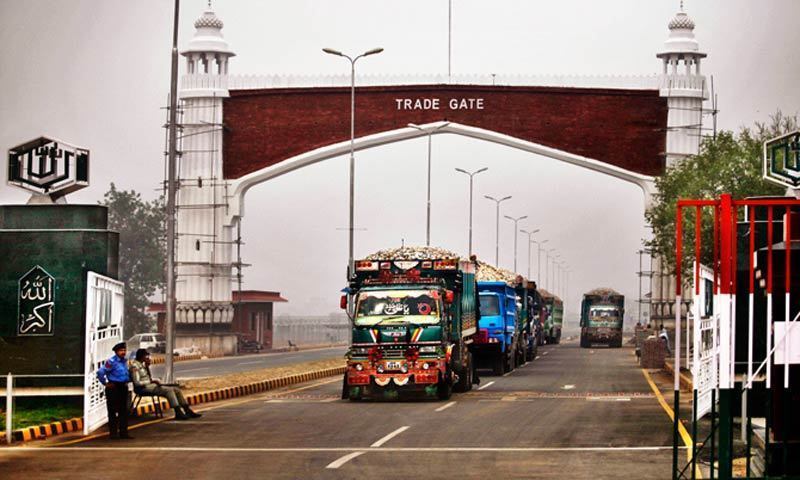
Trade between Pakistan and India is showing signs of recovery despite restrictions imposed following their military confrontation in May 2025, with Pakistan’s imports from its neighbour rising 69 per cent in the July-September quarter of 2026.
Pakistan imported goods worth $61.7 million from India during the three months, compared with $36.6 million in the same period a year earlier, according to data from the State Bank of Pakistan (SBP).
The increase comes despite a breakdown in bilateral relations following the killing of 26 people in Pahalgam in Indian-administered Kashmir in April 2025. India blamed Pakistan for the attack, a charge Islamabad denied.
The tensions escalated after New Delhi placed the Indus Waters Treaty, which governs the sharing of river waters, in abeyance. Pakistan responded by closing its airspace to Indian airlines, shutting the Wagah border crossing and suspending trade.
The two nuclear-armed neighbours exchanged missile and drone strikes in May 2025 before agreeing to a ceasefire on May 10, following four days of fighting.
SBP data show that payments for Indian imports declined from around $20 million in April 2025 to $9.2 million in June and $8.2 million in July before recovering to $19.6 million in September.
For the full 2025-26 fiscal year, Pakistan paid $203.8 million for Indian imports, down 7.6 per cent from the previous year.
Monthly payments have since returned close to pre-conflict levels, averaging $19.3 million in the 12 months before the conflict and $19.1 million in the 13 months from September 2025.
Government trade figures put imports from India at $62.6 million in the latest quarter, compared with $66.6 million a year earlier.
Organic chemicals and pharmaceutical products accounted for 96.2 per cent of Pakistan’s imports from India in 2025-26, up from 93 per cent in the previous fiscal year.
The largest category comprised vaccines, blood products and related items, worth $93.6 million, compared with $70.3 million a year earlier. Imports of vaccines for human use alone increased to $32.3 million from $11.1 million.
Khaqan Najeeb, a former adviser to Pakistan’s Ministry of Finance, said the country’s pharmaceutical industry relied on Indian suppliers because of competitive prices, product availability and geographical proximity.
India has developed a competitive pharmaceutical industry, particularly in active pharmaceutical ingredients (APIs), which are essential for manufacturing medicines, he said.
Although Pakistan imposed a ban on imports originating in India in August 2019, it subsequently exempted therapeutic products regulated by the Drug Regulatory Authority of Pakistan (DRAP).
Following the 2025 conflict, Pakistan’s National Security Committee announced the suspension of all trade with India, including transactions involving third countries through Pakistan.
However, some Indian products continue to reach Pakistan through international supply chains.
Muhammad Zubair Motiwala, a former chief executive of the Trade Development Authority of Pakistan, said Indian goods entered the country through third countries, including the United Arab Emirates and Malaysia.
A DRAP official said Pakistan’s import decisions ultimately depended on national interests and the availability of essential products.
India accounted for only around 0.3 per cent of Pakistan’s total import bill of $64.5 billion in 2025-26. China remained Pakistan’s largest trading partner, supplying goods worth $19.5 billion.
However, India was Pakistan’s second-largest pharmaceutical supplier in 2024, marginally behind Belgium, according to the Observatory of Economic Complexity.
Motiwala said sourcing pharmaceutical raw materials from alternative markets could increase costs by 40 to 50 per cent in some cases.
Najeeb said the additional costs would depend on individual products, as freight, insurance, quality certification, regulatory approvals and delivery reliability all influence sourcing decisions.
The figures indicate that despite political and diplomatic tensions, Pakistan continues to depend on certain Indian products, particularly pharmaceutical inputs, while trade is gradually recovering through existing supply arrangements.