Play store

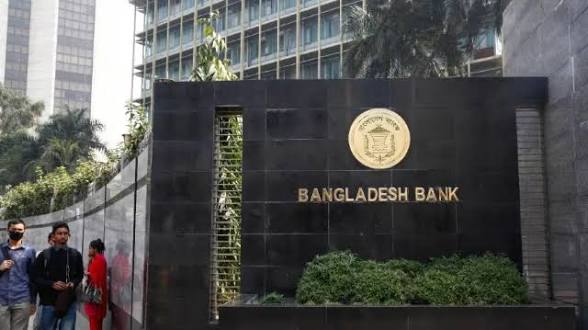
Bangladesh Bank has issued comprehensive guidelines to simplify the management of foreign currency accounts, import-export transactions and foreign investment in the country, introducing several new facilities for non-resident Bangladeshis, foreign investors and businesses dealing with international customers.
Under the new provisions, foreign investors will be allowed to invest in open-end mutual funds alongside listed shares and securities in the country’s capital market. Banks have been instructed to facilitate online opening of Non-Resident Investor’s Taka Accounts (NITAs) for expatriate Bangladeshis, enabling them to apply for and manage their accounts without visiting the country.
Businesses will also be allowed to retain up to 15 per cent of foreign currency earnings from sales of goods and services to foreign tourists through international cards and approved payment systems. The remaining 85 per cent must be converted into taka.
The Foreign Exchange Policy Department-2 (FEPD-2) of Bangladesh Bank issued a consolidated circular in this regard on Thursday (November 12).
The circular brings together existing rules governing the opening and operation of foreign currency and taka accounts by foreign nationals and non-residents, including regulations on deposits, withdrawals and outward remittances.
According to the central bank, various instructions issued under the Foreign Exchange Regulation Act, 1947, have been consolidated to make the rules easier to follow. Some provisions have also been revised to reflect changing requirements.
The circular will remain effective for one year from the date of issuance. Any new instructions issued during this period will have to be read in conjunction with the consolidated guidelines.
One of the significant changes concerns foreign currency retention by businesses providing goods and services to foreign tourists.
Hotels, resorts, restaurants, shopping malls, retail outlets and other eligible businesses will be allowed to retain up to 15 per cent of the total foreign currency received through international cards and approved payment channels.
The remaining 85 per cent of the proceeds must be converted into taka. The retained foreign currency can be used to settle legitimate current account foreign currency liabilities of the businesses concerned.
However, businesses must ensure payment of applicable taxes and VAT to enjoy the facility.
To avail themselves of the benefit, businesses must have the necessary infrastructure to accept international cards and payments through authorised channels. Banks will also be required to ensure compliance with Know Your Customer (KYC) procedures and regulations on anti-money laundering and combating the financing of terrorism.
In a major step towards facilitating investment by non-resident Bangladeshis, the central bank has instructed banks to introduce interactive online platforms for opening Non-Resident Investor’s Taka Accounts.
Under the new arrangement, expatriate Bangladeshis will be able to apply for NITA accounts without travelling to Bangladesh.
Banks will have to publish account-opening procedures and relevant information on their websites. Applicants will be able to complete application forms online and submit scanned copies of the required documents.
After verifying the applicant’s information and documents, the bank will advise the applicant on depositing the required funds. Banks will also be permitted to receive the initial deposit through international cards.
Once the money has been deposited, the account holder will be provided with a PIN to access and operate the account through the online platform from abroad.
Applicants will be required to submit a valid passport, photograph, proof of address, evidence of a reliable source of income and identification documents of their nominees or authorised representatives.
The facility is expected to make it easier for expatriate Bangladeshis to participate in the country’s capital market and manage their investments remotely.
The central bank has expanded the investment opportunities available to foreign investors through NITAs by allowing them to purchase units of open-end mutual funds.
Previously, investments through such accounts were primarily limited to shares and securities listed on the country’s stock exchanges. The revised guidelines have widened the scope to include open-end mutual funds.
However, the funds concerned must have approval from the Bangladesh Securities and Exchange Commission (BSEC). Foreign investors will be allowed to purchase units only in funds with prospectuses approved by the securities regulator.
Banks will have to notify Bangladesh Bank’s Foreign Exchange Investment Department within 14 days of issuing mutual fund units in the names of foreign investors.
Dividends earned from mutual fund investments may be credited to NITA accounts after payment of applicable taxes.
However, proceeds from the sale of mutual fund units can be credited to NITAs only with approval from Bangladesh Bank.
The central bank will also take into consideration the regular publication of the fund’s net asset value (NAV) and the extent of its investments in unlisted shares and securities.
The changes are expected to diversify investment opportunities for overseas Bangladeshis and other eligible foreign investors while providing an additional channel for foreign capital to enter the domestic financial market.
The consolidated guidelines also clarify the rules governing foreign currency accounts opened by Bangladeshi citizens working and earning abroad.
Expatriate Bangladeshis will be allowed to open such accounts without making an initial deposit. They can operate the accounts themselves or authorise another person in Bangladesh to manage them on their behalf.
Bangladeshis working abroad who temporarily visit the country will also be able to deposit foreign currency brought with them into their foreign currency accounts.
If the amount exceeds US$10,000, it must be duly declared to Customs before being deposited into the account.
The guidelines also allow account holders to remit money abroad and spend funds in taka within Bangladesh through these accounts, subject to applicable regulations.
The circular has also consolidated provisions relating to Resident Foreign Currency Deposit (RFCD) accounts, which are maintained with foreign currency brought into the country by residents returning from abroad.
Funds held in RFCD accounts can be remitted abroad or used for legitimate current expenses, including travel, education and medical treatment.
Subject to prescribed conditions, account holders may also be issued international debit, credit and prepaid cards against these accounts.
To facilitate the utilisation of approved foreign loans, designated banks have been authorised to open foreign currency accounts in the names of borrowers.
The proceeds of approved foreign loans can be deposited into these accounts and used for purposes specified in the loan approval conditions.
Eligible uses include payments for imports, legitimate service expenses related to project implementation and approved local purchases.
Banks will be required to submit quarterly statements detailing the utilisation of loan proceeds to Bangladesh Bank’s Foreign Exchange Investment Department in the prescribed format.
Once the loan proceeds have been fully withdrawn and utilised, the relevant account will generally have to be closed.
However, an account may remain operational within the prescribed limits if the loan agreement requires the borrower to retain foreign currency for repayment of instalments.
The provision is intended to facilitate the management of foreign loan proceeds while ensuring proper monitoring of their utilisation.
Rules consolidated for different types of foreign currency accounts
The circular also incorporates guidelines on foreign investors’ capital investment proceeds, Non-Resident Foreign Currency Deposit (NFCD) accounts of expatriate Bangladeshis, vostro accounts of foreign banks and foreign currency accounts maintained by foreign contracting firms.
Under the NFCD facility, expatriate Bangladeshis will be able to maintain fixed-term deposits for one month, three months, six months and one year.
The minimum initial deposit for such accounts will be US$1,000 or its equivalent in another foreign currency.
For foreign nationals, foreign companies, banks and financial institutions, as well as certain wholly foreign-owned industrial enterprises, the minimum deposit requirement will be US$25,000.
The revised guidelines also allow dividends payable to foreign shareholders to be credited to foreign currency accounts maintained in Bangladesh, subject to the fulfilment of specified conditions.
In addition, temporary foreign currency accounts may be opened to receive and utilise funds brought into the country for foreign investment purposes.
Bangladesh Bank has emphasised that authorised dealer banks must strictly follow KYC requirements, anti-money laundering and counter-terrorism financing regulations when opening and operating these accounts.
Banks will also have to comply with applicable reporting requirements to ensure transparency and proper monitoring of foreign currency transactions.
The consolidated circular is expected to make foreign exchange regulations more accessible to banks, investors, expatriates and businesses, while reducing procedural complications in cross-border financial transactions.