Play store

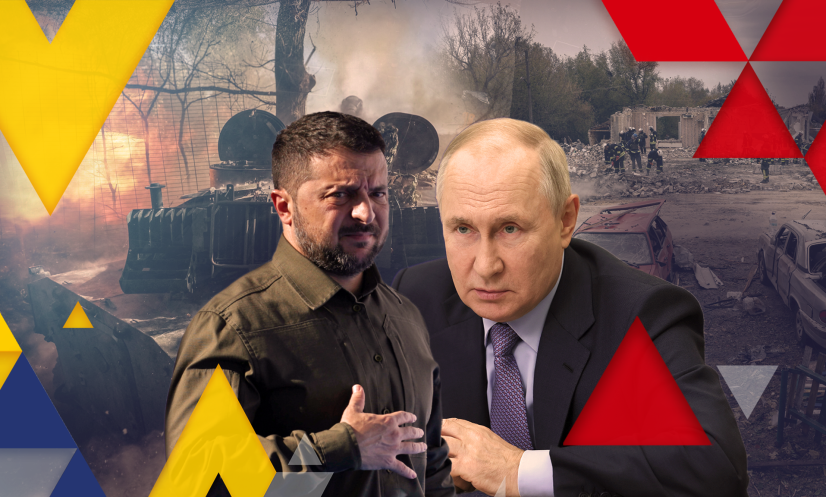
US President Donald Trump’s envoys met Russian President Vladimir Putin in Moscow on Thursday before travelling to Ireland for talks with Ukrainian President Volodymyr Zelenskyy, as Washington stepped up efforts to revive negotiations to end the nearly five-year-old war.
US special envoy Steve Witkoff and Trump’s son-in-law Jared Kushner held talks with Putin at the Kremlin for about two hours before flying to Dublin, where they met Zelenskyy for more than an hour.
The diplomatic engagements followed a round of direct negotiations between Russian and Ukrainian delegations in Abu Dhabi, the United Arab Emirates, earlier this week. The meeting marked the first direct discussions between the two sides in nine months.
Although the Abu Dhabi talks failed to produce a major breakthrough on ending the conflict, the parties agreed to a large-scale prisoner exchange, with the exact number of prisoners yet to be announced. They also agreed to hold another round of negotiations.
Witkoff and Zelenskyy said European representatives would participate in the next meeting, although details about the participating countries and the format of their involvement remained unclear.
Kushner said one of the objectives of the Moscow meeting was to secure Putin’s agreement to European participation in the negotiations, particularly on broader European security arrangements.
Several European security advisers attended discussions on the sidelines of the Abu Dhabi meeting but were excluded from the main trilateral negotiations involving Russia, Ukraine and the United States.
Speaking before leaving Moscow, Witkoff confirmed that another round of negotiations had been agreed upon and indicated that European representatives would join the next meeting.
Zelenskyy, speaking in Dublin, stressed that Europe should have a direct role in the negotiations rather than participating separately or from the sidelines.
“Next meeting, Europe will be during negotiations, will be a negotiation team – not some way, not separately. They will have a voice,” he said.
Washington and Kyiv have supported greater European involvement, with both seeking the appointment of a single European representative to negotiate with Moscow.
Russia, however, has resisted the participation of European countries in direct peace negotiations, accusing them of financing and supplying Ukraine’s military campaign.
Kremlin spokesman Dmitry Peskov said European countries first needed to agree on a representative before seeking direct engagement with Russia.
European governments remain concerned about Moscow’s intentions and its broader security implications for the continent.
The negotiations also face differences between Washington and European capitals over how to approach Moscow. Trump’s diplomatic engagement with Putin and previous decisions that have eased pressure on Russia have raised concerns among Ukraine and its European allies.
Russia has repeatedly identified NATO’s eastward expansion as a major security threat and demanded the withdrawal of alliance forces from areas near its borders.
The latest diplomatic initiative comes as the war approaches its fifth anniversary, with major disagreements over security guarantees, territorial issues and Europe’s future security arrangements continuing to complicate efforts to reach a settlement.