Play store


Vegetable prices have plunged below production costs in Rangpur due to bumper yields, leaving farmers facing heavy losses despite increased production expenses. However, consumers are not benefiting much from the price crash, as retail prices remain several times higher than those received by farmers, raising questions about supply chain management and the role of middlemen.
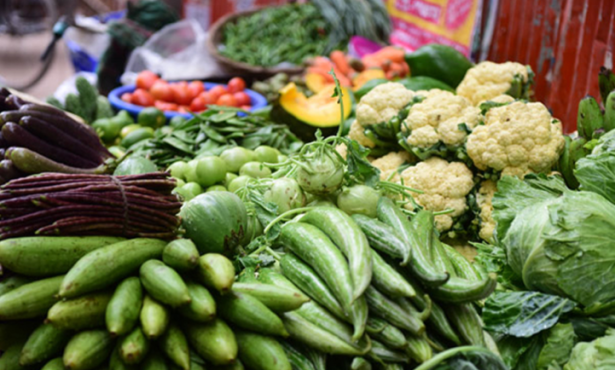
Mizanur Rahman, a farmer from Chhatra in Pirganj, Rangpur, sold eggplants for Tk 40-45 per kg just a month ago. This week, the price dropped to Tk 4-5 per kg, well below his production cost of around Tk 7.
“Production has been good, but prices have collapsed. I don’t know how I will recover my investment or repay my loans,” said the 45-year-old farmer.
Last year, Mizanur earned a profit of Tk 125,000 by cultivating early-season eggplants on three bighas of land. Hoping for similar returns, he borrowed money to grow the crop again this year. However, higher fertiliser and irrigation fuel costs pushed his production expenses up from Tk 152,000 last year to Tk 180,000 this year.
He now fears a loss of Tk 40,000-45,000.
Farmers in Lalmonirhat, Kurigram, Gaibandha, Panchagarh, Rangpur, Thakurgaon and Nilphamari are facing similar difficulties. Although they received good prices at the beginning of the season, rates have subsequently fallen below production costs.
Bumper output drives prices down
Officials of the Department of Agricultural Extension (DAE) said favourable weather, particularly lower rainfall, had contributed to higher yields and the subsequent price decline.
According to the Bangladesh Meteorological Department, rainfall was around 17 per cent below normal in September and 68 per cent lower in October this year. A K M Kamrul Hasan, acting officer of the Rangpur Meteorological Office, said the district received only 27 millimetres of rainfall in October, compared with 109 millimetres during the same month last year.
Mohammad Obaidur Rahman Mondal, director of the DAE’s Field Services Wing, said vegetable production had increased significantly on the same amount of land.
“Supply has exceeded demand, causing both vegetable prices and farmers’ incomes to fall,” he said.
Production costs rise
Farmers are facing additional pressure as production costs have increased alongside the price collapse. DAE officials and growers said expenses on labour, fertilisers, pesticides and diesel had risen.
According to the Bangladesh Petroleum Corporation, agriculture accounts for around 15 per cent of the country’s total diesel consumption, mainly for irrigation.
Farmers in several districts also alleged that authorised fertiliser dealers had restricted supplies, forcing them to purchase fertiliser from the open market. One farmer, requesting anonymity, said he had to pay Tk 500-700 more per sack than government-fixed prices.
SM Abu Bakar Saiful Islam, additional director of the DAE in the Rangpur region, said cultivation costs for four early-season vegetables had increased by 15-25 per cent.
The production cost of cauliflower has risen to Tk 55,000-60,000 per bigha this year from Tk 48,000-50,000 last year. Costs have also increased by Tk 5,000-8,000 for radish, Tk 6,000-7,000 for eggplant and Tk 5,000-6,000 for bottle gourd.
Farm-gate prices low, retail rates remain high
Despite the sharp decline in wholesale prices, consumers continue to pay considerably higher rates in retail markets.
Akbar Ali, a vegetable wholesaler at Rangpur’s City Bazar, said farmers were selling eggplants for around Tk 4 per kg, while the same produce was retailing for Tk 16-20.
Market data showed that eggplant prices in Rangpur ranged between Tk 20 and Tk 50 per kg on November 10, compared with Tk 40-60 during the same period last year. Ridge gourd was selling for Tk 25-30 per kg, down from Tk 40-45 a year earlier. Sweet pumpkin prices have also declined.
Akbar Ali said the number of traders coming from Dhaka and other parts of the country to purchase vegetables from the region had fallen by 70-80 per cent compared with previous years.
As a result, most locally produced vegetables are now being sold within the Rangpur region, putting further downward pressure on prices.
SM Abu Bakar Saiful Islam said allegations of supply chain irregularities, middlemen’s influence and market syndicates had also emerged.
“Farmers would not have incurred losses if they had received even two to three times the prices they are currently getting,” he said.
Bottle gourd and cauliflower growers also suffer
The crisis has hit growers of other vegetables as well.
Nitai Chandra Das, a 60-year-old farmer from Mominpur in Rangpur Sadar, cultivated bottle gourds on four bighas, expecting to earn Tk 150,000 from selling gourds and their leaves.
Two weeks ago, he sold each bottle gourd for Tk 20-25. Prices have since plunged to Tk 3-4 apiece, with buyers sometimes unavailable even at that rate.
His cultivation costs have increased from Tk 34,000 to Tk 45,000 per bigha in a year. He estimates that he will incur a loss of around Tk 45,000.
“If I leave the gourds on the plants, they will rot. If I harvest them, I have to pay labourers. We are caught in a dilemma,” he said.
Sultan Ali, a 70-year-old farmer from Khasbagh in Rangpur Sadar, planted 8,400 early-season cauliflower seedlings on two bighas of land at a cost of Tk 110,000.
Each cauliflower weighs around 700 grams, with production costs estimated at Tk 13-14. However, he is now selling each for Tk 10-11.
Last year, when production costs stood at Tk 10-11 per head, he received Tk 25-27.
“I started harvesting three weeks ago. At that time, production was low and I sold each cauliflower for Tk 50-55. I thought I would make a good profit this year, but now I am getting prices below production costs,” he said.