Play store

Md. Mohsin Hossain from ANTALYA, Türkiye: Bangladesh has called for scaling up global climate adaptation finance to $120 billion annually by 2035, joining other least developed countries (LDCs) in demanding a threefold increase in funding to help vulnerable nations cope with the growing impacts of climate change.
The country has also urged developed nations to provide more financial support to address climate-induced loss and damage, ensure easier access to funds and expedite disbursement.
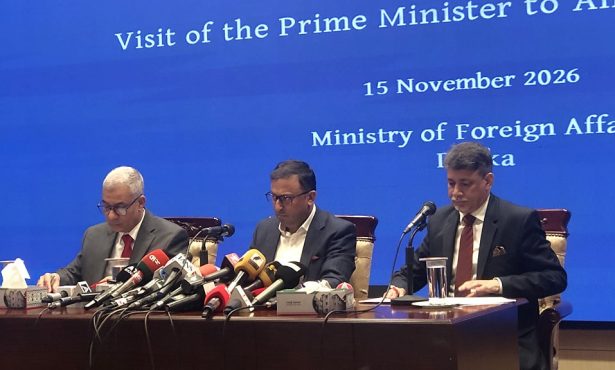
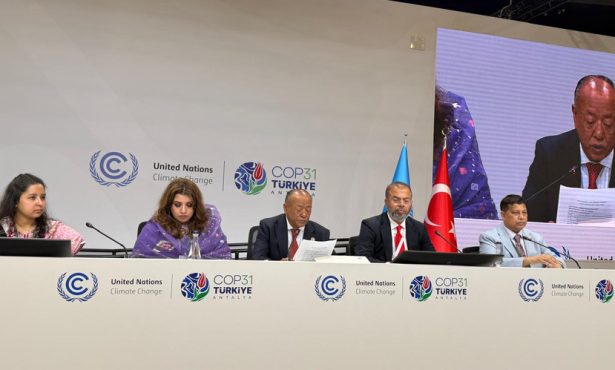
Forest and Environment Minister Abdul Awal Mintoo outlined these demands and the progress of climate negotiations in a written statement at a press conference by the Bangladesh delegation at the UN Climate Change Conference (COP31) in Antalya, Türkiye, on Friday.
State Minister for Foreign Affairs Shama Obaed and State Minister for Forest and Environment Sheikh Faridul Islam, among others, were present.
The statement said international cooperation was essential to strengthen Bangladesh’s adaptation efforts against climate change. Although the country contributes less than 0.5 per cent of global greenhouse gas emissions, it remains highly vulnerable to cyclones, floods, salinity intrusion, heatwaves and other climate-related hazards.
According to the World Meteorological Organization’s (WMO) 2026 climate update, global temperatures from January to September were approximately 1.47 degrees Celsius above pre-industrial levels.
Outlining Bangladesh’s climate commitments, the statement said the country’s third Nationally Determined Contribution (NDC 3.0) targets a 6.39 per cent reduction in emissions by 2035 compared with the business-as-usual (BAU) scenario. With international support, Bangladesh could achieve an additional 13.92 per cent reduction.
Bangladesh is also pursuing initiatives involving renewable energy, rooftop solar power, implementation of its National Adaptation Plan, tree plantation, canal restoration, stronger early warning systems and community-level adaptation programmes.
These initiatives are expected to protect the environment, create green jobs and strengthen climate resilience, the statement added.
The press conference also highlighted an announcement by the Climate Investment Funds (CIF) on Thursday that Bangladesh and four other initial recipient countries were expected to receive $30 million each. The funding will be used to strengthen coastal infrastructure and expand climate-smart agriculture.
Reviewing the progress of COP31 negotiations, the Bangladesh delegation said climate finance remained one of the major issues under discussion.
Alongside increasing adaptation funding, Bangladesh emphasised the need for easier and more direct access to resources from the Green Climate Fund (GCF), Global Environment Facility (GEF) and Adaptation Fund.
Discussions are also underway on implementing the global goal on adaptation through the Belém Adaptation Indicators and the Belém-Addis Vision.
Bangladesh wants indicators that can measure tangible improvements in climate resilience without imposing excessive reporting requirements on developing countries. It has also called for faster implementation of National Adaptation Plans and increased financing for locally led adaptation initiatives.
The LDCs have expressed concern over the inadequacy of resources in the Fund for Responding to Loss and Damage (FRLD), established to address climate-induced losses and damage.
Bangladesh has called for increasing contributions to the fund, simplifying access to its resources, speeding up disbursement and providing support to address both economic and non-economic losses.
Bangladesh has also stressed the need to sustain emission reduction efforts to keep the 1.5-degree Celsius temperature goal within reach.
It supports extending the Mitigation Work Programme beyond 2026 until 2030, with practical sector-specific initiatives backed by financing, technology transfer and capacity-building support.
On a just energy transition, Bangladesh has emphasised protecting the interests of workers, farmers, women, young people, informal sector employees and other vulnerable communities.
It has called for ensuring decent employment opportunities, skills development, social protection and access to clean technologies as countries move towards low-carbon energy systems.
Under Article 6 of the Paris Agreement, Bangladesh has sought fair and accessible arrangements for international cooperation, urging countries not to impose additional financial or administrative barriers on LDCs and other vulnerable developing nations.
The delegation also highlighted the need to strengthen climate monitoring, early warning systems and weather and climate information services.
It stressed adequate financing for technology transfer, capacity-building and the Climate Technology Centre and Network, as well as implementation of the Belém Gender Action Plan.
The press conference also raised concerns about unilateral climate-related trade measures, including the Carbon Border Adjustment Mechanism (CBAM).
According to Bangladesh, such measures could have disproportionate impacts on industries, workers and export sectors in developing countries.
The country called for greater fairness and international cooperation in climate policies, taking into account the different capacities and circumstances of individual nations.
The Bangladesh delegation expressed its commitment to continuing cooperation with the LDC Group, the G77 and China, and other like-minded countries during the second week of COP31.
Bangladesh’s key expectations from the conference include a clear roadmap for increasing climate finance, financial and technological support for implementing its National Adaptation Plan, stronger funding for addressing loss and damage, continuation of emission reduction programmes and fair international cooperation for climate-vulnerable countries.
The written statement said climate negotiations were not merely about reaching decisions but, more importantly, ensuring that their benefits reached vulnerable communities.
The success of COP31, it added, would ultimately depend on how effectively promised support protects people’s lives and livelihoods and helps build a climate-resilient future.