Play store

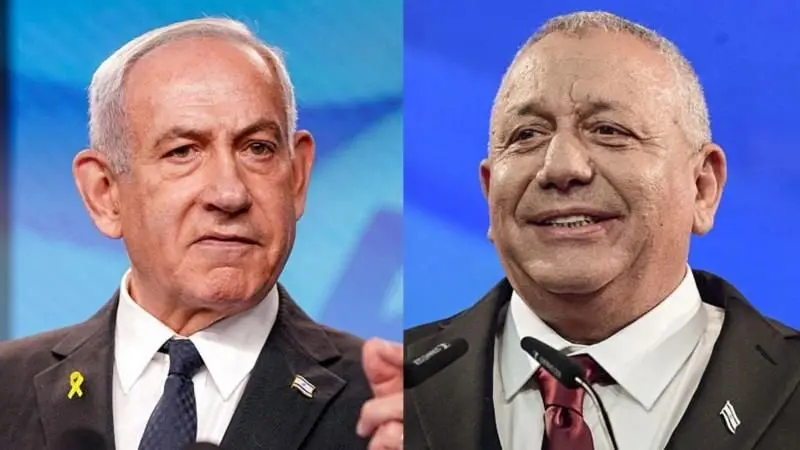
Israel’s incoming prime minister-designate Gadi Eisenkot has rejected outgoing Prime Minister Benjamin Netanyahu’s proposal to form a national unity government, describing it as a political manoeuvre aimed at delaying the transfer of power.
Eisenkot, leader of the Yashar Party, said Netanyahu knew he had lost the election and was using the unity government proposal as a stalling tactic.
He accused Netanyahu and his Likud allies of posing an immediate threat to Israeli democracy and urged the outgoing prime minister to step down without further delay.
“Benjamin Netanyahu and his associates’ conduct represents a real, direct and immediate threat to Israeli democracy,” Eisenkot said.
In last week’s parliamentary election, neither Netanyahu’s right-wing bloc nor Eisenkot’s alliance secured the 61 seats required for a majority in the 120-member Knesset.
Netanyahu’s Likud Party and its far-right and ultra-Orthodox allies won 53 seats, while Eisenkot’s centrist Yashar Party and three allied parties secured 48.
Two Arab-led alliances, the United Arab List and the Joint List, won a combined 19 seats, marking a historic result attributed partly to increased turnout among Arab voters.
President Isaac Herzog subsequently tasked former army chief Eisenkot with forming the next government, following consultations with political parties. The Arab-led blocs have indicated interest in supporting a coalition led by him.
Eisenkot has 28 days to form a government, with a possible 14-day extension.
Amid the political deadlock, Netanyahu proposed a national unity government, arguing that it was necessary to ensure Israel’s security and permanently address the Iranian threat. He suggested that only parties recognising Israel as a Jewish state should be included.
Three possible coalition arrangements have emerged from the election results: a unity government involving both Netanyahu and Eisenkot, a right-wing coalition led by Netanyahu, or an Eisenkot-led government backed by Arab parties.