


 Play store

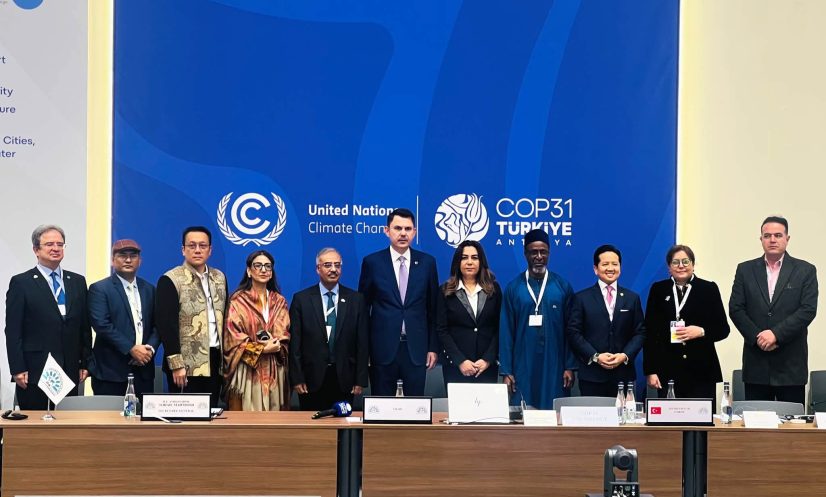
ANTALYA, Türkiye: Bangladesh has called for greater access to grant-based and highly concessional climate finance, technology transfer and stronger cooperation among D-8 member states to help developing countries vulnerable to climate change.
The call was made at the D-8 High-Level Ministerial Session on Climate Action, held on Tuesday on the sidelines of the 31st Conference of the Parties to the United Nations Framework Convention on Climate Change (COP31) in Antalya, Türkiye.
Titled “From Istanbul to Antalya: D-8 Partnership in Climate Implementation”, the session focused on expanding cooperation among member states, translating collective commitments into concrete action and strengthening South-South cooperation to address the impacts of climate change.
At the session, Bangladesh presented proposed amendments to the Antalya Ministerial Action Plan on Climate and Environmental Cooperation. The proposals called for practical measures to fulfil collective climate commitments and coordinated initiatives to strengthen climate resilience and promote sustainable development.
Bangladesh also highlighted initiatives undertaken under the leadership of Prime Minister Tarique Rahman to address climate change and strengthen environmental conservation. These include establishing a National Climate Finance Committee chaired by the Prime Minister, strengthening the Bangladesh Climate Change Trust, restoring canals, reinforcing coastal protection measures, restoring mangrove forests and planting 250 million trees over the next five years.
The country also outlined its priorities in climate-resilient agriculture, renewable energy and the circular economy.
To make cooperation among D-8 members more effective and results-oriented, Bangladesh proposed operationalising the D-8 Environment and Climate Cooperation Platform, forming a Technical Team comprising experts nominated by member states, and preparing an action-oriented roadmap for 2027-2030.
The proposed roadmap would prioritise locally led adaptation, climate-resilient agriculture and water management, stronger disaster early warning systems, climate-related loss and damage, and a just energy transition.
On climate finance, Bangladesh stressed the need to expand access to grant-based and highly concessional funding for project preparation and adaptation activities, in line with national needs and priorities. It also called for developing and disseminating locally appropriate technologies, ensuring gender equality and promoting women’s empowerment and social inclusion.
In waste management, Bangladesh proposed coordinated efforts to reduce waste generation, promote segregation at source, and expand reuse and recycling. It also called for joint pilot projects on composting, biogas production and material recovery from waste.
The proposals included assessing the feasibility of recovering energy from suitable residual waste, subject to safeguards for public health and the environment, emissions control and protection of informal waste workers’ livelihoods.
To advance the proposed initiatives, Bangladesh suggested that member states nominate representatives to the Technical Team by 31 January 2027 and hold its first meeting in the first quarter of that year. It also stressed the need to submit the operational framework of the D-8 Environment and Climate Cooperation Platform and the draft roadmap for consideration and approval by member states.
Bangladesh called for sustaining climate cooperation beyond COP31 and turning commitments into tangible outcomes through effective financing, technical cooperation and joint initiatives. It also underscored the importance of coordinated efforts to improve the livelihoods of climate-vulnerable communities and promote climate-resilient and sustainable development.
Dr Saimum Parvez, Special Assistant to the Prime Minister on Environment, Forest and Climate Change, represented Bangladesh at the session. He presented the country’s climate priorities, government initiatives and proposed amendments to the Antalya Ministerial Action Plan.
The session was attended by Murat Kurum, Türkiye’s Minister of Environment, Urbanisation and Climate Change and President of COP31; Ambassador Sohail Mahmood, Secretary-General of the Developing-8 Organization for Economic Cooperation (D-8); and ministers and senior representatives of D-8 member states.